Author: Max Knutsen

  • Using Plural’s Data to Gain Insights into the California Legislature

    Using Plural’s Data to Gain Insights into the California Legislature

    When is the California legislature most active? What are the California legislature’s busy months? At Plural, we are constantly analyzing, manipulating, and learning from our data. Recently, our data insights team embarked on a project to find patterns in the troves of legislative data in our database. Our team then provided insight and guidance on the four most interesting or useful patterns. The following is the first in a series of four blogs digging into this work. Read the second, third, and fourth blogs in this series.

    When is the California Legislature Most Active?

    Those familiar with California politics know that late Summer and early Fall is when Sacramento is most hectic. During this time, action is brought out of committees and onto the chamber floors, in a mad dash before adjournment.
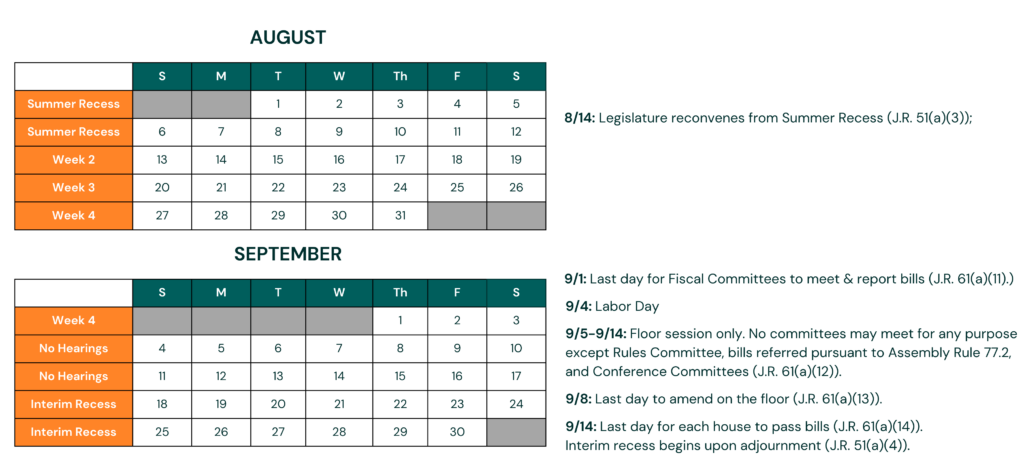
    In 2023, legislators returned from Summer recess on August 14th. They had just fifteen working days before the deadline for reporting bills out of committee on September 1st. Labor Day (September 4th) is now followed by a two-week sprint to the finish line, before legislators adjourn on September 14th.

    In 2023, legislators returned from Summer recess on August 14th. They had just fifteen working days before the deadline for reporting bills out of committee on September 1st. Labor Day (September 4th) is now followed by a two-week sprint to the finish line, before legislators adjourn on September 14th.

    Unsurprisingly, our California data shows a significant increase in bill passage votes each August and September. What’s fascinating is the magnitude of difference between activity during these months and other times of the year. This trend is consistent across more than a decade of data.

    Our Findings: August and September are the California Legislature’s Busiest Months, By Far

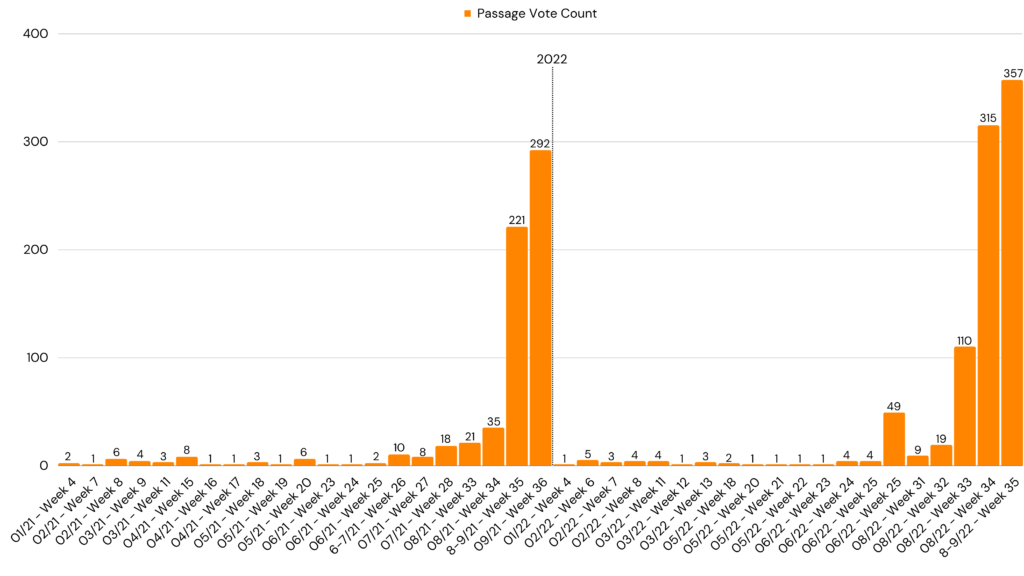
    First, we looked at bill passage votes in California’s 2021-2022 biennium. In the chart below, you can see the consistency in the pattern across both the first year (2021) and the second year of the biennium (2022). You can also see the slightly elevated vote totals in the second year. Passage votes increase significantly in the final seven weeks of each session. This includes the last week before summer recess and the six weeks following recess.

    Also of note in this chart is that the odd-numbered year, 2021, saw slightly less volume in most of these final seven weeks. This suggests that the end of the biennium (August-September 2022) is the busiest time of all.

    2021-2022 Bill Passage Votes by Week in the California State Legislature
    One biennium doesn’t determine a pattern. We wanted to look further back to see if we could find similar trends in previous bienniums. Using data spanning fifteen years, we mapped passage votes by week since the start of Governor Schwarzenegger’s second term in 2007.

    We see a continuation of the trend in the 2021-2022 data, with passage votes ramping up each August and September. However, the second trend identified in the 2021-2022 data, that the final, even year of the biennium saw more activity than the first, odd year is less consistent as we look back to 2007. This pattern shows up in the bienniums beginning in 2009, 2011, 2015, and 2017, but not in the bienniums beginning in 2007 and 2013. Additionally, the 2019-2020 biennium shows a significant departure from the overall pattern, due to the complications of the COVID-19 pandemic.

    2007-2022 Bill Passage Votes by Week in the California State Legislature

    Turning Data Into Meaning

    Trends found in the weekly vote analysis aren’t shocking. However, the clarity and consistency of these trends is significant. One can expect similar analyses of other states to show comparable trends, with slightly different “busy” months.

    At Plural, we’re excited about the possibilities this kind of data opens up, especially in the data quality and data monitoring spaces. The norms we see could be used to build rules alerting interested parties when a deviation from those norms is detected, possibly serving as an early indicator of a break from precedent.

    Get Started With Plural

    Interested in seeing how Plural can deepen your legislative insights? Get started today!

    Explore more public policy resources:

  • Did Taylor Swift’s Eras Tour Spark a Legislative Trend?

    Did Taylor Swift’s Eras Tour Spark a Legislative Trend?

    In response to the chaos surrounding Taylor Swift’s “Eras Tour” ticket sales, lawmakers across the U.S. are introducing legislation to increase transparency and fairness in online ticket sales. In particular, Ticketmaster’s market dominance that has caught the attention of Congress. Image Credit: Rolling Stone.

    As a big fan of state legislative trends, and a casual fan of Taylor Swift, some recent headlines jumped out at me:

    Swift’s Eras tour has been credited with boosting public transit, the hospitality industry, and even consumer spending at-large. It’s unsurprising that the tour would also drive legislative activity. I used Plural’s extensive legislative dataset to get a sense of what’s going on across the country.

    Legislating Ticket Sales to Enhance Transparency and Fairness

    Tickets went on sale for Taylor Swift’s “Eras Tour” in November of 2022. At the same time, legislators across the country prepared for their upcoming 2023 legislative sessions. The ensuing fiasco, caused by high demand, led to soaring prices, lawsuits, and many upset fans.

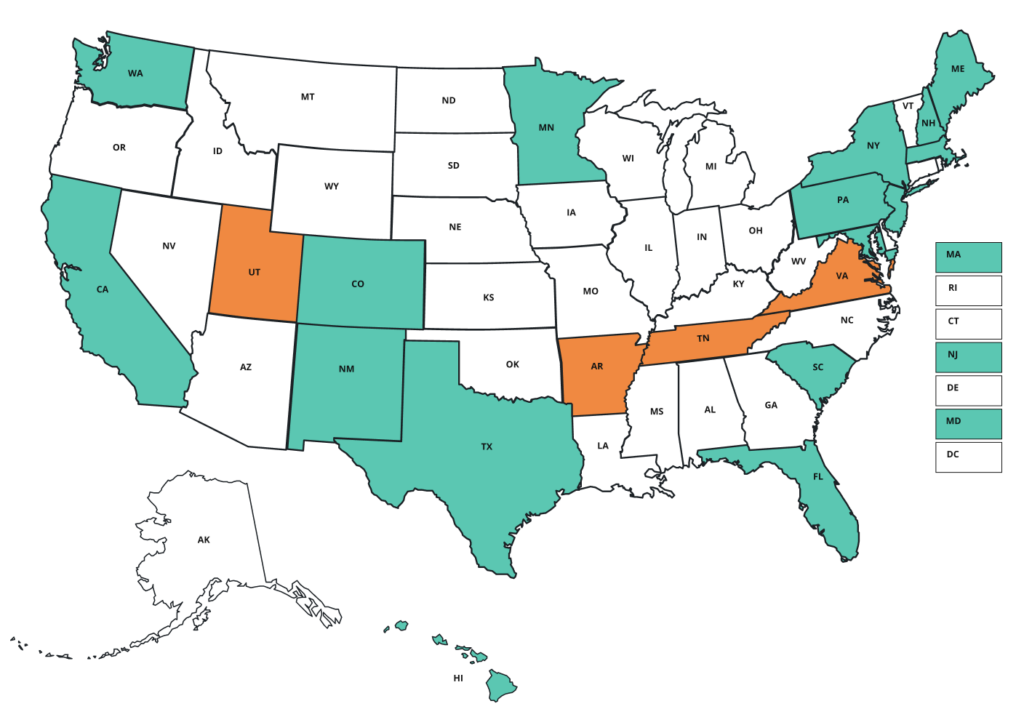
    There has been a flurry of legislative activity in response to the chaos of the Eras Tour ticket sales. To be specific, 45 bills have been introduced across 20 states. The bills each aim to increase transparency and fairness in online ticket sales. Since their introduction, four bills have since become law. But the trend doesn’t end there. Lawmakers in Massachusetts and California are continuing to work on their respective measures. View the complete list of bills here.

    In general, lawmakers focused on two areas of the ticket sales process. At the federal level, U.S. Senators have raised antitrust concerns. They claim that Ticketmaster, which handled Swift’s ticket sales, dominates the market. As such, Ticketmaster’s dominance has led to a harmful lack of competition. At the state level, legislators have introduced legislation that aims to further regulate online ticket sales.

    States That Have Introduced or Passed Legislation Increasing Transparency and Fairness in Ticket Sales

    States that have introduced (teal) or passed (orange) legislation.

    Laws passed in Arkansas, Tennessee, Utah, and Virginia increase regulation by:

    • Reducing the number of “bots” purchasing and reselling tickets
    • Increasing transparency in pricing and fees

    How do we know that this wave of ticket sale legislation isn’t mere coincidence? It’s true that some legislation was introduced independent of the focus that the Eras Tour brought to the industry. However, many lawmakers made it clear that Swift and the Eras Tour motivated their proposals. Lawmakers in Washington named their proposal the “Ticket Sales Warrant Integrity, Fairness, and Transparency (TSWIFT) for Consumer Protection Act.” Maryland lawmakers dubbed their bill the “Event-Goer Rights and Accountable Sales (ERAS) Act.” Even members of U.S. Congress couldn’t resist giving Swift (and Bruce Springsteen) a nod with the “Better Oversight of Stub Sales and Strengthening Well Informed and Fair Transactions (BOSS and SWIFT) for Audiences of Concert Ticketing Act of 2023.” Finally, while Hawaii legislators didn’t use a creative acronym, they paid homage to a Hawaiian native with their “Bruno Mars Act.”

    Pop Culture and Trends in Public Policy

    It may seem silly that a cultural moment like the Eras Tour and the chaos surrounding ticket sales could spur a trend in policy.

    It’s not that simple.

    We’re seeing in real time the speed with which legislative trends can kick off and the efficacy of mass outrage, especially on the internet.

    In our digital world, advocacy and organizing is happening remotely. Online communities like the “Swifties” clearly have the ability to garner the attention of lawmakers.