Author: Yemi Adewunmi

  • What Are the Differences Between State Legislatures and Congress?

    What Are the Differences Between State Legislatures and Congress?

    When examining the state legislatures vs. Congress, it’s important to note key similarities and differences. In the United States political system, the legislative branch is pivotal, holding the critical responsibility of creating laws. This branch is manifested at two levels: the federal Congress and the state legislatures. While they share legislative roles, significant differences in structure, function, and legislative processes distinguish them. Delving into these disparities is crucial for citizens seeking to comprehend the intricacies of governance and engage more effectively in the democratic process.

    Similarities: State Legislatures vs. Congress

    Despite operating at different governmental levels, state legislatures and the federal Congress have noteworthy similarities. Primarily, both are bicameral in most cases, consisting of two legislative chambers: a smaller upper house and a larger lower house. This structure allows for a system of checks and balances within the legislative branch, ensuring that multiple perspectives are considered when creating laws.

    Moreover, both bodies share the fundamental legislative process: drafting, introducing, and debating bills before they’re sent to the executive for approval. Each serves as a forum where representatives of the people can discuss, refine, and create laws necessary for the welfare of the society they serve. They are also similar in that they hold regular sessions to manage their legislative responsibilities, whether annually or biennially.

    Key Differences: State Legislatures vs. Congress

    State Legislatures Introduce More Bills Than Congress

    One stark difference between state legislatures and Congress is the volume of legislation. State legislatures tend to introduce a significantly higher number of bills than Congress in any given legislative session — as much as 23x more. This difference is often attributed to the closer proximity of state legislators to their constituents, leading to a wider variety of issues being addressed. Furthermore, the narrower focus of state legislatures allows them to tackle more localized issues, resulting in a higher number of bills introduced.

    Bills From State Legislatures Are More Likely To Be Enacted

    Not only do state legislatures introduce more bills, but a larger percentage of these bills are enacted into law compared to those at the federal level. The reasons are multifaceted: state legislatures often deal with less partisan gridlock, have more frequent legislative sessions, and address issues more localized than those dealt with by Congress. This efficiency is critical because state laws often have a more immediate impact on the daily lives of citizens.

    How To Learn More About Your State’s Legislature

    The actions of state legislatures significantly impact residents’ lives, often more directly than those of Congress. Therefore, it’s imperative for citizens to understand their state’s legislative process. Many resources are available for those looking to become more informed. State legislative websites offer a wealth of information, including bill tracking, legislative calendars, and live streams of legislative sessions. Moreover, local news outlets, community meetings, and non-profit advocacy groups are valuable resources for keeping informed and engaged with your state’s legislative activities.

    Staying informed and understanding the differences between these two levels of government not only empowers individuals to make knowledgeable decisions but also encourages more meaningful participation in the democratic process.

    Get Started With Plural

    In the world of public policy, it’s all about sorting through the noise to get to what matters. With Plural, you’ll only get exactly what you need, and none of what you don’t.

    Unlock the power of Plural in just one state — that’s premium legislative data, advanced searching and tracking, tools for easy organization and collaboration, and AI-powered insights, catered to your needs.

  • Save Time and Amplify Impact with Plural’s Advanced Features

    Save Time and Amplify Impact with Plural’s Advanced Features

    Several of Plural’s advanced features can save you hours of time spent on manual tasks, so that you can spend more time on strategy and planning (and spend less time working overall!)

    Digging Into Plural’s Advanced Features

    Save Your Frequently Used Searches

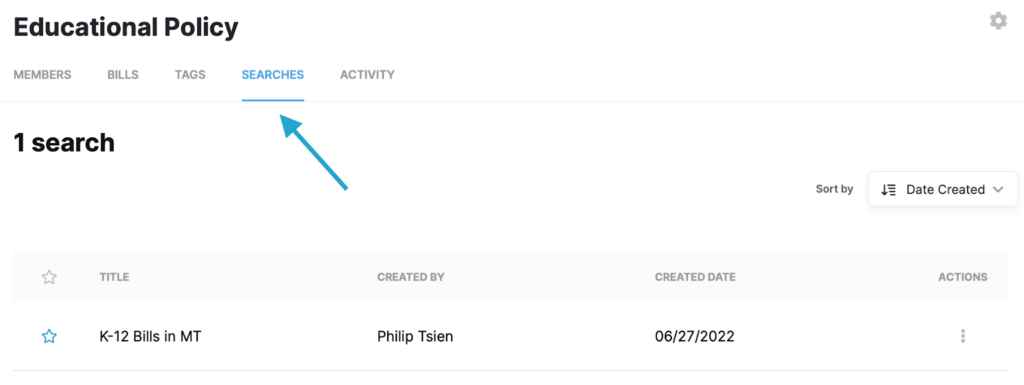
    Plural’s Saved Search feature allows you to save your frequently used searches. You’ll receive email alerts as new updates are available for your search criteria.

    All saved searches are dynamic, so they’ll get updated as new legislative data becomes available. For example, as legislatures introduce new bills that match your saved search criteria, those bills will appear as results.

    View Critical Information for Many Bills in One List

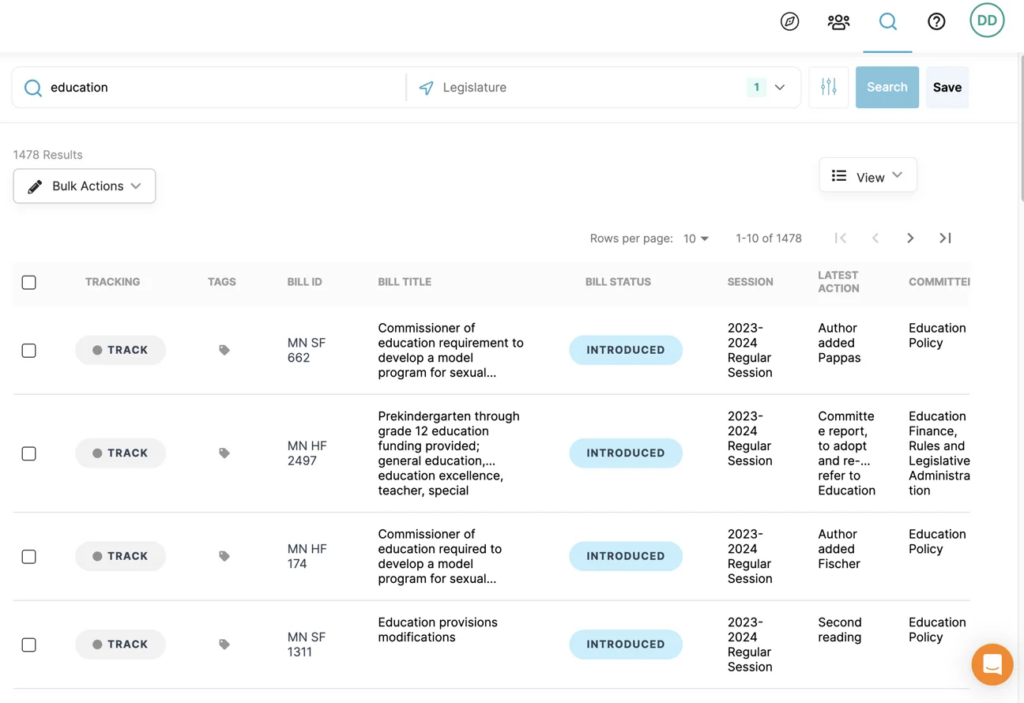
    In Plural, you can choose to display your list of bill search results and tracked bills in “Table View” or “Cards View.”

    Cards View lists key bill information, including the bill’s title, ID, session and committee. Table View adds to this information with bill status and latest action, in an easily skimmable format.

    Table View saves you from having to click into individual bill pages one by one to get the most critical details about each bill.

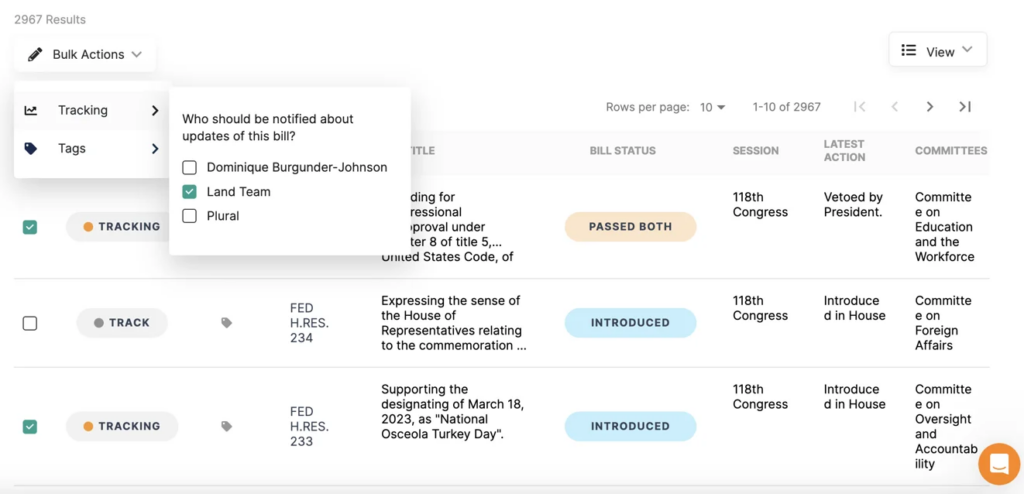
    Track Many Bills at Once

    Tracking a bill in Plural allows you to keep a running list of all of your bills of interest in a single place. You’ll receive email alerts whenever there’s an update on any of your tracked bills.

    When viewing a list of bill search results in Table View in Plural, you can select multiple bills to track at once.

    With this same functionality, you can also quickly un-track multiple bills at once. This can be especially handy when cleaning out your Workspace in preparation for the next session.

    Organize Many Bills into Multiple Virtual Folders at Once

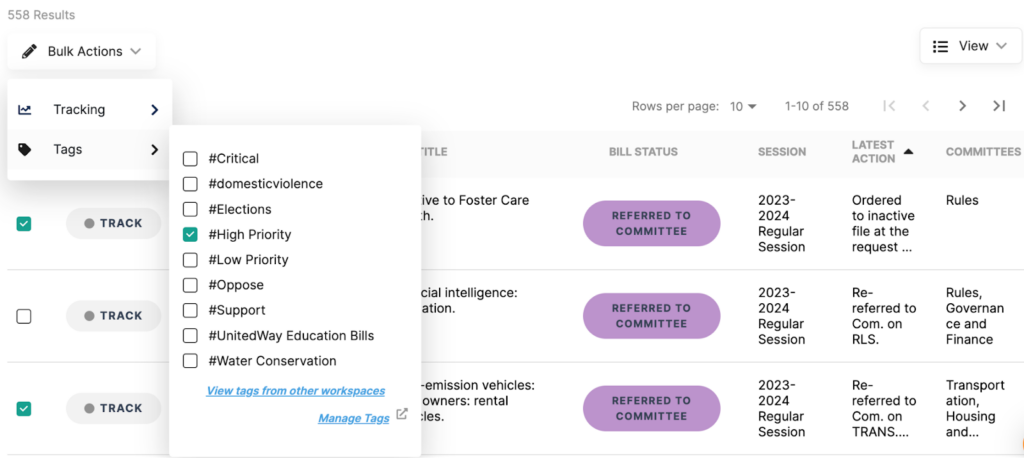
    In Plural, “Tags” are like virtual folders that you can organize your bills of interest into.vFor example, you can use Tags to label bills based on high priority/low priority, support/opposed, or by issue area.

    When viewing a list of bill search results in Table View, you can select multiple bills to assign a tag to at once.

    As with tracking, you can also un-tag multiple bills at once. Again, this can be especially handy when cleaning out your Workspace ahead of the next session.

    BONUS: To keep a record of your tracked bills from past sessions, create a new tag with the session year and bulk-tag all of the bills before untracking them. This will create a new tag on the left sidebar with all of the bills you worked on in previous session(s), making it easy to access and reference them later.

    Easily Share an Interactive List of Bills with External Audiences

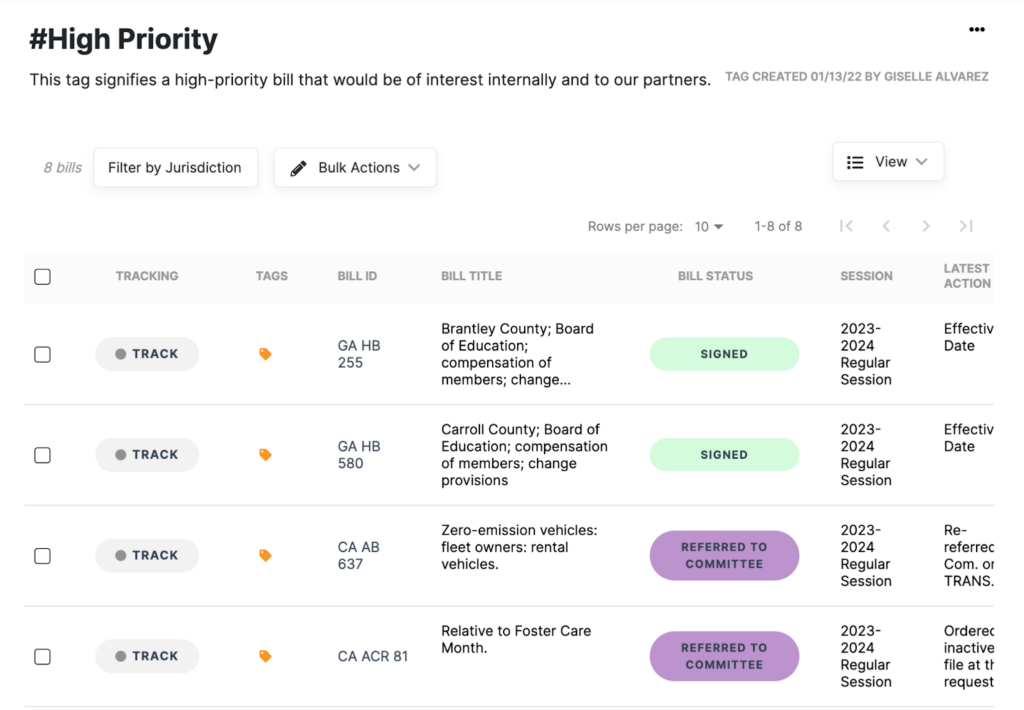
    Publishing a Tag allows you to quickly and easily share a group of bills with anyone, regardless of whether they have a Plural account. This can be especially useful when generating reports for external stakeholders, like clients and organization supporters.

    Tags are fully customizable, and you can create as many as you’d like. Use tags to organize bills into categories such as “high priority/low priority,” “support/oppose,” or by topic area, like “education” or “housing.” After creating your tags, you can then assign one or more of the tags to your relevant bills. Then once you’ve published the tags, you can simply share the URL for the public tag in an email, website or text message.

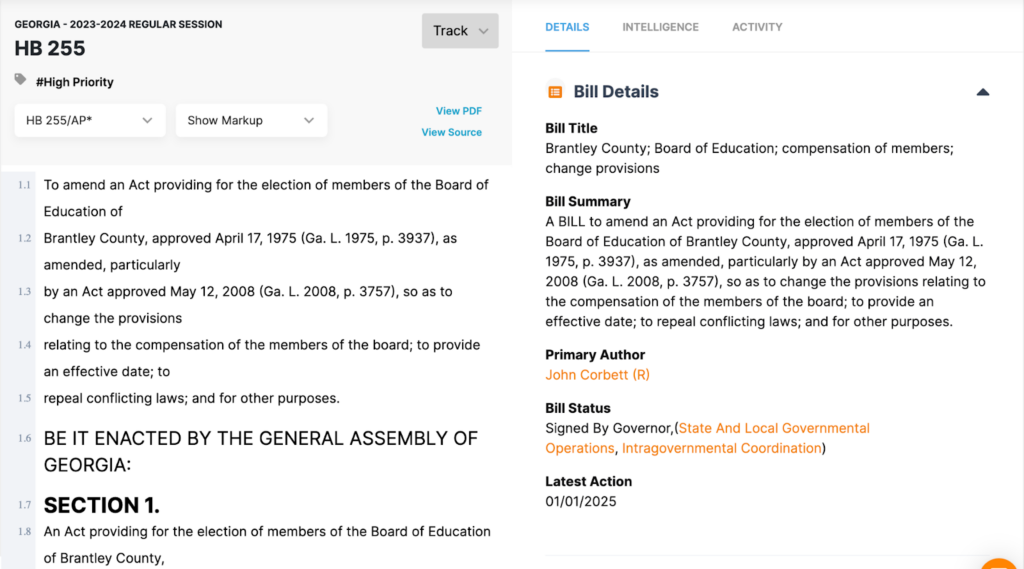
    When someone visits the link for your public tag, they’ll be able to click on any of the listed bills to view the bill page. This page includes full text of the bill as well as the bill’s author/cosponsor, status, committee, actions and vote history.

    Find What You’re Looking For With Advanced Search Options

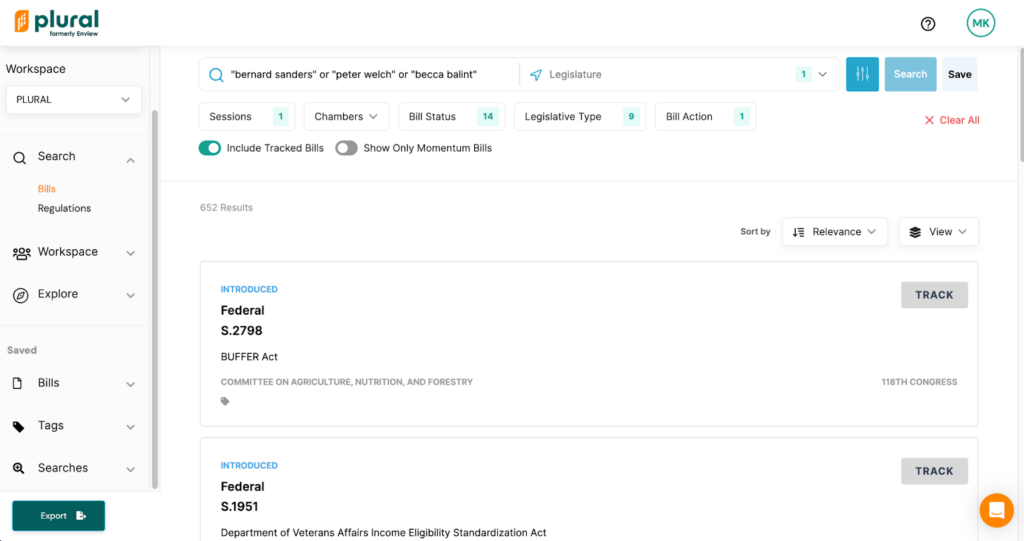
    Using Plural’s filters and search preferences can be key to finding what matters to you. With Plural, you can narrow your search by legislature, session, bill status, and bill action.

    Plus, you can use boolean operators such as quote marks, the “OR” operator and the “AND” operator to more quickly find what you’re looking for.

    Identify Bills With the Highest Chance of Coming Up for a Vote

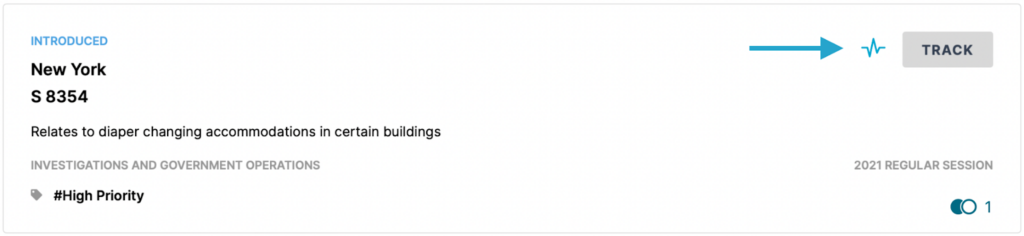
    Thousands of bills are introduced each session, and sifting through them is labor intensive and time consuming. Plural’s AI-powered “Momentum Indicator” makes it easy to find what matters.

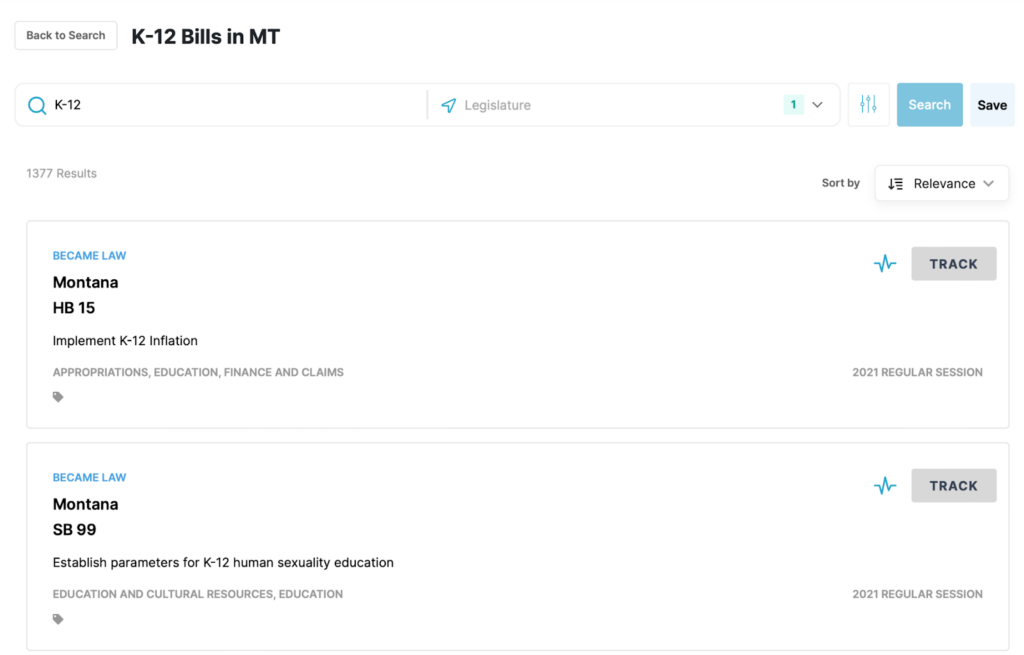
    Bills with potential momentum will have a pulse icon next to the “Track” button and on their bill page.

    You can also filter your search results to show only bills with potential momentum. 

    Find Companion and Other Related Bills All in One Place

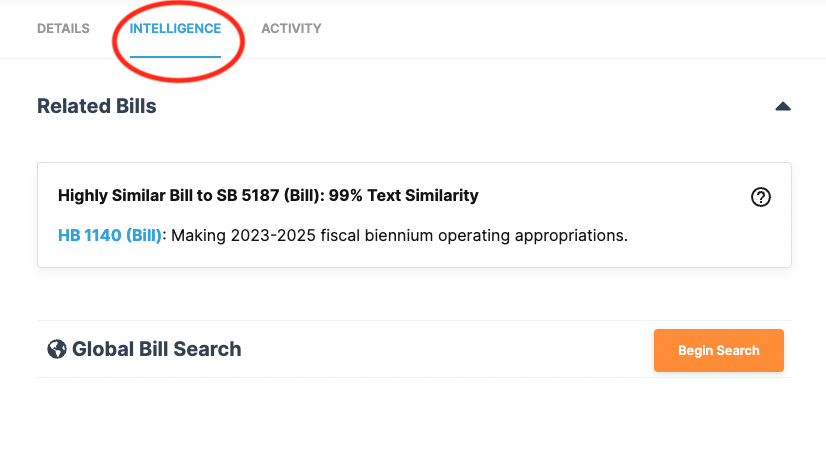
    Within the “INTELLIGENCE” tab on a bill page, you’ll see any bills that share text with the bill you’re currently viewing. This is a quick and easy way to find companion bills or an ominous package.

    Plural will also indicate the degree of text similarity between the related bill and the bill you’re viewing. This will give you an even clearer sense of the relationship between two or more related bills.

    Discover Similar Bills Across Multiple Jurisdictions

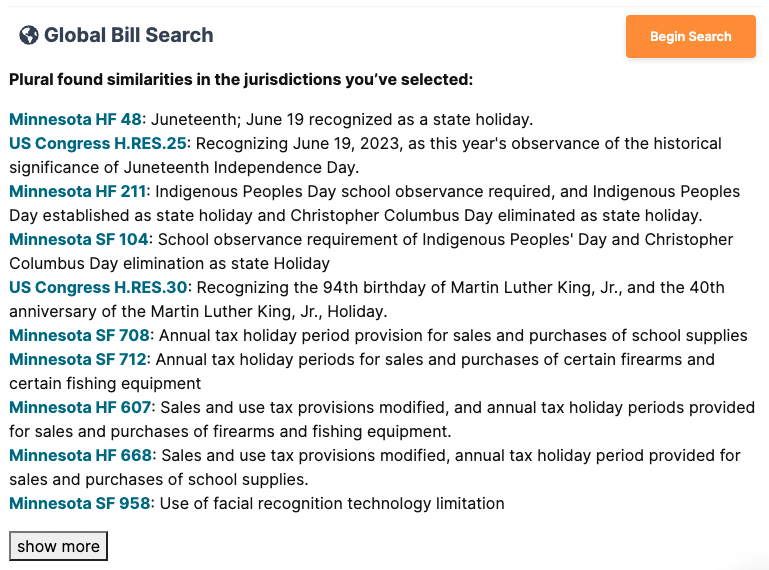
    Plural’s Global Bill Search tool helps you quickly analyze bill text and find commonalities in bills across all jurisdictions.

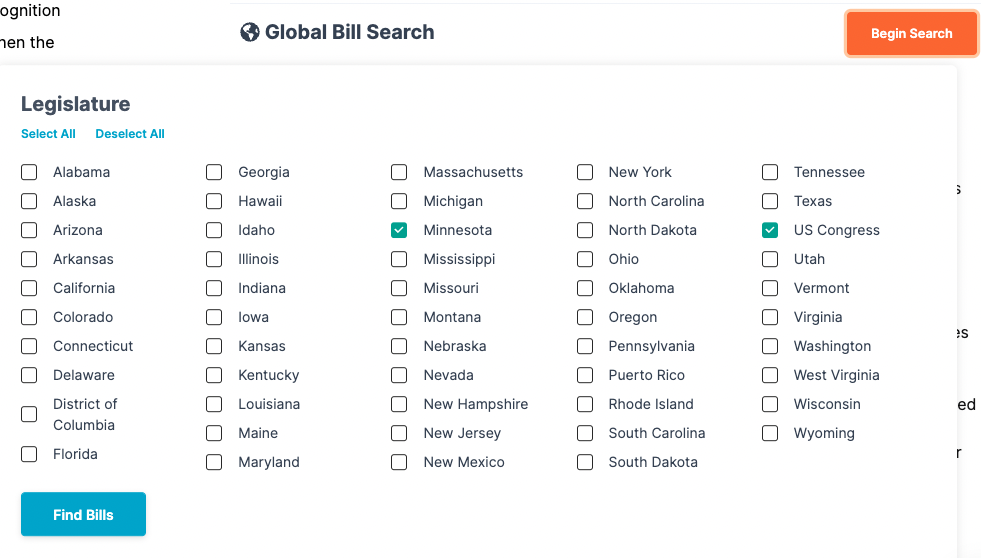
    Within the “INTELLIGENCE” tab, you’ll find the Global Bill Search tool. In the Global Bill Search tool, you can select the legislatures in which you’d like to search for bills similar to the one you’re currently viewing.

    After completing your search, you’ll be shown a list of bills from your selected legislatures containing a high degree of similar text.

    Keep Individual and Shared Work Separate

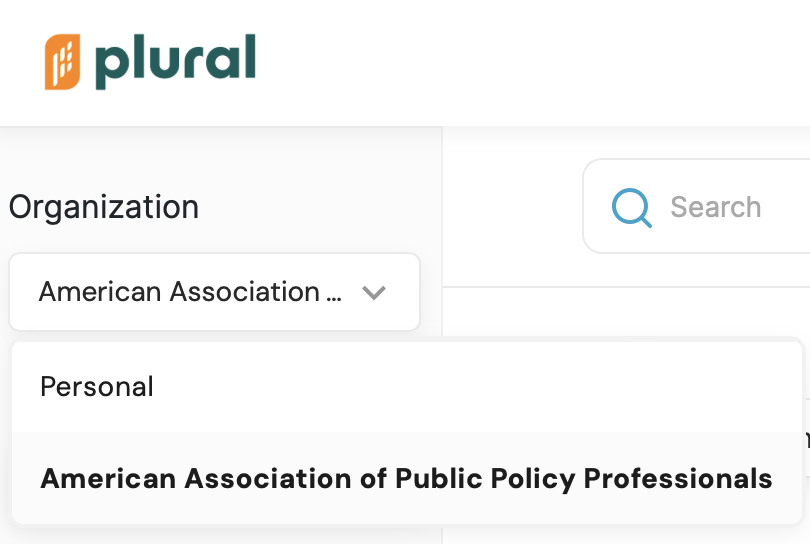
    Plural allows you to have a personal organization, in addition to your shared organization. In your shared organization, you can collaborate with colleagues on work. Your personal organization is for your own work and is not shared with others.

    Within your personal organization, you can track bills, create tags, and save searches that will only be visible to you.

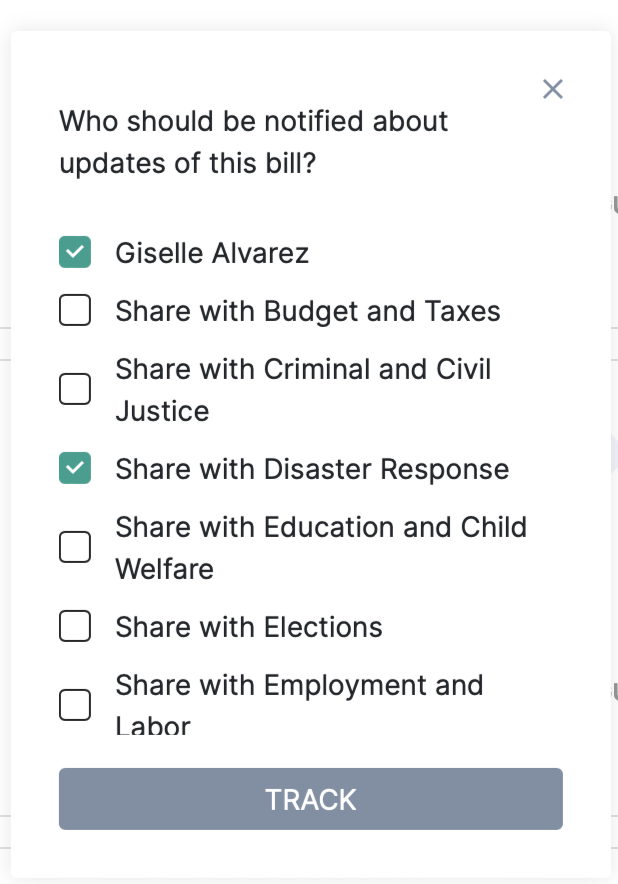
    When working within your shared organization, you can share actions with any of your shared workspaces, or your personal workspace. This helps you avoid navigating back and forth between the two organizations.

    Get Started With Plural’s Advanced Features

    With Plural’s advanced features, it’s easier than ever to shape the future of public policy. Harness the power of Plural’s intuitive, AI-powered legislative tracking and stakeholder collaboration tool and get started today.

  • How a Bill Becomes a Law

    How a Bill Becomes a Law

    The process of how a bill becomes a law is a fundamental cornerstone of democratic governance. This process allows citizens’ preferences to be translated into enforceable rules. Though seemingly straightforward, this process involves multiple stages of scrutiny and revision. Understanding the process of how a bill becomes a law is crucial for anyone looking to comprehend the workings of or influence our government.

    What Is a Bill?

    A bill is a proposal for a new law or an amendment to an existing law. It’s the raw material of law-making; an idea drafted in legal form, subjected to the rigorous legislative process. Bills can originate from either legislative chamber. They can also encompass a wide range of issues, from appropriations to policy reforms across various sectors.

    How a Bill Becomes a Law: The Key Steps

    Drafting the Bill

    The idea for a new law can come from anyone. Typically, ideas for bills come from members of the legislative body, government agencies, or the executive branch. In this step of the process, the idea is put into a formal text.

    Introducing the Bill

    A member of the legislature must sponsor and introduce the bill. Upon introduction, the bill is assigned a number and title, read aloud, and entered into the legislative record.

    Referral to Committee

    The bill is referred to one or more standing committees that specialize in the bill’s subject matter. This marks the bill’s first major hurdle.

    Legislative Action in Committee

    Much of a bill’s shaping occurs at the committee stage, where it’s examined in detail.

    Committee Action

    Committees review, discuss, and modify the bill, deciding if it should proceed. They’re pivotal, with the power to effectively green-light or halt a bill’s journey.

    Public Hearings and Citizen Engagement

    Committees hold public hearings, inviting experts, public officials, and relevant stakeholders to provide insights. Citizen engagement here is crucial, as public opinion can influence the bill’s progression.

    Reporting Out of Committee

    If the committee approves the bill, it’s “reported” back to the floor of the entire legislative body. The bill is accompanied by a committee report explaining the bill and the committee’s recommendations.

    Floor Debate

    Once a bill reaches the floor, it’s debated by the entire legislative body. At this stage, the bill can still be amended or even rewritten entirely.

    Voting by a Simple Majority Vote

    Most bills require a simple majority vote to proceed. If successful, they move to the other legislative chamber or, if already passed in an identical form, to the executive.

    Amendments

    During debate, amendments can be added, altering the bill’s content. Significant amendments can necessitate additional rounds of voting.

    Conference Committee Report

    It’s possible that the two legislative chambers could pass different versions of the bill. In this case, a conference committee of members from both houses is formed to reconcile differences. The committee’s final version, the Conference Committee Report, must be approved by both chambers.

    Approval by Majority Vote

    The final step in the legislature is approval by a majority vote in both chambers. Following this, the bill heads to the executive for approval or veto.

    Visualizing How a Bill Becomes a Law

    The visual below breaks down the intricate journey a bill undertakes, from inception to becoming a law. Understanding each step is essential for those looking to engage with or influence the legislative process.

    Get Started with Plural

    Plural offers best-in-class data, advanced searching and tracking, and AI-powered tools to help public policy professionals deepen their legislative insights. Create a free account or book a demo to learn how Plural can amplify your policy impact.

  • VIDEO | Explore Plural’s Pricing Plans

    VIDEO | Explore Plural’s Pricing Plans

    The next legislative sessions will be here before we know it, and the time to finalize your policy tracking tools and systems is now. It’s easier than ever to explore Plural’s pricing plans with our new video explainer.

    No matter your needs, we have a plan just for you. From premium legislative data and tracking across dozens of jurisdictions to AI-powered tools and top-tier customer support, Plural ensures you never miss a beat.

    Here’s how Plural can level up your policy impact:

    • Search and track best-in-class legislative data 🔎
    • Be the first to know with customizable alerts 🔔
    • Unlock revolutionary AI-powered tools 🧠
    • Keep your team on the same page 🤝
    • Report more efficiently and share your value 📈

    Learn More About Plural’s Pricing Plans

    Free Account

    With a free account, you’ll gain access to core features for all 53 U.S. states and jurisdictions for one person. It’s perfect for the interested constituent getting started with policy tracking.

    Basic Plan

    Plural’s Basic plan is just $3,500 per year. It was designed with small policy teams in mind. You’ll get two user accounts, unlock advanced features for one state or jurisdiction, and one collaborative workspace to get organized and work seamlessly with your team.

    Premium Plan

    For those needing a comprehensive, full-service solution, Plural’s Premium plan starts at $10,000/year. It’s tailored for larger teams, advocacy groups, and researchers and boasts unlimited users, multi-state and even international tracking, AI-powered tools to deepen your insights, premium data to advance your strategy, and top-tier customer support.

    Get Started Today

    Ready to get and stay ahead in the public policy landscape? Learn more about our pricing plans and get started today!

  • VIDEO | Exploring Plural’s AI Bill Summarizer

    VIDEO | Exploring Plural’s AI Bill Summarizer

    In today’s fast-paced legislative space, effective public policy work requires the ability to quickly comprehend and extract key information from bills. However, bills can be long and complicated. Over the course of a legislative session, policy experts must sift through hundreds of bills.

    AI-generated summaries can significantly expedite the bill summarization process by extracting the most relevant information and presenting it in a concise format. They enable decision-makers to quickly grasp the key aspects of proposed legislation, facilitating more informed and timely decision-making.

    Plural helps policy teams work faster, collaborate more effectively, and amplify their impact. Plural’s AI Bill Summarizer will be available to users of our Premium plan by the end of 2024. The goal of the Bill Summarizer is to combine speed, accuracy, and efficiency, allowing you to focus on critical decision-making processes to help your organization achieve its goals.

    Get Started With Plural

    Interested in supercharging your public policy work with Plural’s AI-powered tools? Create a free account or book a demo today!

  • Introducing Plural’s AI Bill Summarizer

    Introducing Plural’s AI Bill Summarizer

    How does Plural’s AI Bill Summarizer streamline complicated public policy work and save time for busy policy teams? Learn more and book a demo today.

    In today’s fast-paced legislative space, effective public policy work requires the ability to quickly comprehend and extract key information from bills. However, bills can be long and complicated. They address complex issues, cover multiple aspects of a particular topic, and account for various stakeholders’ interests and perspectives.

    Over the course of a legislative session, policy experts must sift through hundreds of bills to identify those they care about. One effective way to save time and improve accuracy while still maintaining a high quality of work is to review bill summaries.  

    Unfortunately, many jurisdictions do not provide bill summaries. This leaves policy experts with the onerous task of reviewing long, complicated bill text. Even in cases where summaries are available, they are often like the bills themselves: lengthy and difficult to read. Bill summaries often lack key context necessary to highlight essential aspects of bills.  

    AI-generated summaries can significantly expedite the bill summarization process by extracting the most relevant information and presenting it in a concise format. They enable decision-makers to quickly grasp the key aspects of proposed legislation, facilitating more informed and timely decision-making.

    In today’s fast-paced legislative space, successful policy advocacy requires the ability to quickly comprehend and extract key information from bills.

    How do bill summaries work?

    AI bill summarizers work using text summarization capabilities. Text summarization is a powerful technique in natural language processing that involves condensing a piece of text, such as legislative documents, into a shorter, more concise text while retaining key information. Today, we can use Language Models (LMs), which are trained on vast amounts of text data to achieve the ability to generate human-like language. These LMs are generative models that can create text beyond simple sentence extraction or rephrasing. They can understand information and generate summaries that may not have been explicitly present in the original document. 

    Further, LMs can be fine-tuned for a particular domain or task. For example, they can be designed to capture the unique language patterns, terminology, and context specifics of bills.

    Introducing Plural’s AI-Powered Bill Summarizer

    At Plural, we’ve made it our mission to help policy teams work faster, collaborate more effectively, and amplify their impact. We’re excited to announce that Plural’s AI Bill Summarizer will be available to users of our Premium plan by the end of 2023. The goal of the Bill Summarizer is to combine speed, accuracy, and efficiency, allowing you to focus on critical decision-making processes to help your organization achieve its goals.

    Interested in learning more?

  • Advocating Effectively and Providing Value for Your Chamber’s Members

    Advocating Effectively and Providing Value for Your Chamber’s Members

    How does the St. Paul Area Chamber of Commerce advocate effectively, track public policy, and provide value for its members? On October 19, Amanda Duerr, the Vice President of Government Affairs at the St. Paul Area Chamber, joined Damola Ogundipe, the CEO and Co-Founder of Plural, to discuss the Chambers’ strategies and how they use Plural to amplify their impact.

    ABOUT THE SPEAKERS

    Amanda Duerr | Vice President of Government Affairs, St. Paul Area Chamber

    Amanda Duerr is the Vice President of Public Affairs for the St. Paul Area Chamber, where she leads the organization’s advocacy efforts at the state and local government level. Amanda is a long-time veteran of the Minnesota State Capitol, having worked in government relations for a corporation, a membership association, and as a contract lobbyist. Throughout her advocacy career, her work has centered around municipal government. Prior to lobbying, Amanda worked for five years in the Minnesota Senate, first as a legislative assistant and then as a researcher/media specialist. Amanda graduated from the University of MN-Morris with a degree in Political Science. She lives in Mendota Heights, MN with her husband (also a lobbyist). In her spare time, she enjoys marathon running, growing cacti, traveling, and true crime podcasts.

    Damola Ogundipe | CEO & Co-Founder, Plural

    Damola Ogundipe is the Co-Founder and CEO of Plural, which creates cutting-edge software to make it easy for public policy data to be discoverable, interpretable, and collaborative. Born in Lagos, Nigeria, Damola and his family immigrated to the US when he was six years old. From a young age, Damola was interested in global perspectives, politics, and how the world is governed. Frustrated by the lack of civic engagement in the US, Damola and his co-founders created Civic Eagle, leveraging public-access data to create easy ways for global citizens to engage and express their opinions on how they want to be governed.

  • Strategies to Track Public Policy and Advocate Effectively

    Strategies to Track Public Policy and Advocate Effectively

    How does 1 Million Madly Motivated Moms (1M4) track public policy and advocate for their cause of ending police violence and reducing harm in Black communities? On September 21, 2023, Tansy McNulty, the Founder & CEO of 1M4 joined Yemi Adewunmi, the COO & Co-Founder of Plural, to discuss how 1M4 uses Plural to track policy and advocate effectively.

    ABOUT THE SPEAKERS

    Tansy McNulty | Founder & CEO, 1 Million Madly Motivated Moms

    Tansy McNulty is the Founder and CEO of 1 Million Madly Motivated Moms (1M4). 1M4 empowers Black Moms to end police violence by the year 2038 through legislative policy education, financial assistance to impacted families, and encouraging the next generation of Black youth to pursue roles in the justice system & politics with integrity. This type of activism and organizing requires that Black Moms protect their greatest weapon in the fight… their mental health. 1M4 gives Moms a place to air their frustrations with recurring police violence, create solutions that have measurable impact, and prioritize their mental health to maintain peace of mind despite the chaos of inequality. With a background in Corporate Supply Chain Management, emphasis on cost reduction and process improvement initiatives, Tansy is a problem solver who simply wants to save Black lives and create a more equitable justice system.

    Yemi Adewunmi | Co-Founder & COO, Plural

    Yemi serves as Plural’s Chief Operating Officer, leading growth, product marketing, brand experience, and customer experience. Before co-founding Plural, Yemi served as a Senior Policy Analyst at the New York State Legislature. She holds a bachelor’s degree in Politics & Philosophy from the University of Pittsburgh, and a Master of Public Administration degree from the Rockefeller College of Public Affairs and Policy at the University of Albany/SUNY. Her concentrations in her graduate program were in nonprofit management and information systems management.

  • Understanding the Supreme Court’s 2023 Decisions

    Understanding the Supreme Court’s 2023 Decisions

    The Supreme Court’s 2023 session was by all means unprecedented. It’s been a couple of months since the major decisions from this year’s docket were published. In this time, the Plural policy team has analyzed the Court’s decisions, and their impacts on American people. Many major laws, practices, and rights were reconstructed in this Supreme Court term. It’s essential to look at the effects we have felt thus far, and investigate where policy move in response.

    Major Supreme Court Decisions in 2023

    For the Supreme Court of the United States’ term of 2022-2023, the court issued decisions in 58 cases. The seven detailed in this article were by far the most contested and debated. The Court holds the authority to affect every individual in the United States. This power makes understanding their decisions essential, from average citizens to policymakers.

    Affirmative Action

    The two Supreme Court cases brought by Students for Fair Action, Inc. against Harvard and UNC, respectively, were decided on June 29th, 2023. The six to three decision effectively overturned affirmative action. Affirmative action has been present and legal in the United States since the 1960s. It refers to a set of procedures designed to:

    • Eliminate unlawful discrimination among applicants
    • Remedy the results of such prior discrimination
    • Prevent discrimination in the future

    In recent decades, affirmative action has been largely affiliated with higher education. Many academic institutions holistically consider race in admissions decisions. Learn more about affirmative action here.

    Students for Fair Admission, Inc. v. President and Fellows of Harvard College argued that affirmative action is not race-neutral. Therefore, affirmative action is discriminatory in nature. The majority opinion determined that the college admissions process should instead be color-blind. Justices Jackson, Sotomayor, and Kagan authored dissenting opinions. Their opinions contextualized affirmative action within our nation’s history. They also analyzed the threats that might arise from straying from precedent.

    In her dissent, Justice Jackson wrote:

    “With let-them-eat-cake obliviousness, today, the majority pulls the ripcord and announces ‘colorblindness for all’ by legal fiat, but deeming race irrelevant in law does not make it so in life.”

    Justice Ketanji Brown Jackson

    Student Loans

    Biden, President of the United States v. Nebraska et al. was decided on June 30th, 2023. The six to three decision prevented the distribution of student loan forgiveness nationwide.

    In making its decision, the Court looked to the Higher Education Relief Opportunities for Students (HEROES) Act of 2003. It ruled that the Secretary of Education does not have the authority to establish a student loan forgiveness program. The program proposed by the Secretary would cancel approximately $430 billion in debt. This cancellation would affect nearly all student loan borrowers in the United States. Learn more here.

    Justices Kagan, Sotomayor, and Jackson again authored a dissenting opinion. They asserted that the HEROES Act gives discretion to the Secretary of Education to “give the relief that was needed, in the form he deemed most appropriate, to counteract the effects of a national emergency on borrowers’ capacity to repay.” Therefore, the actions made to cancel student loan payments was authorized.

    This decision impacted every student loan borrower in the United States. Despite negative effects, the Court’s decision did leave opportunities for Congress to act. The Court’s decision did not state that the loan forgiveness program was unconstitutional. Rather, it stated that the Secretary of Education did not have the authority to act. This nuance leaves room for Congress to broaden the scope of the HEROES act or otherwise allow for a loan forgiveness program.

    Religious Freedom and Employment

    Groff v. Dejoy was decided on June 29th, 2023. The nine to zero decision increased religious freedoms for workers within their places of employment.

    Gerald Groff is a U.S. Postal Service employee who is a Christian. Due to his religious beliefs, Groff refused to work on Sundays. In response, the USPS offered to find employees to swap shifts with him. However, on numerous occasions, no co-worker would swap, and Groff did not work. The USPS subsequently fired him. The Court determined that the USPS failed to reasonably accommodate Groff’s religious beliefs.

    Prior to this decision, employers had to prove they faced an “undue burden” in accommodating religious beliefs. Title VII now holds employers to a higher standard. In order to decline accommodations, employers must show that accommodating religious beliefs would result in substantially increased costs.

    Religious freedom advocates and religious communities heralded this decision as a win. It was one of few unanimous decisions in this Supreme Court term.

    LGBTQIA+ Rights

    303 Creative LLC v. Elenis was decided on June 30th, 2023. The six to three decision reduced the protected class status of LGBTQ+ consumers. In doing so, the case effectively increased religious freedom for businesses.

    Lorie Smith is the owner and founder of 303 Creative LLC, a graphic design business in Colorado. Smith wanted to expand her business to include wedding websites. However, she opposed same-sex marriage on religious grounds. As such, she did not want to provide services for same-sex couples.

    Colorado’s Anti-Discrimination Act prohibits businesses from discriminating on the basis of sexual orientation. Smith sued the state of Colorado, arguing that the law violated her freedom of speech.

    The Court agreed with Smith, ruling that states cannot force individuals to carry out messaging that conflicts with their religious beliefs. To do so would be a breach of their freedom of speech.

    Once again, three Justices joined in a dissenting opinion on this case. Justices Sotomayor, Kagan, and Jackson wrote:

    Five years ago, this Court recognized the “general rule” that religious and philosophical objections to gay marriage “do not allow business owners and other actors in the economy and society to deny protected persons equal access to goods and services…”. Instead today, the Court, for the first time in its history, grants a business open to the public a constitutional right to refuse to serve members of a protected class.

    Justices Sonia Sotomayor, Elena Kagan, and Ketanji Brown Jackson

    Federal Elections

    Moore v. Harper was decided on June 27th, 2023 in a six to three decision. The Court ruled that, under the Federal Elections Clause, state legislatures do not have exclusive and independent authority to set federal election rules.

    This case came before the Supreme Court after the 2020 Census was completed in North Carolina. It argued that congressional redistricting resulted in a partisan gerrymandered state map. The map was challenged once in state court. The state court asked the state legislature to propose another map. However, the re-done map was highly similar to the first. The State Speaker of the House petitioned the Supreme Court to review the map.

    The Court ruled against the State Speaker and the gerrymandered congressional map. It affirmed that the gerrymandered map would result in a discriminatory election. The Court stated that the state legislature must again recreate the congressional map.

    This decision was closely watched, especially given the upcoming 2024 elections. Many advocates deemed this case a success for voting rights and election integrity.

    Race and Redistricting

    Merrill v. Milligan was decided on June 8th, 2023 in a five to four decision. The Court ruled that Alabama’s redistricting map violated the Voting Rights Act.

    Like Moore vs. Harper, this case was a response to redistricting following the 2020 Census. In Alabama’s newly-redistricted map, only one district had a majority of black residents. The case alleged that black voters were systematically silenced in Alabama. As such, it also alleged that the redistricting map allowed for racial discrimination.

    The Court affirmed that the Alabama state map did allow for racial discrimination. The majority and minority opinions were not split along usual lines. In the majority were Justices Sotomayor, Kagan, Jackson, Roberts, and Kavanaugh. By contrast, dissenting justices included were Justices Thomas, Alito, Gorsuch, and Barrett.

    Native Americans

    Haaland v. Brackeen, was decided on June 15th, 2023. The seven to two decision effectively upheld the Indian Child Welfare Act.

    The Indian Child Welfare Act aims to keep Native American children connected to their families and culture. This case arose from three separate child custody proceedings governed by the Act. The case alleged that the Indian Child Welfare Act is racially discriminatory. It also posited that the federal government should not involve itself in state issues. The Supreme Court dismissed both arguments.

    Tribal leaders hailed the ruling as “a major victory for Native tribes, children, and the future of our culture and heritage.” They also lauded the Court’s decision as “a broad affirmation of the rule of law and the basic constitutional principles surrounding relationships between Congress and tribal nations.” Learn more here.

    Justice Barrett authored the majority opinion in this case. Her opinion emphasized the necessity of righting past wrongs committed against Native tribes and the importance of keeping Native American children connected to their tribe and culture.

    The Makeup of the Supreme Court

    According to the Constitution, the Supreme Court is to be apolitical. Justices are to be non-political actors, involving themselves only in Constitutional interpretation.

    This charge has always been difficult. Supreme Court Justices are appointed by sitting Presidents. Appointment proceedings are, at times, politically charged.

    As of August 2023, the current Supreme Court Justices are:

    • Chief Justice John G. Roberts, appointed by President George W. Bush, Republican
    • Associate Justice Clarence Thomas, appointed by President George W. Bush, Republican
    • Associate Justice Samuel A. Alito, appointed by George W. Bush, Republican
    • Associate Justice Sonia Sotomayor, appointed by President Barack Obama, Democrat
    • Associate Justice Elena Kagan, appointed by President Barack Obama, Democrat
    • Associate Justice Neil Gorsuch, appointed by President Donald Trump, Republican
    • Associate Justice Brett Kavanaugh, appointed by President Donald Trump, Republican
    • Associate Justice Amy Coney Barrett, appointed by President Donald Trump, Republican
    • Associate Justice Ketanji Brown Jackson, appointed by President Joe Biden, Democrat

    Justices often vote along the party lines of the President by which they were appointed. Throughout the 2022-2023 Supreme Court term, decisions were often divided six to three. This split aligns with the six Republican-appointed justices and three Democrat-appointed justices.

    The conservative-leaning Supreme Court has led to strong backlash, especially among young, progressive Americans. Many Americans question the validity of the Supreme Court’s power.

    President Biden’s Response to Supreme Court 2023 Decisions

    Following affirmative action decisions, Lawyers for Civil Rights sued Harvard University. The suit alleged that Harvard violates the Civil Rights Act by prioritizing legacy applicants. 70% of Harvard’s donor-related and legacy applicants are white. Being a legacy student makes an applicant roughly six times more likely to be admitted. Some universities have ended legacy admissions, including Johns Hopkins University and Amherst College. President Biden stated that legacy admissions “expand privilege instead of opportunity.”

    Following the Biden, President of the United States v. Nebraska et al. decision on student debt relief, President Biden promised to deliver debt relief through other means. The White House has turned to the Higher Education Act of 1965 to restore the student debt relief program. They have also created a 12-month repayment plan, protecting borrowers from the threat of bad credit due to missed payments. Democratic members of Congress have also made student debt cancellation a legislative priority.

    Looking Ahead to 2024

    In many recent cases, public opinion did not align with the decisions made by the Court. Americans strongly support affirmative action, economic investment in historically disadvantaged communities, and abortion rights. It remains to be seen how public outrage surrounding these issues will come into play in 2024’s Presidential election. However, state elections on abortion measures may be an early harbinger.


    Explore Free Public Policy Resources

  • Comparing Policy Tracking Tools: State Websites vs. Plural

    Comparing Policy Tracking Tools: State Websites vs. Plural

    Prior to co-founding Plural and serving as Chief Operating Officer, I started my career working as a policy researcher and analyst at the New York State Legislature. In that role, I read A LOT of bills — proposed legislation to amend or introduce rules that govern us. I used state legislative websites for my comparative research. I examined the various ways that other states wrote legislation to make recommendations on how New York could write its laws.

    The work was interesting, but also tedious because of the policy tracking tools (or lack of) that I was working with.

    The most common way to learn about policies and laws is by visiting a state legislatures’ website. Some telltale signs that you’re on the state website include:

    • A “.gov” web address
    • A state seal in the navigation bar

    Using State Legislature Websites to Research & Track Policy

    State government websites are a great resource. They contain loads of information about a state’s operations — the agencies and programs that make things work smoothly. They’re a useful tool for anyone to get vital information.

    However, the process of maneuvering through state government websites is not always easy. State legislature websites are often bloated with words and hyperlinks. Confusing navigation and a lack of mobile responsiveness only add to these issues. A lack of user-friendly tools can impede research and make for a negative experience.

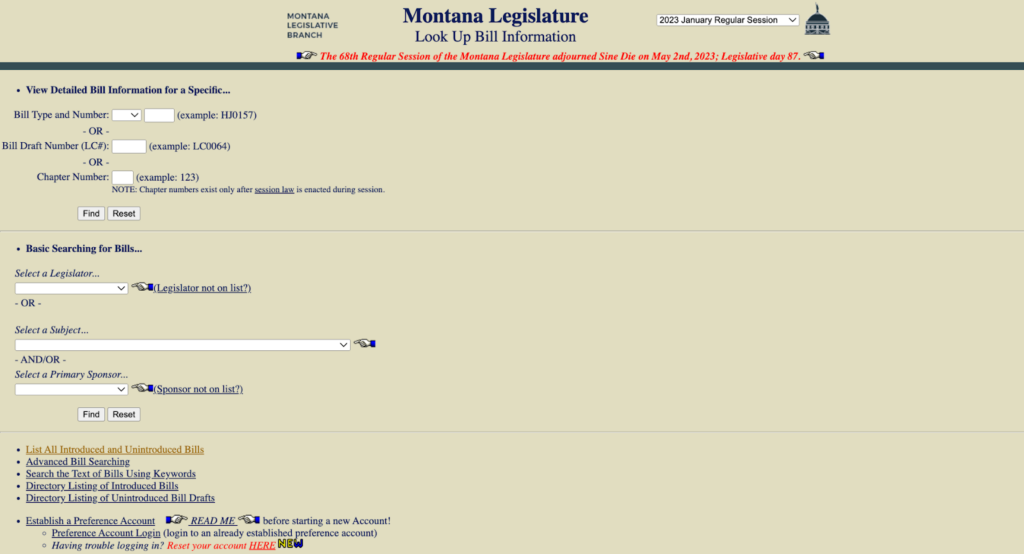
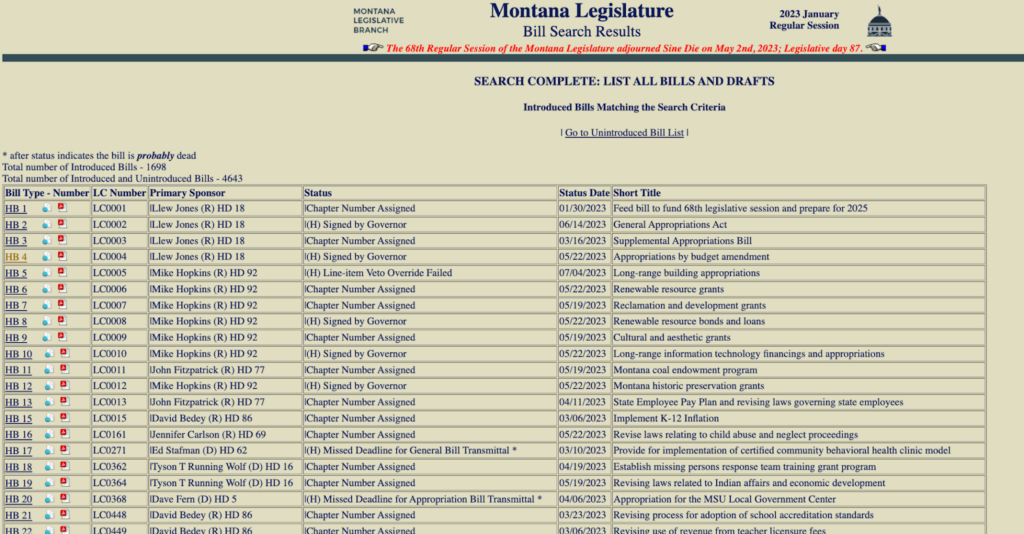
    For instance, let’s take a look at the Montana Legislature’s website.

    Navigating to the Montana Legislature’s website, you expect a clear pathway to finding the state’s laws and legislative information. However, the experience quickly becomes a challenge. Upon entering the site, you’re faced with a complex navigation system, where information seems hidden within a maze of links and tabs. 

    Attempting to use the search function leads to further confusion, as it doesn’t guide you to the specific information you’re looking for. Switching to a different device only exacerbates the problem, as the outdated design of the website does not adapt well to varying screen sizes. 

    The Montana Legislature’s website, with its intricate layout, archaic design, inefficient search functionality, and slow responsiveness, turns the essential task of understanding state laws into a taxing experience.

    Plural: The Better Policy Tracking Tool

    For public policy professionals, researchers, advocates and lobbyists, navigating through clunky state legislative websites slows down their work. There is often no way to track legislation, meaning that it’s confusing to understand where a bill is in the legislative process and leading policy pros to miss crucial updates. Further, legislation appears as PDFs, making it difficult to process complex bill text. And on top of that, each state’s website is distinct, and equally hard to navigate. Policy pros that work across states will have to replicate this tedious process for each respective state legislative website.

    Using a policy tracking tool like Plural will streamline your public policy work and enhance your effectiveness. 

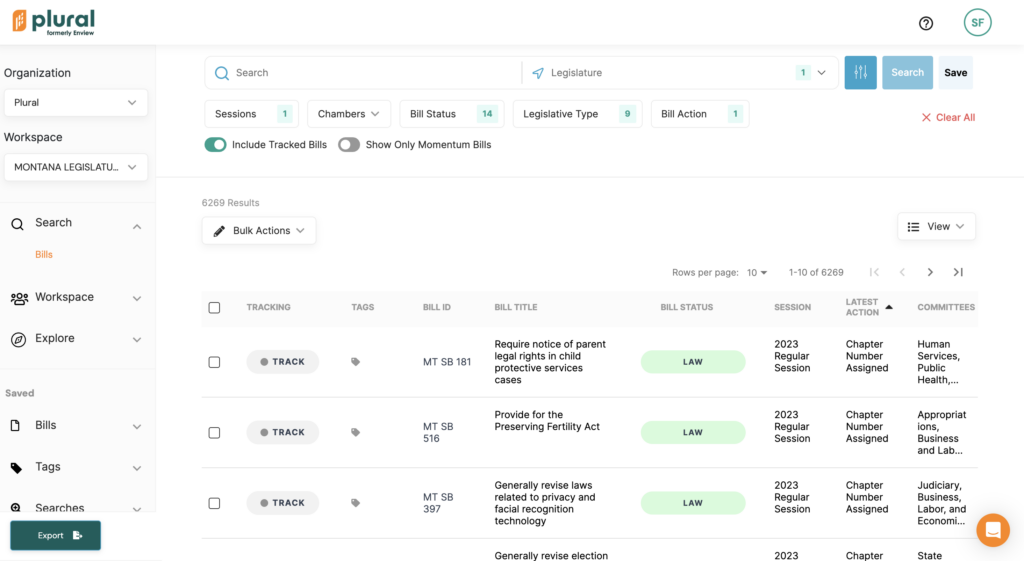
    • Plural is easy to use, with a simple and unified interface so all legislation looks the same, regardless of the state it originated from.
    • On Plural, bill text is digital, rather than a PDF – digital text makes it easy to work with the text, meaning that copying text or commenting on a bill is seamless rather than tedious. 
    • With Plural, it’s easier than ever to organize complicated public policy work. Bills can be organized or tagged, and users can track bills and receive notifications as bills continue through the legislative process.
    • Plural works just as well when viewed on different devices or screen sizes, making it the best legislative tracking tool for busy teams on the go.

    Get Started with Plural

    Want to experience the difference yourself? Get started with the best policy tracking tool today.

  • The Power of Policy Tracking Tools to Enhance Chamber of Commerce Advocacy Efforts

    The Power of Policy Tracking Tools to Enhance Chamber of Commerce Advocacy Efforts

    Chambers of commerce play a pivotal role in driving economic growth and addressing the concerns of their members. To achieve these goals, chambers engage in advocacy efforts. For chambers of commerce, advocacy goes beyond traditional business promotion. It involves active participation in the legislative process, to shape laws that impact their community.

    Tracking public policy is key to a chamber’s effectiveness. By doing so, chambers can align their efforts with the needs and aspirations of their members. Tracking policy not only supports economic growth. It also helps Chambers foster an environment conducive to business expansion and innovation.

    Policy tracking tools like Plural have revolutionized the way that chambers of commerce engage in advocacy. Plural is a comprehensive solution for monitoring legislative activities. We’re proud to help chambers to stay up-to-date on the policy changes that affect their constituents.

    “With the bill tracking tools we used before, analyzing proposed legislative bills and its changes also meant going through several screens. With this platform, it is much easier to identify the rationale for proposed legislation, and how changes could impact our legislative priority areas.” – Kwee Lan Teo, Austin Chamber of Commerce

    Developing Policy Intelligence

    Plural enhances chamber of commerce advocacy efforts and improves influence on policy outcomes. Plural makes it easier than ever to:

    • Identify key legislative trends
    • Anticipate potential challenges
    • Devise informed strategies to advocate for favorable policies

    With data-driven insights, chambers increase their chances of swaying policy in their favor.

    Collaborating Effectively

    Policy tracking tools enhance collaboration within chambers and among members. Real-time updates and alerts allow for better communication and coordination. Plural helps chambers ensure that their community remains engaged and aligned on critical issues. Strong collaboration allows chambers to be more impactful in advocating for beneficial policies.

    Plural and the St. Paul Area Chamber of Commerce

    Plural is proud to partner with the St. Paul Area Chamber of Commerce. The St. Paul Area Chamber harnesses Plural’s best-in-class data to enhance their advocacy efforts. Between January and March of 2023, the St. Paul Area Chamber viewed more than 1,300 bills in 176 searches. The Chamber tracked 194 bills and created 22 tags to organize their work.

    “Using a platform like Plural to track legislation saves my team a lot of time in keeping up to date with what is moving at the Capitol. The ability to set up multiple searches and email alerts is a real game changer. We no longer have to go through daily bill introductions and scour committee agendas to see if anything impactful is moving forward; we’re automatically notified! Plural captures everything, so it’s good to know nothing is slipping through the cracks and we can focus on our actual advocacy efforts!” – Amanda Duerr, St. Paul Area Chamber of Commerce

    Policy tracking tools have transformed chamber of commerce advocacy methods. Plural empowers chambers to be at the forefront of legislative developments, become more efficient, and support their members. With Plural, fostering economic growth, addressing member concerns, and influencing policy outcomes is easier than ever.

  • What You Need To Know About the Judicial Branch

    What You Need To Know About the Judicial Branch

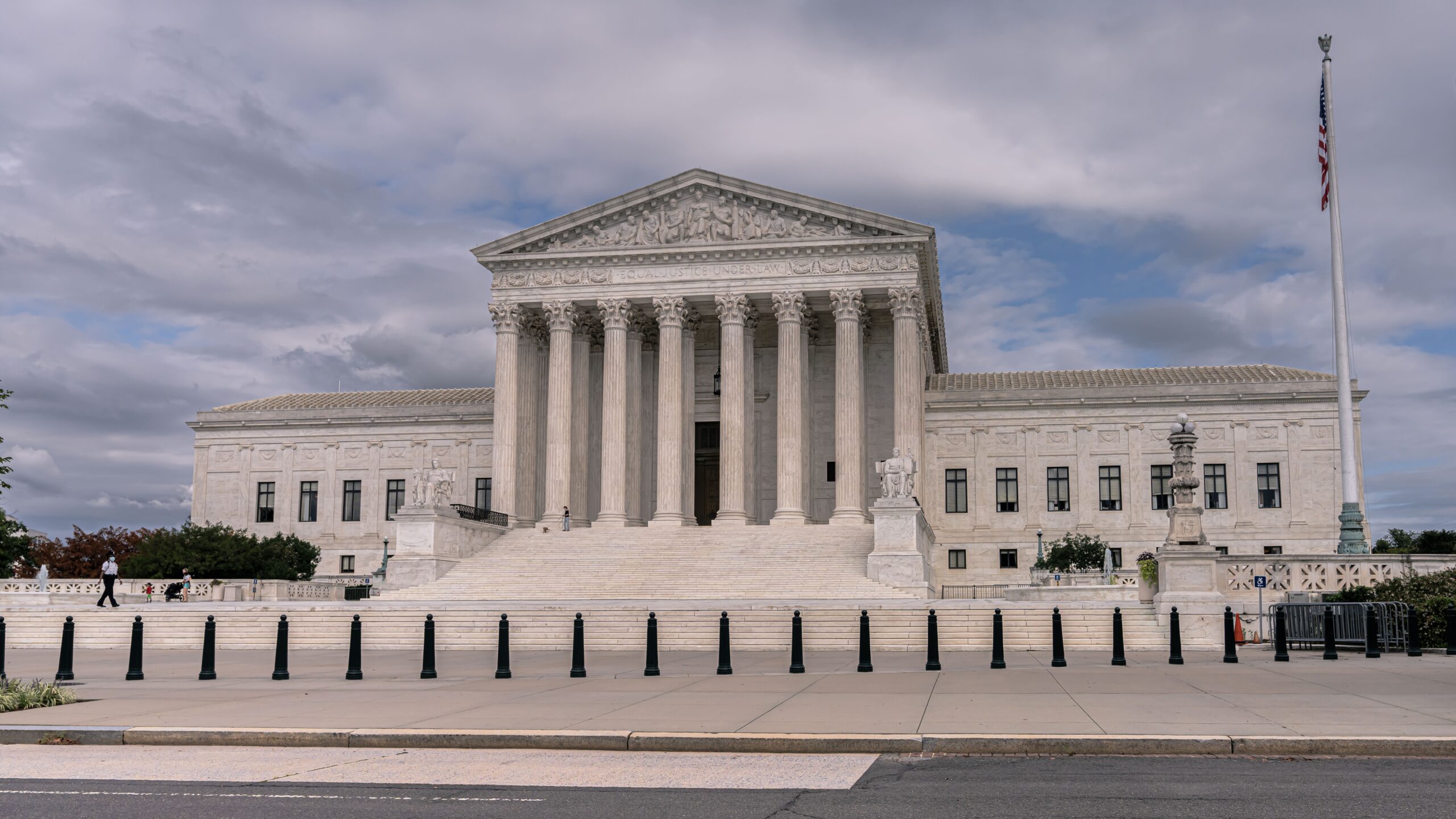
    Understanding the judicial branch is key to understanding how our government implements laws and policies. The Judicial branch is nationwide, and includes:

    • The United States Supreme Court
    • Federal District Courts
    • Appellate Courts
    • Circuit Courts
    • Courts of Appeals
    • Trial Courts
    • State Supreme Courts

    The History of the Judicial Branch

    The Judiciary Act of 1789, passed by the first US Congress, established the judicial branch. This Act created the Supreme Court as well as the national system of district and circuit courts. The first Supreme Court, led by Chief Justice John Marshall, shaped the power of the judicial branch with the Marbury v. Madison decision of 1803. 

    Marbury v. Madison established judicial review. Judicial review is the power of the courts to determine the constitutionality of laws or government actions. It allows courts to review whether a law or government action is in line with the Constitution.

    If the court finds that a law or action violates the Constitution, it can declare it unconstitutional, thus invalidating it. Many lower district and appellate courts operate according to this interpretation of judicial review.

    The Structure of the Federal Judicial Branch

    The federal judicial branch consists of three main entities: the US Supreme Court, 13 Courts of Appeals and 94 Federal District Courts.

    District courts are the trial courts of the federal judiciary. They handle both civil and criminal cases and are where most federal cases will begin. District judges are appointed for life by the President, with confirmation by the Senate.

    Following the decision of a Federal District Court, each party to the lawsuit may appeal the decision. To appeal means to request a higher court, in this instance the Court of Appeals, to review and potentially overturn a decision made by a lower court.

    Parties may attempt the appeal process one more time to the United States Supreme Court. To do so, the party must file a petition for a “Writ of Certiorari.” The Supreme Court makes the final decision whether to review a case once again or deny the petition. If a petition is granted, the case is heard before the Supreme Court. If the petition is denied, the decision from the Court of Appeals stands as the final decision.

    The Supreme Court

    The United States Supreme Court consists of a Chief Justice and eight Associate Justices. The Chief Justice is appointed by the President and confirmed by the Senate. There is no requirement that the Chief Justice first serves as an Associate Justice. Current Chief Justice John Roberts Jr. was appointed to the Supreme Court Bench as Chief Justice in September of 2005.

    There are five main points that are important to know about the Supreme Court of the United States:

    • The Supreme Court is the highest court in the land
    • There are nine Justices on the Supreme Court, who serve lifetime appointments
    • Their main responsibility is to interpret the Constitution of the United States
    • They take on a limited number of cases every year, focusing on topics that are relevant to the entire nation
    • They publish highly regarded written opinions explaining their decisions, often used to determine future cases

    The Power of the Judicial Branch

    The Judicial Branch holds several important powers, including:

    • Interpreting the Constitution: The courts are responsible for determining the meaning and application of the Constitution. This is especially true for the Supreme Court. Through their interpretations, courts establish legal precedents. Precedents guide future court decisions by determining the constitutionality of laws and policies. They also shape the development of constitutional law.
    • Judicial Review: If a court determines that a law or action conflicts with the Constitution, it can declare it unconstitutional. This decision then becomes precedent. Precedents provide consistency and predictability in the legal system. They ensure that comparable cases are treated similarly, and that the law is applied consistently over time. However, precedents are never set in stone.
    • Resolving Legal Disputes: The courts interpret and apply the law to determine the rights and responsibilities of the parties involved. This is done, ideally, through fair and impartial proceedings.
    • Enforcing the Rule of Law: The courts ensure that laws are applied in a fair and consistent manner. By doing so, they hold individuals and entities accountable for their actions and help maintain order in society.

    Checks and Balances

    Checks and balances exist between the three branches of the United States government. While the judicial system holds many responsibilities and powers, it also has limitations. These limitations include a reliance on the legislative and executive branches for enforcement. Essential checks and balances include congressional oversight, impeachment and removal processes. Additionally, the courts are held to public opinion.

    Through judicial independence, the judiciary acts as an independent branch of government. Judicial independence ensures that judges make fair decisions without political pressure or interference.

    Congressional oversight ensures that the judiciary adheres to ethical standards and acts within its constitutional authority. Should the courts and justices not meet these standards, justices can be removed from office.

    While judges are not elected officials and refrain from politics, they are still held to public opinion. Should the courts routinely go against the will of the people, they may undermine public approval and trust in the justice system as a whole. Without respect for the courts and their ability to impartially review the law, their decisions lose power.