
Author: Yemi Adewunmi

  • Plural for Cable Companies

    Plural for Cable Companies

    Cable companies operate within a dynamic and highly regulated landscape. Over the decades, they’ve navigated a complex maze of policy and regulatory frameworks. The policy and regulatory environment in which cable companies operate is shaped by waves of deregulation and re-regulation. As digital technology continues to evolve, cable companies face a myriad of challenges. In order to remain competitive and compliant, public policy teams must develop not just strategic awareness, but also agile responses to key developments.

    In this blog, we’ll discuss the various areas of legislation that impact cable companies. We’ll also discuss how Plural helps cable companies maximize their policy impact.

    Policy Issues Faced By Cable Companies

    Various areas of legislation impact cable companies. This includes broadband infrastructure, taxation, and antitrust regulation, among others. Learn more below.

    Broadband Infrastructure

    Today, broadband infrastructure is more than just a utility. Broadband is a critical component of economic and social infrastructure. Cable companies play a pivotal role in expanding broadband access. They’re tasked with overcoming significant hurdles, such as:

    • Securing rights-of-way
    • Adhering to diverse state and federal guidelines
    • Managing high costs associated with deployment technologies

    Legislative changes in this area are frequent. Policy developments can dramatically shift operational strategies and financial planning. This continuous evolution requires a proactive approach to policy monitoring and advocacy to ensure favorable conditions for expansion and operation.

    Taxation

    Cable companies face a challenging fiscal environment as they navigate through an ever-changing landscape of taxes. Each jurisdiction operates under a web of local, state, and federal laws. This legislative patchwork means that jurisdictions have dramatically different tax obligations. Competing laws often aim to either incentivize technological investments or generate revenue from these profitable enterprises.

    Staying up-to-date on these changes is critical for maintaining compliance and competitiveness. The complexity of tax regulations requires detailed analysis and strategic planning to optimize tax obligations and leverage any available incentives.

    Consumer Protections

    The emphasis on consumer rights in the telecommunications sector has never been higher. New regulations often emerge, aiming to protect consumers from unfair practices. Some require clearer billing practices and explicit consent for service changes. Others impose strict penalties for non-compliance. For cable companies, this requires constant shifts in order to align with new laws. Cable companies must update their policies and customer service practices to remain compliant. Staying ahead of these changes is crucial to maintain customer trust and avoid legal pitfalls.

    Advertising Regulations

    Cable companies must navigate a stringent regulatory environment regarding their marketing practices. Advertising regulations aim to prevent misleading advertising, ensuring that consumers receive honest and clear information. When crafting their marketing campaigns, cable companies must balance creativity and compliance. Doing so often requires legal consultations to prevent infractions. Marketing strategies must be adaptable and regularly reviewed to ensure ongoing compliance.

    Antitrust Regulation

    The cable industry is prone to consolidation. As such, antitrust scrutiny is a constant concern. Cable companies must carefully manage their growth strategies to ensure they don’t inadvertently stifle competition or harm consumer interests. This involves meticulous planning and frequent compliance audits to ensure alignment with antitrust laws. The potential for regulatory action requires cable companies to be vigilant and responsive.

    Plural’s Strategic Advantage

    Given these challenges, Plural provides an invaluable service to cable companies. Top cable companies trust Plural for their legislative tracking and stakeholder engagement needs. Plural simplifies the complex policy environment and provides actionable insights that drive strategic decision-making. Learn more about how Plural meets the challenge below.

    Best-in-Class Data

    Plural’s comprehensive database offers up-to-date legislative information across various jurisdictions. This allows for quick access to relevant data, enabling swift responses to relevant changes. The depth and breadth of Plural’s data is unmatched, providing a panoramic view of the legislative landscape. This includes:

    • Tools to discover everything there is to know about a bill
    • Legislator and staffer information
    • Historical data
    • AI-powered insights
    • And more!

    With Plural, cable companies turn potential policy threats into manageable challenges.
    Advanced Search Tools

    Plural’s advanced search capabilities are unmatched. With Plural, it’s easy to filter through the noise to find relevant data. Users can efficiently sift through vast amounts of legislative data to find the specific information that impacts their business areas. Search by keyword, legislature, session, bill status, and more. This saves valuable time and resources, making policy analysis more efficient. Plural helps cable companies uncover the bills that affect their bottom line.

    Real-Time Updates

    The legislative environment is incredibly dynamic, with new proposals and regulations emerging rapidly. Plural helps real estate companies discover key information immediately. With real-time notifications, Plural users never miss an update. This immediacy transforms cable companies’ ability to stay ahead and develop actionable strategies.

    Global Bill Search

    Thousands of bills are introduced in each jurisdiction throughout each legislative session. As cable companies expand, tracking legislation in multiple jurisdictions becomes a daunting task. The ability to quickly and efficiently find the bills that matter is the key to staying ahead. Plural’s Global Bill Search simplifies this task. Plural users unlock a sophisticated search engine designed to streamline the legislative discovery process and bring relevant bills to the forefront. This means that cable companies can monitor national policy developments from a single platform. Global Bill Search helps cable companies companies ensure compliance and streamline strategic planning.

    Momentum Indicator

    Understanding the potential trajectory of legislation is crucial for cable companies. These insights help ensure compliance and guide strategic planning and advocacy. Yet, without the right tools, policy teams must rely on manual tracking and intuition. This often leads to missed opportunities and misallocated resources.

    Plural’s Momentum Indicator offers cable companies a novel way to assess a bill’s traction and potential for progress. The Momentum Indicator uses AI to forecast the likelihood of a bill’s advancement or failure.

    With Plural, discovering which bills are likely to become law is quick and simple. This predictive capability is vital for effective resource allocation. Further, these insights help cable companies prepare for possible outcomes and strategize accordingly.

    Why Plural Is Indispensable for Cable Companies

    Cable companies face complex interplay of jurisdictional dynamics, regulatory updates, and legislative challenges. In this context, Plural is a powerful ally. Plural offers a robust solution that enables cable companies to stay informed and compliant. With Plural, cable companies not only react to changes, but also proactively shape the regulatory environment.

    Are you ready to streamline your legislative tracking and stakeholder management? Sign up for a demo with Plural today and take control of your policy environment.


    More Resources for Public Policy Teams

  • The State of Abortion Policy in 2024

    The State of Abortion Policy in 2024

    Abortion is one of the most contentious and polarizing issues in contemporary American politics. Both federal and state abortion laws have changed rapidly, some would say cataclysmically, in the past two years. In 2022, the Supreme Court reversed nearly 50 years of precedent with its decision in Dobbs v. Jackson Women’s Health Organization. The Court ended the constitutional right to abortion at the federal level. Overnight, state governments enacted severe restrictions on abortion. These restrictive policies were previously unconstitutional under Roe v. Wade. Since then, fourteen states have made abortion illegal

    Since 2022, state-level abortion policy has been extremely diverse. Stark policy differences exist between Democratic and Republican controlled states. In liberal states, legislatures have maintained or even expanded access to abortion care. Meanwhile, conservative states have imposed various restrictions, from outright bans to gestational limits. 

    The History of Abortion Policy

    Roe v. Wade protected abortion access as a constitutional right. It curtailed states’ ability to regulate or limit access to the procedure. In Roe, the justices argued that abortion was a personal, medical decision protected by the constitutional right to privacy. Any regulations on abortion access had to be justified by a compelling state interest until the fetus reached viability. After viability, states could prohibit abortion except when necessary to protect life or health

    Yet, despite the protections ensured by Roe, many state legislatures continued to pass abortion restrictions in an effort to test the decision’s boundaries in federal courts. Conservatives, particularly the Christian Right, remained strongly opposed to abortion and wished to see Roe overturned. With the Dobbs decision, the anti-choice lobby achieved a decades-long project. 

    The case that ended Roe originated in Mississippi. In 2018, the Mississippi legislature passed a law that effectively banned abortion after 15 weeks of gestation. The law was an intentional challenge to the Supreme Court’s precedent. Mississippi legislators knew it would result in litigation. 

    Mississippi’s sole abortion provider, the Jackson Women’s Health Organization, challenged the ban in court. This case, known as Dobbs v. Jackson Women’s Health Clinic, traveled through the lower and appellate court system before reaching the Supreme Court in 2022. There, the Justices voted 5-4 in favor of the State of Mississippi. The decision allowed the 15-week ban to take effect, reversing the Roe decision.  

    The Court’s decision in Dobbs is all but unprecedented. It’s arguably the first time in U.S. history that the Court reversed a previously guaranteed constitutional right. As such, it raised the possibility of other contested or controversial Supreme Court decisions being overturned. Many Americans share concerns that precedent protecting other reproductive rights, including contraception, could be next.

    Current Abortion Laws in the United States

    Dobbs was a major turning point in American history. As mentioned, it has unleashed a flurry of abortion policy changes at the state level. A few states have enacted new policies protecting abortion access and reproductive rights. However, most policy change has occurred in conservative states to restrict abortion access. Overall, abortion access has been severely curtailed.

    Protecting Abortion Access at the State Level 

    Since Dobbs, there have been several state-level policy victories for abortion rights advocates. First, in a 2022 special election, Kansas voters rejected a ballot measure that would have paved the way for a total abortion ban. Over 59% of voters voted against the measure. The initiative drove increased turnout in an off-cycle election in a right-leaning state.  

    Backlash continued in the 2022 midterm elections. Across party lines, Americans voted in favor of abortion rights in statewide ballot measures. Voters in California, Michigan, and Vermont supported measures that explicitly preserved abortion access. In conservative Kentucky, voters rejected a constitutional amendment that would remove abortion protections from the state constitution. Ohio voters followed suit in 2023, approving a ballot measure that explicitly protected reproductive rights.

    Overall, a trend is clear. Not one state has passed an abortion restriction via ballot measure since Dobbs. Most Americans are in favor of abortion access, even in conservative-leaning states.

    Total Abortion Bans 

    Since the Dobbs decision, fourteen states have enacted total abortion bans. These laws offer no exceptions, or incredibly narrow exceptions, in the case of rape, incest, extreme fetal abnormalities, and so on. Many of these states have also enacted criminal penalties for women that seek abortions, or for doctors that perform them. 

    Three states have passed a six-week gestational limit on abortion. In practice, six-week abortion bans function as total bans, because so few women even know that they are pregnant at the six-week mark. 

    In states with total abortion bans, pregnancy is increasingly dangerous. Women seeking reproductive healthcare for medical emergencies, including ectopic pregnancy or miscarriage, are being denied care. Healthcare providers fear facing criminal penalties for defying abortion bans.

    Limiting, But Not Banning, Abortions 

    While most states have passed measures that are explicitly in favor of or against reproductive rights, few currently operate in the gray area between legality and illegality. Arizona and Utah have passed “moderate” gestational limits since Dobbs. Those seeking or needing abortions in these states are subject to fifteen and eighteen week bans, respectively. While these measures are less restrictive than outright or six-week bans, advocacy groups such as Planned Parenthood still claim that these limits are needlessly burdensome and restrictive.

    The Controversy Over Abortion Policy & Its Impact on Elections

    Since Roe v. Wade was overturned, political controversy over abortion policy has escalated. Abortion access has driven polarization and drastically influenced voter behavior. Elections have become referendums on the future of abortion policy in America. The issue has profoundly impacted campaigns and elections across all levels of government. With abortion rights no longer federally protected, the issue has become a focal point in state and local campaigns.

    Generally speaking, conservatives prioritize abortion opposition. They’ve made a “pro-life” position and identity a litmus test for candidates seeking party support. This has resulted in the rise of anti-abortion politicians. Restrictive abortion measures have become intrinsically integrated into Republican Party platforms. Conversely, liberals view reproductive rights as fundamental to gender equality and bodily autonomy. Democrats have campaigned on restoring abortion access in recent elections. 

    Over the past two years, candidates have made reproductive rights a central campaign issue. On the whole, pro-choice candidates are winning those races. Despite heightened polarization, a majority of Americans support abortion access and oppose the Dobbs decision. Many Republicans, particularly those in toss-up states, have subsequently de-emphasized abortion rights as a campaign issue. With Roe gone, abortion is largely losing issue for Republicans. Conservatives must move towards the middle or risk alienating moderate voters and women.  

    Get Started With Plural

    Top public policy teams trust Plural to track abortion policy in the United States. Get started with Plural today to:

    • Access superior public policy data 
    • Be the first to know about new bills and changes in bill status
    • Streamline your day with seamless organization features
    • Harness the power of time-saving AI tools to gain insights into individual bills and the entire legislative landscape
    • Keep everyone on the same page with internal collaboration and external reporting all in one place
  • Webinar: 2024 Legislative Sessions Wins

    Webinar: 2024 Legislative Sessions Wins

    What did top public policy and advocacy teams achieve during the 2024 legislative sessions? On June 20, 2024, Plural brought together policy leaders from across the country to share their experiences, victories, and strategies at the state, multi-state, and federal levels.

    Meet the Speakers

    We’re thrilled to feature several of our outstanding clients who have made significant strides in their respective jurisdictions and policy areas, achieving major wins in their policy objectives, bipartisan collaboration, and strategic approaches. In particular, attendees will have the opportunity to learn about the following organizations:

    Orlando Jones
    Chief of Staff & Director of Government Relations
    Secure Elections Project

    Orlando Jones, Jr. has over a decade of experience in various advocacy arenas. He is a former children’s health lobbyist, U.S. Congressional House and committee staffer, and has held positions on successive presidential campaigns as a GOTV campus organizer and a regional office manager. Orlando is currently the Chief of Staff and Director of Government Relations at the Secure Elections Project. The Secure Elections Project is dedicated to preserving and protecting the sanctity of American elections. Orlando and his team advocate for common sense, nonpartisan election security reforms that prevent hacking and fraud without restricting eligible citizens from accessing the polls. On Thursday, Orlando will provide an overview of its national scope and bipartisan approach to election reform. Participants will learn about the ongoing challenges and the critical importance of maintaining secure and fair elections in today’s political climate.

    Stephannie Lewis
    Assistant Vice President for Advocacy & Community Impact
    Greater Twin Cities United Way

    Prior to joining Greater Twin Cities United Way, Stephannie Lewis served as the director of strategic partnerships for Social Impact Strategies Group and was a visiting assistant professor at Macalester College teaching Black entrepreneurship. Stephannie currently serves as the Assistant Vice President for Community Impact at Greater Twin Cities United Way. She drives the development and effective implementation of operations strategy, team performance and project management initiatives for the community impact team. By thoughtfully and intentionally investing in solutions that address household stability, educational success, and economic opportunity Greater Twin Cities United Way makes a lasting and transformative impact throughout the Greater Twin Cities. On Thursday, Stephannie will showcase the organization’s impressive policy agenda, highlighting achievements in their impact areas of housing stability, educational success, and economic opportunity this year. Participants will discover how Greater Twin Cities United Way’s strategic initiatives have made a lasting impact on individuals and families.

    Jesús Rubio
    Government Affairs Manager
    Georgia Conservation Voters

    Jesús Rubio began his political involvement as a student organizer, serving as President of Young Democrats at Kennesaw State University. He then served as a campaign staffer in two separate political campaigns for the Biden-Harris Coordinated Campaign and worked as a political consultant for Providence, Rhode Island Mayor Jorge Elorza. Most recently, he served as the Georgia State Director for Mi Familia Vota and Mi Familia Vota Education Fund, where he led the state operations and advocated for Latino communities. Jesús currently serves as Government Affairs Manager at Georgia Conservation Voters, where he and his team advocate for environmental protection, organize communities, and engage in the democratic process. Georgia Conservation Voters is a non-profit organization dedicated to advocating for policies and practices that protect and preserve Georgia’s environment. Committed to engaging and mobilizing citizens, GCV works to ensure a sustainable and healthy future for all residents of the state. GCV recently launched its “100%” campaign, to engage community members and law makers alike on pro-environment legislation year round in Georgia. On Thursday, Jesús will provide an overview of the campaign and GCV’s work in 2024.

  • Navigating Committee Dynamics With Plural

    Navigating Committee Dynamics With Plural

    Understanding committee structures and roles is fundamental in government relations. Committees are where the details of legislation are debated and shaped. Knowing who’s who and what’s what in these committees can significantly enhance your advocacy efforts.

    Plural offers comprehensive data, including legislative committee data. Plural users seamlessly unlock all there is to know about committees, including members, staffers, hearing dates, and more.

    Let’s dive into how Plural can help you access this crucial information.

    Get Started With Plural’s Legislative Committee Data

    Top public policy teams trust Plural to help them get and stay ahead in the legislative landscape. With Plural, you’ll:

    • Access superior public policy data, including legislative committee data
    • Be the first to know about new bills and changes in bill status
    • Streamline your day with seamless organization features
    • Harness the power of time-saving AI tools to gain insights into individual bills and the entire legislative landscape
    • Keep everyone on the same page with internal collaboration and external reporting all in one place

    Create a free account or book a demo today!

    More Resources for Public Policy Teams

  • Communicating in a Crisis: Understanding Crisis Management Tools

    Communicating in a Crisis: Understanding Crisis Management Tools

    There’s an old saying about crisis communications: “A crisis never happens between nine and 5 on a weekday.” Crisis and reputational issues by their nature are unpredictable. With the advent of social media, a seemingly small issue can quickly spiral into an emergency. Effective crisis management requires careful coordination, meticulous monitoring and a swift response.

    Communicating in a crisis may be one of the most difficult communications tactics. Any and all communications are highly scrutinized. Any misstep in a response to employees or the public can create more challenges or crisis issues. Companies and those responding to a crisis in real-time must have the right crisis management tool and planning in place.

    What Is Crisis Management?

    Crisis management and crisis communications cover a wide umbrella of reputation issues that can happen to a company, business or individual. Nearly all crisis issues have a negative impact on the business or person they are targeting. Many traditional crises include:

    • A political scandal
    • Negative media coverage stemming from an investigative news story
    • Class action lawsuit or legal action for alleged wrongdoing
    • A viral social media or internet post

    For many, the risk around reputation issues depends on their industry and focus. Publicly traded companies could lose stock value or senior leaders could be fired. Congress could call hearings to demand CEOs or whistleblowers testify about reputational challenges. Political crises could mean the end of a political career, or investigation by law enforcement or government ethics committee. For those in healthcare, a cybersecurity breach could result in HIPPA violations, fines, investigations and a lack of public trust.

    Crisis management determines how a business or person responds to a perceived threat. These plans can include everything from a simple statement on social media to building a crisis response team and monitoring a possible threat to the company or customer.

    Crisis Communications Case Studies

    There are many examples of crisis communications case studies that received public attention. Of course, the outcomes of these incidents vary widely. Learn more about successful crisis communications below.

    Johnson & Johnson Tylenol Recall

    In 1982, seven people died after taking Tylenol capsules laced with cyanide. Johnson & Johnson immediately recalled 31 million bottles of Tylenol, established a toll-free consumer hotline, and worked closely with the media to provide transparent information. The company’s quick and transparent actions were a positive example of rebuilding public trust.

    Airbnb’s Response to a Host’s Ransacked Home

    In 2011, an Airbnb host’s home was vandalized and burglarized by a guest. Initially, Airbnb faced criticism for their slow response. However, they then revamped their policies, offering a $50,000 guarantee for damages and improving their customer service. These measures helped reassure users and improve Airbnb’s reputation of safety and customer care.

    Starbucks’ Response to Racial Bias Incident

    In 2018, two African American men were arrested at a Philadelphia Starbucks while waiting for a friend, sparking accusations of racial bias. Starbucks closed 8,000 stores for racial bias training, apologized to the men, and engaged in a public discussion about the issue. While the incident was damaging, Starbucks’ proactive and sincere response was seen as a positive step towards addressing systemic issues. 

    There are also a few high profile examples of companies failing at their crisis communications response.

    BP Oil Spill

    The Deepwater Horizon oil rig explosion led to a massive oil spill in the Gulf of Mexico in 2010. BP’s response was seen as slow and inadequate. CEO Tony Hayward made several controversial statements, such as “I’d like my life back,” which were perceived as insensitive. The poor handling of the crisis resulted in significant reputational damage and financial loss for BP.

    United Airlines Passenger Dragging Incident

    In 2017, a passenger was forcibly removed from an overbooked United Airlines flight. Several viral videos showed the passenger being dragged off the plane. Initally, United blamed the passenger and evaded responsibility, leading to widespread public outrage. United faced severe backlash, a drop in stock prices, and long-term reputational damage.

    Pepsi’s Kendall Jenner Ad

    A Pepsi commercial featuring Kendall Jenner was accused of trivializing social justice movements. It was widely criticized for being tone-deaf in 2017. Pepsi quickly pulled the ad and issued an apology. However, the initial release showed a lack of awareness and sensitivity to current social issues. The incident highlighted the importance of understanding social context, and Pepsi faced significant criticism for the misstep. 

    Why Have a Crisis Management Tool?

    Crisis management tools are crucial to effectively handle unforeseen emergencies. These tools enable real-time monitoring of public sentiment and media coverage. They allow organizations to respond to emerging issues and maintain control over the narrative. Crisis management tools also facilitate comprehensive planning and preparedness, helping organizations identify vulnerabilities and develop robust response strategies. Overall, crisis management tools minimize disruption to operations and maintain organizational stability.

    There are many types of crisis management tools, each with a specified use case. These include:

    Data analytics tools provide valuable insights into key data points. They enable informed decision-making and strategic adjustments in response to evolving situations.

    Collaboration and documentation tools enhance team coordination. They ensure that all members are aligned and working towards common goals.

    Training and simulation tools prepare employees for real-life scenarios. These tools boost confidence and effectiveness in crisis response.

    Legal and compliance tools help manage regulatory risks. They help ensure that the organization’s actions comply with relevant laws and standards.

    Crisis management tools ensures that organizations can respond quickly, transparently, and effectively. Effective crisis response helps organizations safeguard their reputation, maintain stakeholder trust, and ensure business continuity amidst challenging circumstances.

    Key Considerations in Your Crisis Management Tool

    Crisis management tools and plans should have one goal: helping a company or individual effectively manage a crisis. There are several factors to consider when selecting a crisis management tool. This includes:

    Ease of Use

    Teams should be able to use and engage the crisis management tool in real time. Access to or management of the tool should sit across more than one department to ensure adequate coverage or access.

    Clear Decisionmakers

    When managing a crisis, speed will be key. Any crisis management tool should have a clear decisionmaker who has the final say.

    Measurement

    Any crisis management tool should have a form of measurement to analyze the crisis response. Without any measurement, it’s difficult to analyze whether a response has it’s intended effect on key audiences.

    Streamlined Communications

    Pushing out or compiling communications should be streamlined in a crisis management tool. Since multiple audiences will need to be contacted at once, it’s important to consider a tool that can help compile these communications.

    Other key considerations include:

    • Transparency: Openly sharing information and being honest about the situation.
    • Speed: Responding quickly to manage the narrative and control misinformation.
    • Responsibility: Taking accountability and showing empathy towards those affected.
    • Consistency: Providing clear and consistent messages across all communication channels.
    • Preparedness: Having a crisis communication plan in place before a crisis occurs.

    Types of Crisis Management Tools

    Crisis management tools are essential to effectively navigate emergencies and mitigate their impact. These tools can be broadly categorized into a few subgroups, including:

    • Monitoring
    • Communication
    • Planning
    • Incident management
    • Data analytics
    • Collaboration
    • Training
    • Legal compliance

    Monitoring tools track public sentiment and media coverage. Examples of monitoring communities include Hootsuite for social media and Meltwater for media.

    Communication tools ensure timely and accurate dissemination of information. Examples include Slack for internal communications and Everbridge for mass notifications.

    Planning and preparedness tools help organizations identify potential risks and develop response strategies. Examples of such tools include Resolver for risk assessment and Noggin for crisis management planning.

    Next, incident management platforms include tools like JIRA Service Management. These platforms facilitate the coordination of response efforts.

    Data analytics tools like Tableau visualize trends to inform decisionmaking.

    Collaboration and documentation tools enhance team coordination. Examples include SharePoint for document management and Trello for task management.

    Training tools include CrisisSim for simulations and Coursera for e-learning. These tools prepare employees for real-life scenarios.

    Lastly, legal compliance tools ensure regulatory adherence and manage legal risks. An example of such a tool is NAVEX Global.

    By integrating these tools, organizations can better prepare for, respond to, and recover from crises. Crisis management tools aid in maintaining stakeholder trust and ensuring business continuity.

    Plural for Crisis Management

    Policy tracking during a crisis may be important for companies monitoring a big impact. Lawmakers may read about negative media coverage or hear about a company crisis from the public. They might introduce legislation, hold a hearing or call senior leaders to come testify about the challenges. Staying up-to-date and learning about updates in real-time is key.

    Top organizations trust Plural as a key component of their crisis management efforts. With Plural, you’ll:

    • Access superior public policy data 
    • Be the first to know about new bills and changes in bill status
    • Streamline your day with seamless organization features
    • Harness the power of time-saving AI tools to gain insights into individual bills and the entire legislative landscape
    • Keep everyone on the same page with internal collaboration and external reporting all in one place
  • The Historical Expansion of Voting Rights in the United States

    The Historical Expansion of Voting Rights in the United States

    The Declaration of Independence famously reads, “all men are created equal,” but all were not granted equal voting rights when the United States began. Many men could not vote for the leaders of their new nation. Women could not vote at all for some time after those words were written in 1776.

    As the country grew, so did its voting rights, moving closer to the ideals of the Declaration. Today nearly all adult U.S. citizens have a legal right to vote. Read on to learn more about the expansion of voting rights throughout the country’s history.

    The Evolution of Voting Rights in the US

    Voting rights in the United States have evolved over time with the passage of new election laws and Constitutional amendments.

    Voting Rights in the 1700s and 1800s

    In the late 1700s, most states restricted voting rights to white male property owners older than 21. They began to remove the property ownership requirement in the early 1800s, and by the 1820s, it was no longer common.

    The next major change to voting rights came at the end of the Civil War. In 1865, the 13th Amendment to the U.S. Constitution ended slavery nationwide. The 14th Amendment then granted citizenship and equal protection under the law to “all persons born or naturalized in the United States,” including former slaves.

    In 1870, the 15th Amendment extended voting rights to Black men. They would face a long struggle before they could exercise it freely.

    In the meantime, women were beginning their own fight for the right to vote. Wyoming was the first to grant it to women in 1869. One by one, more states allowed women to vote, but most still banned it during the 19th century.

    Voting Rights in the 1900s

    While the expansion of voting rights had already begun, many Americans wouldn’t see true change until the 1900s.

    Women’s Suffrage Movement

    The women’s suffrage movement in the U.S. began in the mid-1800s. Supporters protested, marched, and lobbied for women’s right to vote. Women still could not vote nationwide the 19th Amendment was ratified in 1920. Even then, Black women still faced the same obstacles to voting as Black men did.

    Civil Rights Movement

    While Black men were granted the right to vote by law in 1870, most still could not vote well into the 20th century. Many states, especially in the South, quickly put up barriers to voting that targeted Black citizens. Poll taxes required payment to vote, and Black voters were less likely than white voters to be able to pay them. Literacy tests also disadvantaged Black citizens, whose educational opportunities were limited. The requirements were often waived for white voters. Some states enacted “grandfather clauses,” which exempted people from these laws if they or their ancestors could vote before 1866 or 1867.

    In the 1960s, the Civil Rights Movement challenged these and other discriminatory laws. Black Americans and their allies fought for equality through years of protests, marches, and civil disobedience. As a response, Congress passed the 24th Amendment to the Constitution, which banned poll taxes. Congress then got to work on civil rights legislation.

    In 1965, President Lyndon B. Johnson signed the Voting Rights Act, which banned literacy tests and enforced the 15th Amendment. Johnson had told Congress that these “literacy tests” sometimes required Black voters to recite the Constitution or explain complex state laws. Since its passage, several amendments to the Voting Rights Act have extended it and added protections for voters. Notably, a 1975 change required districts with a significant non-English-speaking population to provide ballots and information in the language of that population.

    Native Americans and Asian Americans

    Some Native Americans already had citizenship by 1924, but that year, the Indian Citizenship Act granted all Native Americans citizenship and the right to vote. Some states still prevented them from voting for a few decades.

    The Magnuson Act of 1943 gave Chinese immigrants the right to citizenship and, thus, the right to vote. In 1952, the McCarran-Walter Act granted these rights to all Americans of Asian descent.

    Youth Rights Movement

    Efforts to lower the minimum voting age started in the 1940s, but they didn’t gain momentum until the 1960s. The military draft during the Vietnam War sparked a youth rights movement. Voters had to be 21 to vote in most states, but they could be conscripted into military service at 18. Advocates pointed out that young men were being sent to war without the ability to vote for the people who decided to wage it. In 1971, the 26th Amendment established a national voting age of 18.

    Protections For Voters With Disabilities

    The Voting Accessibility for the Elderly and Handicapped Act of 1984 set nationwide requirements for accessibility in the federal election process. It mandates that all polling places must be accessible to people with disabilities and the elderly. If no accessible location is available, voters must have an alternate means of voting on Election Day. The law also requires each state to provide ballots printed in a large font and voting aids for the deaf and hard of hearing.

    Motor Voter Act

    In 1993, Congress passed the National Voter Registration Act of 1993, also known as the “Motor Voter Act.” This law includes several provisions intended to make voter registration easier. It requires states to allow people to register to vote when they apply for or renew their driver’s license or apply for public assistance. States must also offer mail-in voter registration applications.

    Voting Rights in the 21st Century

    The 21st century began with further expansions of voting rights and improvements in the election process. Later, though, two U.S. Supreme Court rulings weakened key provisions of the Voting Rights Act.

    Convicted Felons and Prisoners

    In the first decade of the 2000s, many states began to lift restrictions on voting for convicted felons. People with felony convictions had typically been banned from voting for life. Now, most states restore voting rights after prisoner release, probation, or parole. Some set conditions on restoration, and two – Kentucky and Virginia – require felons to petition for it. Maine, Vermont, and Washington, D.C., allow prisoners to vote while they are in prison.

    Help America Vote Act of 2002

    The 2000 presidential election was especially contentious. The result came down to Florida, where George W. Bush won over Al Gore by a thin margin. State law required a recount, bringing attention to ballots that had been rejected for errors. Some counties in Florida used punch-card voting machines, which some voters had difficulty using. The machines also did not fully punch the ballot card at times, causing the counting system to reject those ballots. Gore contested the election and requested a manual recount in four counties, but the U.S. Supreme Court ruled against him.

    In response to this controversy, Congress passed the Help America Vote Act of 2002. The law required states to replace punch card or lever voting systems with newer systems. It also created the Election Assistance Commission and set minimum standards for election administration.

    Weakening of the Voting Rights Act

    In the 2013 case Shelby County v. Holder, the Supreme Court ruled that Section 4(b) of the Voting Rights Act was unconstitutional. As a result, states with a history of voting rights violations no longer had to seek federal review to make changes to their voting systems.

    In 2021, the Supreme Court weakened Section 2 with its ruling in Brnovich v. Democratic National Committee. Section 2 reads, “No voting qualification or prerequisite to voting or standard, practice, or procedure shall be imposed or applied by any State or political subdivision in a manner which results in a denial or abridgment of the right of any citizen of the United States to vote on account of race or color.” While they did not overturn it, the Court set standards that made it harder to challenge voting laws based on this section.

    Where Voting Rights Stand Now

    Current voting rights issues commonly relate to voter identification laws and other potential barriers to voting. Over the nation’s history, many states changed their systems to make it easier to vote. Absentee, mail-in, and early voting offer citizens the chance to cast ballots without having to go to a polling place on Election Day. In recent years, though, some states have restricted these methods of voting – sometimes while closing polling places.

    Several states also have passed voter ID laws in the 21st century. Supporters say requiring voters to show photo identification is necessary to prevent voter fraud. Opponents say fraud is extremely rare and that these laws make voting harder for poor people and voters of color.

    Voting rights advocates fight against restrictions that could disenfranchise protected groups. They may also fight for election reforms, including changes to voting methods, redistricting methods, the electoral college, and more.

    Register To Vote

    Now that you know more about voting rights, if you are a United States citizen, you can get ready to exercise them. (Some states allow non-citizen residents to vote in local or state elections, too.) All states except North Dakota require voters to register before casting a ballot. The registration deadline varies by state, but according to the Motor Voter Act, it must be no more than 30 days before a federal election. In some states, voters can register during early voting times or even on Election Day.

    To register to vote, enter your state or territory at vote.gov. This website will give you information about voter registration in your state, including the ways you can register and the deadline. Usually, you can register online through your state’s Board of Elections website. Other options include registering by mail or in person.

    Get Started With Plural

    As the 2024 election nears, understanding the history of voting rights as well as how to vote is especially crucial. At Plural, we’re committed to helping public policy teams, advocates, and citizens alike understand government and legislation. Create a free account today to:

    • Search legislative data from 53 US jurisdictions: 50 states, Washington, D.C., Puerto Rico, and U.S. Congress
    • See comprehensive bill details, state-specific data, and legislator information
    • Easily track bills and never miss an update
    • Receive daily updates on the bills you’re monitoring

    More Resources for Public Policy Teams

  • The Electoral College: Purpose and Process

    The Electoral College: Purpose and Process

    The Electoral College may not be a school, but learning about it will give you a useful education on United States presidential elections.

    The term “Electoral College” refers to the group of people who cast direct votes for the president and vice president of the United States. These positions are not directly chosen by citizens in a popular election. When a voter marks a ballot for a presidential candidate, they are really voting for a slate of electors who pledge to vote for that candidate. The winning slate becomes part of the Electoral College. Learn more about the Electoral College’s history, how it works, and how it affects U.S. politics below.

    History of the Electoral College

    When the Founding Fathers drafted the U.S. Constitution, some proposed that Congress elect the President. Most delegates to the Constitutional Convention eventually rejected this idea because it could violate the separation of powers between government branches. Others suggested a direct election by qualified citizens, but some delegates were concerned that citizens would be too uninformed or too likely to be swayed by populism. Delegates from slave states also objected that this would give them less influence.

    When delegates decided on Congressional representation, they came to the Three-Fifths Compromise. Three-fifths of a state’s slave population would count for the apportionment of representatives. The Founders then agreed that each state would be allocated electors based on their Congressional representation. These electors would be elected by citizens and meet to vote for the president. In the case of a tie, the House of Representatives would decide the winner, with each state contingent getting one vote.

    At first, electors cast votes for two presidential candidates. The candidate receiving the most votes became President and the runner-up became Vice President. After a contentious election in 1800, Congress proposed the 12th Amendment to the Constitution, which requires electors to cast separate presidential and vice presidential ballots.

    Many state legislatures chose electors in the first several presidential elections. By 1832, all states except South Carolina had switched to a popular election by citizens. South Carolina’s legislature continued to choose its electors until 1860.

    How Does the Electoral College Work?

    The Electoral College has the simple task of meeting and voting every four years. However, it is part of a larger, more complicated process.

    The Allocation of Electoral Votes

    Each state is allocated a number of presidential electors equal to the size of its Congressional delegation. That’s the number of members of the Senate — two for each state — and the House of Representatives combined.

    Currently, there are 538 electors in the Electoral College. This includes 535 from the 50 states and three from Washington, D.C., which does not have voting representation in Congress but is still allocated presidential electors. Presidential electors are reallocated every ten years based on the U.S. Census population counts. The total number of electors has grown over time but has not changed since 1964.

    To win the presidency, a candidate must receive an absolute majority of electoral votes, which is 270. All but two states allocate all of their electors to the statewide winner of the popular vote. Maine and Nebraska each allocate two electors this way, and they allocate the rest according to the popular vote in each Congressional district. The winner in Washington, D.C. is assigned all three of its electors.

    The Role of Presidential Electors

    Under the Constitution, electors cannot be members of Congress or hold federal office. Otherwise, elector selection is left up to the states. In most states, each political party nominates a slate of electors at its state convention. In others, each state party committee chooses its electors.

    The Constitution does not require electors to vote for the winner of their state’s popular vote, though some states do. Still, “faithless electors” who do not vote for their pledged candidate are rare. There have been only 165 faithless electors in American history, including 71 whose candidates died before the votes were cast.

    When the United States first began, electors did not pledge to vote for any candidate. The Founders intended for them to decide based on the will of the people. Over time, more electors began pledging their support for presidential candidates. This became a standard part of the process by the mid-19th century. By the 20th century, most presidential ballots featured the candidate’s name. Electors still appear on the ballot underneath their presidential candidates in a few states, but most states now only list the candidates themselves.

    Certifying the Presidential Election

    After the election results are counted, each state performs a canvass where they double-check the results. They then certify their elections, determining which electors will be part of the Electoral College.

    Each state’s members of the Electoral College meet on the first Monday after the second Wednesday in December. From their own states, they cast their electoral votes for President and Vice President. They send these votes to Congress, which meets on January 6 to count them.

    Electoral College Criticisms and Controversy

    The Electoral College has drawn its share of criticism and controversy.

    Popular Vote vs. Electoral College Votes

    It is possible for a candidate to win the Electoral College without winning the popular vote. This has happened in four elections in American history – 1876, 1888, 2000, and 2016.

    Lowers Turnout

    Critics of the Electoral College argue that its winner-take-all nature lowers voter turnout. Voters in strong “red” (Republican) or “blue” (Democratic) states may not show up to the polls if they don’t believe their presidential vote will count.

    This also could hide any disenfranchisement within states. If a state makes it harder for a group of people to vote, this reduces turnout for that group but does not affect the overall electoral vote count.

    Unequal Voting Power and Influence

    The apportionment of presidential electors favors smaller states, which have a proportionally larger share of the electoral vote than larger states. Candidates also tend to campaign almost entirely in “swing” states that could swing one way or the other in the election.

    Supporters argue that the Electoral College balances the interests of rural, less populous states and more populous urban ones. It also limits the amount of money spent on presidential elections by focusing campaigns on a few key states.

    No Votes For U.S. Territories

    Residents of U.S. territories cannot vote for President of the United States. This includes the four million residents of American Samoa, Guam, Puerto Rico, the Northern Mariana Islands, and the U.S. Virgin Islands. Individuals living in these territories do not have voting representation in Congress or the Electoral College.

    Disadvantages Third Parties

    Smaller political parties are unlikely to make a meaningful challenge for President in a winner-take-all system. The last time a third party claimed any electors was in 1968, when George Wallace won five states and 46 electoral votes.

    Faithless Electors

    Faithless electors are those who do not vote for their pledged candidate. They’re rare, and have never changed the outcome of a presidential election. However, this remains a possibility.

    The 2020 Election

    After the 2020 election, vote counts showed that presidential candidate Joe Biden would win a majority of electoral votes. Incumbent President Donald Trump and his legal team planned to convince several states to certify “alternate” slates of electors pledged to Trump. None of these states certified the alternate slates. In some states, they met anyway and signed documents with illegitimate electoral votes. This did not affect the Congressional certification, even when rioters broke into the Capitol building on January 6, 2021, to try to change it.

    Efforts to Reform the Electoral College

    There have been more than 700 proposals introduced to remove or reform the Electoral College. Learn more about some of the most notable attempts below.

    Bayh-Cellar Amendment

    In the 1968 election, Richard Nixon received 301 electoral votes to Hubert Humphrey’s 191. Nixon’s margin of victory in the popular vote was much narrower – 43.5% to 42.9%. This led the U.S. House of Representatives to approve an amendment to abolish the Electoral College in 1969. The Bayh-Celler Amendment, proposed by Sen. Birch Bayh and Rep. Emanuel Celler, would have set up a two-round system. The winner of the national popular vote would win the election if they received more than 40% of the vote. If multiple candidates hit that threshold, the winner would be decided in a runoff election.

    Some lawmakers from Southern and smaller states opposed the amendment, saying it would cause their states to lose influence. When the Senate debated the amendment, opponents began a filibuster – a delay tactic to prevent a vote. Supporters did not have enough votes to break the filibuster, and the proposal never passed.

    Carter Proposal

    In 1977, President Jimmy Carter sent a letter to Congress with several proposed election reforms. These included a Constitutional amendment for the direct election of the president. The Senate debated such an amendment but, once again, failed to pass it after a filibuster.

    National Popular Vote Interstate Compact

    The National Popular Vote Interstate Compact (NPVIC) is an agreement that participating states will allocate all of their electoral votes to the popular vote winner. It will come into effect only when enough states adopt it for a total of 270 electoral votes – the majority needed to win a presidential election. As of May 2024, 17 states and Washington, D.C., have adopted the NPVIC, totaling 209 electoral votes.

    14th Amendment Litigation

    In 2018, lawsuits were filed in four states – California, Texas, Massachusetts, and South Carolina – challenging the constitutionality of the Electoral College. The nonprofit group Equal Citizens argued that a winner-take-all allocation of presidential electors violates the Equal Protection Clause of the 14th Amendment. The lawsuits were unsuccessful.

    Get Started With Plural

    As the 2024 election nears, understanding the Electoral College is especially crucial. At Plural, we’re committed to helping public policy teams, advocates, and citizens alike understand government and legislation. Create a free account today to:

    • Search legislative data from 53 US jurisdictions: 50 states, Washington, D.C., Puerto Rico, and U.S. Congress
    • See comprehensive bill details, state-specific data, and legislator information
    • Easily track bills and never miss an update
    • Receive daily updates on the bills you’re monitoring

    More Resources for Public Policy Teams

  • ACIOE Associates: Understanding the Legislative Process in Nigeria

    ACIOE Associates: Understanding the Legislative Process in Nigeria

    The Federal Republic of Nigeria has a clearly defined legislative procedure from which its laws  are formulated. This procedure ensures that proposed laws are carefully considered and discussed before becoming nationally enforceable. Like most contemporary nations, Nigeria’s government comprises the executive, legislative, and judicial branches. All branches of government are assigned certain duties as stated in the Federal Republic of Nigeria’s 1999 Constitution (the “Constitution”). Interpreting and enforcing the law should ideally fall to the judiciary and executive branches. On the other hand, the legislature oversees passing laws that govern Nigeria and is acknowledged for its ability to do so. The Senate and the House of Representatives are Nigeria’s two main legislative bodies, known as a bicameral legislature.

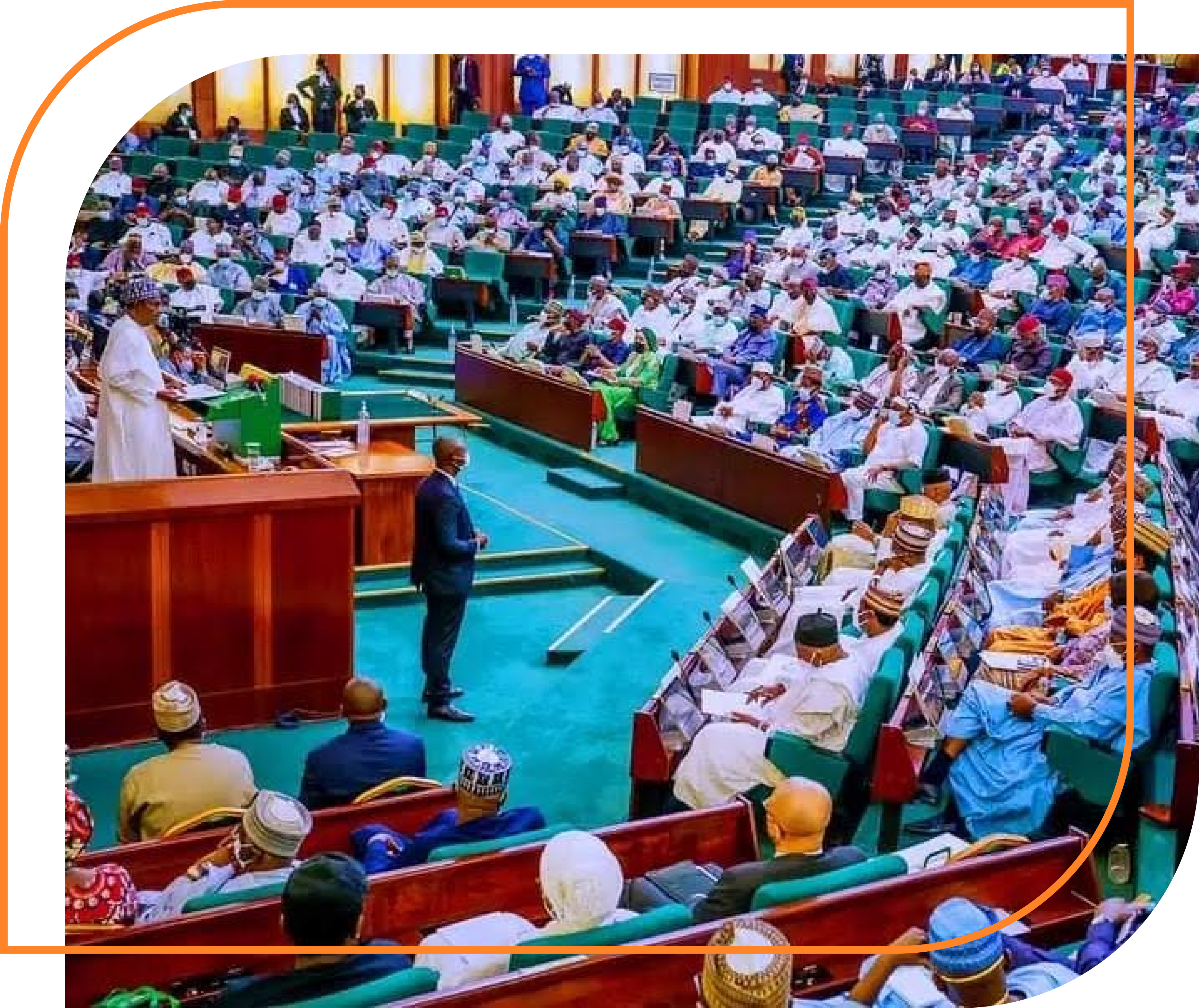
    A joint session of Nigeria’s Upper and Lower Legislative Chambers. Source: Premium Times

    Both chambers combine to form the National Assembly, which is authorized by the Constitution’s section 4(1) to enact legislation for the federation’s good governance, peace, and order. At the federal level, the Chief Justice of the Nigerian Supreme Court oversees the judiciary, the President of the Federal Republic of Nigeria leads the executive branch of government, and the President of the Senate leads the National Assembly. At the state level, the Speaker of the State House of Representatives leads the Legislature, the Governor leads the Executive branch, and the Chief Judge of the State’s High Court leads the Judiciary.

    Understanding the legislative process is crucial, as it allows for the informed participation of citizens who can engage with their representatives, voice their opinions on proposed laws, and even attend public hearings. Furthermore, transparency is strengthened when the public understands how laws are debated and voted upon, holding lawmakers accountable for their decisions. It allows us to be informed citizens who can track the development of laws that impact our lives. Whether it’s a new tax law or a change in environmental regulations, bills can significantly affect our daily routines, rights, and responsibilities.

    The Nigerian Legislature

    Nigeria as a nation operates a legislature that legislates on behalf of its populace, it is founded on the most fundamental democratic ideas and ethics. The Nigerian democracy thrives on a system of checks and balances with the National Assembly holding legislative power. This bicameral legislature is comprised of two chambers: the Senate and the House of Representatives – serving as the cornerstone of Nigeria’s lawmaking process. 

    Composition and Structure

    • The Senate: Often referred to as the “Red Chamber,” consists of 109 Senators, with three representatives from each of the 36 states and one from the Federal Capital Territory. Senators are elected for four-year terms.
    • The House of Representatives: Known as the “Green Chamber,” has a larger membership, currently 360 members. Each state’s representation is based on the number of constituencies, ensuring a broader voice for Nigerians. Representatives serve four-year terms as well.

    The Senate is headed by the Senate President and Deputy Senate President, the chamber also features eight principal officers who manage its affairs.

    The House of Representatives is led by the Speaker and Deputy Speaker. The House has a similar structure with eight principal officers for smooth operation.

    Godswill Akpabio is the President of Nigeria’s 10th Senate. Source: BBC Africa

    Role and Functions of the Legislature in Lawmaking

    1. Initiating Legislation: Legislators, either Senators or Representatives, introduce bills (proposed laws) for consideration by the National Assembly. These bills address a wide range of issues, aiming to solve problems or improve existing situations.
    2. Lawmaking Process:  The National Assembly doesn’t just vote yea or nay on bills. Legislators engage in a thorough process that includes debates, reviews, and amendments. Committees play a vital role here, scrutinizing bills, proposing revisions, and ensuring they align with the Constitution and national needs.
    3. Representation: Legislators act as representatives of the people who elected them. They are expected to consider their constituents’ needs and interests throughout the lawmaking process. Public hearings can be part of this process, allowing citizens to directly voice their opinions on proposed laws.
    4. Oversight: Lawmaking isn’t a one-time act. The National Assembly also plays an oversight role. They monitor how the executive branch implements the laws they create. This ensures that the laws are functioning as intended and that there’s no misuse of power.
    5. Budget Approval:  The National Assembly is responsible for approving the national budget. This involves allocating resources for various government functions and ensuring proper spending. By controlling the purse strings, the legislature can influence government priorities.

    Introduction to the Concept of a Bill

    A bill is a formal proposal for a new law or a change to an existing one. In the intricate world of lawmaking, a bill serves as the foundation for new legislation. It embodies a proposed law or a significant alteration to an existing one. Think of it as a blueprint outlining the specific details and regulations that, if approved, will become binding rules.

    Bills are not laws themselves. They are propositions presented to the legislative body, typically a parliament or congress, to initiate a formal process of debate and refinement. This process ensures that the proposed law is thoroughly examined, potential consequences are weighed, and public input is considered. These bills can cover a wide range of topics, from regulating businesses to protecting the environment to ensuring social welfare. This exclusive function is vested on the National Assembly to make laws for the Federal Republic of Nigeria.

    A Bill is simply defined as a draft of a proposed law. There are generally two types: Private and Public Bills. 

    A public bill may be initiated by a Minister; in which case it is referred to as a “government bill.” A private Member may also initiate a public bill; in which case it is called a “private Member’s bill.”

    • A government bill is a written legislative initiative submitted to Parliament by the government for approval and possibly for amendment before becoming law. Such bills relate to matters of public interest and may include financial provisions. 
    • A private Member’s bill is the text of a legislative initiative submitted to Parliament by a Member who is neither a Minister, a Parliamentary Secretary, a Speaker, or a Deputy Speaker for approval and possibly for amendment before becoming law.

    A private bill confers special powers or benefits (beyond or in opposition to the general law) upon one or more individuals or groups, including corporations, or exempts them from the application of a statute. It must be based on a petition signed by the person or people advocating it, and it cannot be introduced by a minister. Hence, the main factor determining whether a bill is public or private is based on the bill’s purpose.

    The Lawmaking Process

    The Bill Introduction and First Reading

    The Bill Introduction and First Reading constitute the first step. After the Clerk receives a copy of the Bill, he gives notice to the members of the relevant chamber. In the case of a Public Bill, the Clerk is required to publish a copy of the Bill in the Official Gazette and send a copy to every member of the relevant chamber. In the case of a Private Bill, the member sponsoring the Bill must move a motion to request permission from the Senate President (or the Speaker of the House, as appropriate) to present the Bill and publish it in two (2) successive issues of the Official Gazette. After publication, a copy of the first issue must be sent to each member of the relevant chamber. 

    At the first reading stage, the Clerk reads the short title of the Bill, provides a brief statement on what the Bill aims to achieve, and puts it before the Senate President or the Speaker of the House of Representatives, depending on the chamber Bill is presented in. The purpose of the first reading stage is simply to inform legislators of the Bill introduced. There are no discussions or debates at this stage.

    The Second Reading and Committee Stage

    The Second Reading and Committee Stage come next, during the second reading stage, the merits of the Bill undergo debate and discussion. This phase initiates when the sponsoring member moves a motion for Bill’s second reading. Within this motion, the member outlines the Bill’s purpose, its fundamental principle, and the advantages it offers, advocating for its passage into law. For the motion to progress to the second reading, it must receive support (or “seconding”) from another legislator in the pertinent chamber. Without such support, the motion is deemed rejected and does not advance to the second reading stage. Once supported, the bill is deliberated on by chamber members and subsequently put to the vote on whether it should move to the Committee Stage. If a simple majority of chamber members support the Bill, it advances to the Committee Stage for further review; otherwise, it cannot be debated again until reintroduced later.

    Following the second reading, the Bill is directed to the relevant chamber’s appropriate Standing Committee(s). During the Committee Stage, the Committee endeavours to enhance the Bill’s value and may conduct public hearings to involve key stakeholders and the public. The Committee(s) are tasked with providing suggestions, amendments, and recommendations (if any) to the Bill, and they subsequently present their findings to the relevant chamber for further examination. 

    The Report Stage and Third Reading

    The Report Stage and Third Reading commences when the Chairperson of the designated Committee provides a report on the Bill’s progress, after which the chamber, operating as the Committee of the Whole, engages in further deliberations on the Bill. At the conclusion of this stage, a motion may be passed for the Bill to undergo a third reading.

    During the third reading stage, the Bill undergoes another reading, and members vote on its passage. Subsequently, the Clerk, along with either the Speaker of the House of Representatives or the Senate President, generates and authenticates a pristine version of the bill, inclusive of all amendments. This endorsed Bill is then transmitted to the Clerk of the opposite chamber with a request for its concurrence, signifying approval from the other chamber.

    The Passage to the Other House

    The receiving chamber may accept the proposed legislation as presented; in which case it communicates its concurrence without alterations. However, if there are disagreements with the provisions of the Bill from the originating chamber or if amendments are sought, a Harmonisation/Conference Committee must be established independently by the Senate President and the Speaker to reconcile these disparities in the Bill. Typically comprised of members from both chambers, this harmonization committee is tasked with proposing a unified stance that can be adopted by both chambers.

    When both chambers endorse the Harmonisation Committee’s report, the Clerk of the originating chamber prepares a clean version of the harmonized Bill for submission to the President for assent. A bill only becomes law after the President signs it.

    The Presidential Assent

    At this stage, the President must either approve or veto/reject the bill within thirty (30) days of receiving it. Suppose the President vetoes the bill or fails to communicate assent within the specified period; in that case, the National Assembly (NASS) can override the veto with a two-thirds majority vote from both chambers to pass the bill into law. This means the bill becomes law without the President’s assent. 

    However, this process doesn’t apply to all Bills. For constitutional amendments, the amendment Bill must be supported by a two-thirds majority of members in each chamber of the NASS before it can proceed to a third reading. Once the Federal Legislature approves, it needs a two-thirds majority of the 36 State Houses of Assembly. Another exception is urgent state matters like passing the National Budget, where the NASS can suspend its procedure to promptly address such critical issues.

    The Publication and Commencement

    The bill is now passed into law.

    President Tinubu signing a bill into law. Source: The Cable

    Potential Reforms to Improve the Nigerian Legislative Process

    The Nigerian legislative process faces some challenges that could be improved through reforms.

    • Citizen Input: There could be more opportunities for citizens to provide feedback on proposed legislation. This could involve online platforms, public forums, and improved communication between legislators and constituents.
    • Think Tank Involvement: Collaboration with research institutions and think tanks could provide legislators with non-partisan policy analysis and expertise.
    • Timely Action on Bills: Setting deadlines for committee reviews and votes on legislation could help prevent bills from languishing. Implementing a digital system to track bill progress will allow legislators and the public to monitor it more easily.
    • Strengthening Oversight: The legislature should more effectively hold the executive branch accountable for its actions. This could involve more robust committee oversight hearings and stricter enforcement mechanisms.
    • The Role of the Law Reform Commission: The Nigerian Law Reform Commission has a role in proposing legislative reforms. Strengthening its capacity and ensuring its recommendations are implemented could be beneficial.
    • Constitutional Review: Debates on restructuring Nigeria’s government and amending the constitution could also impact the legislative process.
    • Greater Autonomy and Transparency: Committees could be given more independence to set agendas and conduct in-depth reviews of bills. Public hearings and committee deliberations should be more transparent and accessible.

    These are some suggestions that can influence specific reforms when implemented. The Nigerian legislature can become a more robust and democratic institution that effectively represents the people’s will.

    Understanding the Legislative Process in Nigeria

    Understanding the legislative process in Nigeria is essential for citizens to actively engage with their representatives, contribute to public discourse, and hold lawmakers accountable. Nigeria’s bicameral legislature, comprised of the Senate and the House of Representatives, plays a crucial role in lawmaking, from initiating legislation to overseeing its implementation. Despite the obvious low capacity, political interference, and inadequate public participation, there are potential reforms that can enhance the legislative process. By promoting citizen input, strengthening oversight mechanisms, collaborating with think tanks, and implementing timely actions on bills, Nigeria can build a more robust and democratic legislative framework that serves the interests of its people and fosters national development.

    About ACIOE Associates

    ACIOE Associates is an advisory services firm providing solutions in strategy, government relations, regulatory affairs, economic development, advocacy, investment facilitation, policy analysis and strategic intelligence in various sectors. Based in Abuja, Nigeria, its mission is to deliver clear and practical business solutions to ease doing business in Africa while creating mutually beneficial opportunities for growth and sustainable development.

    Get Started With Plural

    With best-in-class public policy data and real-time notifications, Plural is the tool of choice for top government relations teams in Nigeria. Book a demo today to learn more.

    More Resources for Africa

  • Plural for Medical Associations

    Plural for Medical Associations

    Medical associations play a crucial role in shaping healthcare policy. Within these organizations, public policy teams have a key responsibility. They’re tasked with ensuring that legislative developments align with best practices and standards of care. Overall, they must ensure that healthcare systems benefit both providers and patients. Given these complex challenges, medical associations must effectively track legislation, manage stakeholder relationships, and advocate for their members’ interests.

    In this blog, we’ll discuss the various areas of legislation that impact medical associations. We’ll also discuss how Plural helps medical associations maximize their policy impact.

    The Policy Environment

    Various areas of legislation impact medical associations. This includes healthcare reform, drug pricing, and research funding, among others. Learn more below.

    Healthcare Reform

    Medical associations are at the forefront of healthcare reform discussions. They advocate for policies that ensure equitable access to healthcare and improve quality of care. Any new developments can have profound impacts on how healthcare services are delivered and financed. This includes changes to healthcare coverage, payment models, and new patient care protocols. Medical associations must stay informed about legislative developments in these areas. This awareness allows them to effectively represent their members and help shape policies that foster a sustainable healthcare system.

    Regulatory Compliance

    The healthcare sector is subject to a myriad of frequently-updated regulations. They cover everything from patient privacy and data security to clinical practices and facility standards. Medical associations must help their members understand and navigate these regulations. Compliance is not just adherence to laws, but also ensuring that the highest standards of patient care and safety are met.

    Drug Pricing

    The cost of medications remains a critical issue in healthcare policy. Medical associations are actively involved in the dialogue surrounding drug pricing. They advocate for legislation that makes medications affordable. At the same time, they also encourage the innovation necessary to develop new treatments. Understanding the complexities of pharmaceutical pricing, including the roles of manufacturers, insurers, and government programs, is essential for effective advocacy.

    Medical Research Funding

    Advocating for research funding is another key area of focus for medical associations. Medical research is the backbone of advancement. Securing funding is crucial. This involves engaging with legislative bodies to ensure that government grants and subsidies are allocated to support vital research projects. Effective stakeholder management is key to this process. Medical associations must also monitor and influence the budgetary allocations at federal and state levels. They must make the case for the importance of continued investment in medical research.

    Plural’s Strategic Advantage

    Top medical associations trust Plural for their legislative tracking and stakeholder engagement needs. Plural’s suite of tools is designed to empower medical associations to manage the legislative complexities of the healthcare sector more effectively. Learn more about how Plural meets the challenge below.

    Best-in-Class Data

    Access to comprehensive and up-to-date legislative information is crucial for staying informed about changes that impact healthcare policy and regulations. Plural enables medical associations to stay up-to-date on legislative trends and developments. This includes:

    • Tools to discover everything there is to know about a bill
    • Legislator and staffer information
    • Historical data
    • AI-powered insights
    • And more!

    With Plural, medical associations turn potential policy threats into manageable challenges.

    Advanced Search Tools

    With Plural, it’s easy for medical associations to filter through the noise to find relevant bills. Advanced search capabilities allow users to pinpoint specific legislation affecting healthcare. Search by keyword, legislature, session, bill status, and more. This precision helps associations focus their efforts on the most impactful issues, saving time and enhancing the effectiveness of their advocacy.

    Real-Time Updates

    The healthcare policy landscape can change rapidly. Plural’s real-time updates ensure that medical associations receive immediate notifications about legislative developments. These insights allowing them to respond swiftly and keep their members informed.

    Global Bill Search

    Thousands of bills are introduced in each jurisdiction throughout each legislative session. For medical associations, finding the exact bills that matter can feel like searching for a needle in a haystack. The ability to quickly and efficiently find the bills that matter is the key to staying ahead. Plural’s Global Bill Search streamlines the discovery process and brings relevant legislation to the forefront. Global Bill Search helps medical associations discover the national landscape of legislation impacting their goals and objectives.

    Momentum Indicator

    Identifying which bills are gaining traction is crucial for medical associations. These insights guide strategic planning and advocacy. Yet, without the right tools, policy teams must rely on manual tracking and intuition. This often leads to missed opportunities and misallocated resources. Plural’s Momentum Indicator offers a novel way to assess a bill’s traction and potential for progress. With the Momentum Indicator, discovering which bills are likely to become law is quick and simple.

    Why Plural Is Indispensable for Medical Associations

    Medical associations are committed to advancing healthcare standards and best practices. Plural offers a robust solution for navigating the complex world of healthcare policy. With Plural, medical associations can not only keep up with, but also actively influence this dynamic policy field. By adopting a proactive approach, medical associations ensure that they can efficiently represent the interests of both healthcare providers and patients, promoting a healthier future for all.

    Are you ready to enhance your legislative tracking and advocacy efforts? Sign up for a demo today and empower your medical association to lead in healthcare policy.

    More Resources for Public Policy Teams

  • Plural for Real Estate Companies

    Plural for Real Estate Companies

    What are real estate policy issues faced by companies in the sector? Between taxes, urban development and more, Plural is a helpful tool for real estate companies looking to track public policy. Learn more today!

    Real estate is one of the most highly invested assets. Despite this, the U.S. is facing many housing crises throughout the country. Real estate companies must be aware of legislative decisions made in their jurisdictions. Tracking legislation is an essential step in making educated assessments of their actions within the market and for their businesses. 

    Plural allows real estate companies to track legislation together. Plural offers a user-friendly search engine, features that make understanding policy easy, and a supportive team that can answer your questions. 

    In this blog, we’ll discuss the various areas of legislation that impact the real estate market. We’ll also discuss how Plural helps real estate companies maximize their policy impact.

    Real Estate Policy Issues

    Various areas of legislation impact the real estate market. This includes zoning laws, environmental compliance, and taxation, among others. Policy issues can impact real estate companies’ regulatory compliance, market dynamics, strategic planning, risk management, and corporate responsibility. Learn more below.

    Issues Affecting Regulatory Compliance

    Zoning Laws

    For real estate companies, zoning laws are fundamental in shaping property development. They designate specific land uses, influencing what can be built and where. For example, a zoning law reclassifying a suburban residential area to commercial use can drastically alter development prospects, enabling the construction of shopping centers or office buildings. This shift can create lucrative opportunities for real estate companies. However, it also poses challenges in navigating new market dynamics.

    There are many arising challenges in zoning laws. Increasingly popular in recent years, inclusive zoning refers to a range of policies and practices that mandate or provide incentives for the inclusion of affordable housing units in new developments. Inclusive zoning encourages mixed income neighborhoods and increases the supply of affordable housing.

    Building Codes and Safety Regulations

    Adhering to building codes and safety regulations is equally critical. These codes ensure that structures meet safety and health standards. They protect occupants and enhance building longevity. Non-compliance can have consequences, including hefty fines, legal disputes, and forced closures. Owners might face remediation costs and litigation if a building fails a safety inspection due to outdated fire prevention systems.

    Environmental Regulations

    Environmental regulations are increasingly necessary for real estate development. These laws mandate sustainable practices, such as energy-efficient design and pollution control. For example, a real estate company developing a property in a coastal area might need to implement erosion control measures and preserve natural habitats to meet regulatory standards. Failure to comply can result in project delays, increased costs, and potential legal action.

    Policy Issues With Financial Implications

    Tax Legislation

    Changes in tax legislation can have a profound impact on the profitability of real estate investments. This includes changes to property taxes, capital gains taxes, and others. An increase in property taxes can significantly raise the cost of holding and maintaining properties. Conversely, decreasing capital gains taxes can make real estate investments more attractive by enhancing after-tax returns.

    Tax incentives can also play a pivotal role in real estate investment decisions. Consider a scenario where a government introduces tax breaks for developing affordable housing. Such incentives can lead real estate companies to prioritize these projects, not only for the financial benefits but also for the positive community impact. By leveraging these tax incentives, companies can improve their financial outcomes while contributing to the common good.

    Tax legislation is notoriously difficult to understand. Real estate companies must act fast to gain an advantage. Plural’s AI-powered tools, including bill summarization, help users quickly understand legislation.

    Government Funding and Subsidies

    Various forms of government funding and subsidies are available for real estate projects. These financial opportunities can reduce project costs and enhance profitability. For example, a real estate company that secures a government grant for green building initiatives can lower its development expenses and increase its market appeal. 

    By tracking and utilizing these financial opportunities, real estate companies can:

    • Optimize their investment strategies
    • Maximize returns
    • Ensure long-term financial stability

    Staying informed about changes in tax legislation and available subsidies allows companies to take full advantage of beneficial programs.

    Issues Affecting Market Dynamics

    Understanding market dynamics is essential for real estate companies, particularly rent control and tenant protection laws.

    Rent Control Laws

    Rent control laws have required notices and start dates which landowners should be readily aware of. These laws aim to protect tenants and promote market stability. They can also influence decisions on property investments and upgrades. Tenant protection laws, which cover issues like eviction processes and lease terms, add another layer of regulation. These laws may change the administrative processes.

    Mortgage and Lending Laws

    Mortgage and lending laws also play a critical role in shaping the real estate market. Legislation affecting these factors can alter market demand and buyer behavior. Stricter lending regulations make it harder for buyers to secure loans, reducing demand for properties. Conversely, favorable mortgage terms can stimulate market activity by making homeownership more accessible. Keeping abreast of these laws helps real estate companies anticipate market shifts and adjust their strategies accordingly.

    Issues Impacting Strategic Planning

    Urban Development Policies

    Urban development policies play a key role in shaping the landscape of cities and towns. Laws related to urban planning and infrastructure development can create new opportunities for real estate companies. For example, when a city plans to develop a new transportation hub, nearby properties can become more valuable, attracting investors and developers. Real estate companies can leverage these policies by strategically acquiring and developing properties in areas slated for infrastructure improvements, thus gaining a competitive edge.

    These opportunities are usually released on a quarterly basis. Getting notified of upcoming opportunities in real-time is essential. With real-time alerts, Plural helps real estate companies stay up-to-date on important legislation.

    Economic Policies

    Economic policies also impact the real estate market. This includes interest rate adjustments, fiscal stimulus measures, and employment initiatives. Lower interest rates can boost housing demand by making mortgages more affordable. Fiscal stimulus measures can increase disposable income, leading to higher real estate investment. Historical examples include the policies enacted after the 2008 financial crisis, which significantly influenced market dynamics. The economic impacts of the COVID-19 pandemic are yet another example, which experts are continuing to study today.

    By understanding and anticipating the effects of economic policies, real estate companies can better navigate market fluctuations and capitalize on emerging trends.

    Policy Issues Impacting Corporate Responsibility 

    Sustainability and social responsibility are increasingly vital in the real estate sector. Laws promoting sustainable development are crucial for environmental protection. These include green building standards and energy efficiency requirements, among others. Compliance with these laws goes beyond protecting the environment. It also enhances a company’s reputation and market appeal, attracting eco-conscious clients and investors.

    For real estate companies, staying up-to-date on legislative changes is imperative. It ensures compliance, optimizes financial strategies, and offers a competitive edge. As the industry evolves, adapting to an ever-changing legal landscape will be pivotal for success. How does Plural help real estate companies meet the challenge?

    Plural for Real Estate Companies

    Top real estate companies trust Plural for their legislative tracking and stakeholder engagement needs. Learn more about how Plural meets the challenge below.

    Best-In-Class Data

    Plural’s suite of tools allows for efficient deep dives into legislative information. This includes:

    • Tools to discover everything there is to know about a bill
    • Legislator and staffer information
    • Historical data
    • AI-powered insights
    • And more!

    With Plural, real estate companies turn potential policy threats into manageable challenges.

    Advanced Search Tools

    With Plural, it’s easy to filter through the noise to find relevant data with advanced search capabilities. Advanced search functionality is a game-changer. Search by keyword, legislature, session, bill status, and more. Plural helps real estate companies uncover the bills that affect their bottom line.

    Real-Time Updates

    Public policy moves fast — Plural helps real estate companies discover key information quickly. With real-time notifications, Plural users never miss an update. This immediacy transforms real estate companies’ ability to stay ahead and develop actionable strategies.

    Global Bill Search

    Thousands of bills are introduced in each jurisdiction throughout each legislative session. For real estate companies, finding the exact bills that matter can feel like searching for a needle in a haystack. The ability to quickly and efficiently find the bills that matter is the key to staying ahead. Plural’s Global Bill Search feature offers a sophisticated search engine designed to streamline the discovery process and bring relevant legislation to the forefront. Global Bill Search helps real estate companies discover the national landscape of legislation that impacts their bottom line and operating environment.

    Momentum Indicator

    Identifying which bills are gaining traction is crucial for real estate companies. These insights guide strategic planning and advocacy. Yet, without the right tools, policy teams must rely on manual tracking and intuition. This often leads to missed opportunities and misallocated resources. Plural’s Momentum Indicator offers real estate companies a novel way to assess a bill’s traction and potential for progress. With the Momentum Indicator, discovering which bills are likely to become law is quick and simple.

    Why Plural Is Indispensable for Real Estate Companies

    Real estate companies operate in the complex interplay of policy, economic, and societal challenges. In this context, Plural is a powerful ally. Plural offers more than insights; it provides a strategic advantage. With Plural’s tools and insights, real estate companies navigate the policy landscape with confidence. Plural helps real estate companies ensure that they are well-prepared to face future challenges and seize current opportunities.

    Interested in learning more? Book a demo today!

    More Resources for Public Policy Teams

  • Cannabis Policy: A Comprehensive Overview

    Cannabis Policy: A Comprehensive Overview

    Marijuana — more formally cannabis — is the most commonly used illegal drug in America. While legal in some states, it’s still illegal nationwide at the federal level. Still, almost 50% of Americans have used cannabis at least once, and nearly 20% have used in the past year. These rates are only increasing. Legal prohibitions for both medical and recreational marijuana use are rapidly eroding. After decades of complete legal prohibition on cannabis, weed has gone mainstream. Twenty-four states have legalized cannabis for recreational use. Today, marijuana is more commonly used and easily accessible than any drug, barring alcohol. 

    Cannabis policy has evolved rapidly in the 21st century. At present, most innovation and change has occurred at the state level. States have legalized medical and recreational use, and devised tax and regulation schemes for both cases. Both state and local governments have also released people with cannabis-related convictions from prison and expunged related criminal records. 

    Federally, cannabis is still a Schedule I drug, considered to have little to no medical benefit and a high potential for abuse. It is subject to criminal penalties via the Drug Enforcement Administration (DEA.) Yet, as more states legalize recreational use, even the federal government is considering reforms to its cannabis policy. Cannabis policy is a dynamic, rapidly evolving field. Innovative legislation is pending in state houses across the country as well as on Capitol Hill. 

    History of Cannabis Policy

    In recent years, evolving attitudes and shifting policies characterize cannabis policy. However, for most of its history, cannabis policy was nonexistent — marijuana was simply prohibited. Cannabis and related industrial products made from hemp were legal in the late 19th and early 20th centuries

    The Marihuana Tax Act of 1937

    During Prohibition, several states passed laws criminalizing cannabis. These new laws were triggered by rising marijuana use, then spelled “marihuana,” sensationalist media coverage, and racial prejudices. In 1937, federal prohibition arrived with the The Marihuana Tax Act of 1937. This legislation effectively banned the use and sale of cannabis by establishing a restrictive tax and regulation scheme. While marijuana was not technically illegal, the Act marked the beginning of widespread cannabis prohibition.

    The Controlled Substances Act of 1970

    No major changes in cannabis regulation were made at the federal level for decades. This stangancy ended with the Controlled Substances Act of 1970. Cannabis was classified as a Schedule I drug with no accepted medical use alongside drugs like heroin, cocaine, and LSD. The Act kicked off decades of harsh anti-drug use policies at the federal level, capped off by Reagan’s “War on Drugs” and Clinton’s 1994 Crime Bill.

    Widespread Legalization of Medical Marijuana

    By the 1990s, state governments were already pioneering less restrictive cannabis use policies. Beyond recreational use, marijuana was increasingly seen as beneficial for medical purposes. Patients, advocates, and medical professionals recognized the therapeutic benefits of cannabis for chronic pain, epilepsy, cancer, and more. In 1996, California became the first state to legalize medical marijuana with the passage of Proposition 215, also known as the Compassionate Use Act. This landmark legislation paved the way for similar initiatives across the country. By 2016, a majority of states had legalized medical cannabis use. 

    Comprehensive Regulatory Frameworks for Cannabis Policy

    The next major turning point in cannabis legislation came in 2012. Colorado and Washington became the first states to legalize recreational cannabis for adult use through voter-approved initiatives. This move marked a significant departure from decades of prohibitionist policies. It reflected changing societal attitudes and growing support for cannabis legalization. Since then, many states have followed suit in legalizing recreational use through ballot measures or legislative action. Some states begin with simple decriminalization. However, it’s much more common for states to adopt comprehensive regulatory frameworks for the cultivation, distribution, and sale of cannabis to adults.

    Federal vs. State Cannabis Laws

    Federal and state cannabis laws conflict significantly. They’ve been at odds since the 1990s, when western states began experimenting with looser cannabis regulations. At the federal level, marijuana growth, possession, and trafficking remain crimes, irrespective of states’ marijuana laws. Yet, the federal government has opted to allow state-level innovations in cannabis policy. The Department of Justice and the DEA are largely “looking the other way” and declining to pursue prosecutions. 

    This federal-state conflict hurts the cannabis industry. Cannabis businesses must contend with an ambiguous legal status. This status has made it difficult to access banking services, insurance policies, credit card processing, and other essential services. Because of these restrictions, the cannabis industry is overly reliant on cash payments, which creates public safety and tax compliance concerns. It’s clear that, for the cannabis industry to thrive, better alignment between state and federal cannabis policy must be achieved. There are several pending pieces of federal legislation that aim to do so.

    Federal Cannabis Laws

    In April of 2024, the DEA proposed rescheduling cannabis from Schedule I to Schedule III. This change would allow for medical use. Schedule III drugs are those which have medical uses but are subject to prescription requirements. Examples of Schedule III drugs include ketamine, most barbiturates, and buprenorphine. They cannot be dispensed without a valid prescription. This proposed shift spells good news for the medical marijuana industry. Recreational marijuana would, of course, still be illegal under the Controlled Substances Act.

    In Congress, several pieces of cannabis-related legislation are currently pending. This includes the Marijuana Opportunity and Reinvestment and Expungement Act (MORE) Act. If passed, it would:

    • Decriminalize and deschedule cannabis
    • Invest federal money into communities adversely impacted by the War on Drugs
    • Allow for the expungement of certain cannabis offenses.

    The MORE Act has not yet passed out of committee in the House or Senate. 

    Other legalization bills have been proposed, including the States Reform Act of 2023 or the Strengthening the Tenth Amendment Through Entrusting States (STATES) Act. Both would deschedule cannabis and largely defer regulatory authority to state governments. Like the MORE Act, these measures have also made little progress in Congress.

    The SAFE Banking Act of 2023 is another bill that has not yet passed. However, it has had much more success in Congress than full legalization bills. The SAFE Act would protect financial institutions and other businesses with clients in the cannabis industry, effectively increasing cannabis businesses’ access to traditional financial services. The SAFE Act was amended and passed out of its Senate committee as the SAFER Act in the fall of 2023. It has not been voted upon by the full Senate. The House has passed similar legislation on many occasions.  

    State Cannabis Laws

    On the whole, state-level cannabis policy has moved towards wider permissibility and accessibility in the 21st century. States have taken diverse paths in the shift towards legalization. Many first created medical marijuana programs before moving to full recreational use. 

    In states with citizen-initiated ballot initiatives, voters have often legalized cannabis. More often, however, state legislators have passed laws allowing for medical and/or adult-use recreational cannabis. No matter the state, recreational-use laws almost always allow for at-home cannabis growth for personal use.  

    At present, only three states still completely bar both medical and recreational cannabis use. This includes Idaho, Nebraska, and Kansas. Twenty-four states have fully legalized adult medical and recreational. The remaining states have a patchwork of regulated medical cannabis programs and low THC/CBD programs. There is significant diversity in state-level medical cannabis programs. The most restrictive allow only cannabis-derived medications to treat a narrow set of disorders. Other medical programs allow cannabis to be prescribed for a wide range of illnesses, from anxiety to chronic pain. 

    Expunging the criminal records of people with cannabis-related convictions is another policy trend. Thirteen states have allowed for the expungement of some cannabis-related convictions. Eleven others have automatic record clearance for all cannabis convictions. These policies attempt to right the wrongs of the “War on Drugs.” During that era, Black and Latinx communities across the country were over-policed and over-incarcerated. On the federal level, President Biden has issued mass pardons to those with federal marijuana possession convictions. This affected a very small number of people, as the federal government rarely pursues possession charges. 

    Get Started With Plural to Track Cannabis Policy

    Top public policy teams trust Plural with their legislative tracking and stakeholder management needs. With Plural, you’ll:

    • Access superior public policy data 
    • Be the first to know about new bills and changes in bill status
    • Streamline your day with seamless organization features
    • Harness the power of time-saving AI tools to gain insights into individual bills and the entire legislative landscape
    • Keep everyone on the same page with internal collaboration and external reporting all in one place

    Create a free account or book a demo today!

    More Resources for Public Policy Teams

  • Deepfake Laws: A Comprehensive Overview

    Deepfake Laws: A Comprehensive Overview

    Artificial intelligence is leading to a massive shift in the way voice, video, and created content is consumed and shared. Deepfake content facilitates the creation and sharing of misleading, fake, explicit, or incorrect information that appears real. Proponents argue that deepfakes, or synthetic content, could have a legitimate use in movies, entertainment, and education. However, they also pose significant risks, including:

    • Spreading misinformation
    • Creating non-consensual explicit content
    • Perpetrating fraud

    In particular, deepfakes pose a significant threat to politics, national security, and government. Deepfakes can infiltrate anything from a candidate statement or video, to fake footage of an emergency or fabricated audio of recordings from government officials or politicians.

    The rapid advancement of AI has made deepfakes increasingly sophisticated. Legislators and the Americans they serve share concerns about their potential misuse. The need for effective detection and regulation methods is clear. Read on to learn more about efforts to regulate deepfakes at the state and federal levels.

    What Are Deepfakes?

    A deepfake is a fake piece of media that is created using AI. The AI creates fabricated images, video clips, or audio snippets. The main issue with deepfakes is their “believability.” Deepfakes are often used to deceive viewers or users of social media on any number of controversial issues. This might include politics, national security, social issues, or notable people. AI-generated content is becoming more convincing and can closely mimic the appearance and voice of real individuals.

    Why Regulate Deepfakes?

    Deepfakes can cause significant harm. One of the primary concerns related to deepfakes is the spread of misinformation across various platforms, including social media and news organizations. Since 2016, misinformation has been a consistent target of federal legislation and regulatory efforts. Efforts to curb misinformation led to fact checking of posts and user content on Meta (then-Facebook). Currently, X offers a community notes function for users to correct or add context to misleading posts. A similar regulation or standard across social media could be adopted for deepfakes.

    Without regulation, deepfakes could manipulate public opinion, interfere with elections, or incite unrest. The ability to produce highly convincing fake content is a serious threat to our democracy.

    Privacy and personal security are also at risk with an increase in deepfakes. Citizens can be exploited with inappropriate and non-consensual content that is explicit. Everyday citizens must be protected from being victimized by deepfake content.

    Deepfakes could also ramp up financial fraud – especially for seniors. While phishing emails and robocalls are already common attempts to defraud seniors, deepfake audio could be employed to impersonate state or federal officials or agencies looking for access to sensitive information.

    How Are Legislators Approaching Deepfake Laws?

    Congress has taken several steps to address the regulation of deepfakes. Legislators recognize the threats deepfakes pose to national security, privacy, and public trust. Efforts to understand deepfakes mirror those with big tech. Congress has held hearings to better understand the implications of deepfakes and explore technological solutions for detection and prevention.

    In March of 2024, the House Committee on Oversight and Accountability held a hearing on deepfakes, called “Addressing Real Harm Caused by Deepfakes.” The hearing focused not only on the national security and political implications of deepfakes, but also their impact on everyday citizens, including children.

    A follow-up report from the hearing found that improved technology will make it more difficult to distinguish deepfakes from real content. Technological advancement will further erode public trust in social media and the news. It also found that women and children were more likely to be targets of a deepfake video. 

    Federal Deepfake Laws

    The 2019 National Defense Authorization Act mandates that the U.S. Department of Homeland Security (DHS) produce annual reports on the use of deepfakes. This law was among the first targeting deepfakes. Since then, Congress, agencies, and the White House alike have taken significant steps on deepfake regulation.

    Congress has recently passed several efforts to regulate and oversee deepfakes. These include:

    • The Preventing Deep Fakes Scams Act. H.R. 5808 establishes the Task Force on Artificial Intelligence in the Financial Services Sector. The Task Force reports to Congress on issues related to AI in the financial services sector.
    • The DEEPFAKES Accountability Act. H.R. 5586 protects national security organizations from threats posed by deepfake technology. It also provides a legal recourse to victims of harmful deepfakes.
    • The Protecting Consumers From Deceptive AI Act. H.R. 7766 requires the National Institute of Standards and Technology to establish task forces on AI and deepfakes. The Task Forces aim to facilitate and inform the development of technical standards and guidelines related to the identification of content created by generative AI. These standards will ensure that audio or visual content created or substantially modified by AI includes a disclosure acknowledging the origin of such content.
    • The No AI Fraud Act. H.R. 6943 provides for individual property rights in likeness and voice.

    Agency and White House Involvement

    Beyond Congress, the White House and federal agencies have also taken steps to address deepfakes. The White House has conducted meetings and consultations with technology companies, researchers, and policymakers to discuss deepfake legislation and regulation.

    Along with the DHS’s annual reports on deepfakes, mentioned above, other federal agencies have launched programs aimed at developing technologies to detect and counteract deepfakes. This includes the Department of Defense’s Advanced Research Projects Agency (DARPA). DARPA’s Media Forensics program creates automated tools to identify deepfake content.

    The Federal Trade Commission has also engaged in efforts to protect consumers from the deceptive practices enabled by deepfakes. The Agency emphasizes the need for transparency and accountability in digital content creation.

    State-Level Deepfake Laws

    Several states have already passed or are looking at legislation to regulate deepfakes.

    • California is a pioneer in deepfake regulation with laws enacted as far back as 2019. A.B. 602, passed in 2019, allows victims of non-consensual deepfake pornography to sue creators. Also passed in 2019, A.B. 730 prohibits the distribution of deceptive media aimed at influencing elections within 60 days of an election​.
    • With H.B. 1766 and S.B. 2396, Hawaii has focused on preventing misinformation or communications that could be considered deepfakes or fraudulent before or during elections.
    • Laws in Arizona, including S.B. 1078 and S.B. 1336, aim to prevent the false use of digitized audio recordings or the unauthorized dissemination of deepfake videos, audio or communications for financial gain or malicious intent.
    • Washington legislators have passed S.B. 5152, which targets deceptive media and election integrity. The law mandates disclosure of manipulated media that could influence elections. It also requires clear identification of any AI-generated content used in political campaigns​.
    • Similar to other states, Florida has implemented S.B. 850, which requires the labeling of political ads or other election related communications if they were created with generative AI​.
    • In New York, Governor Hochul signed S. 1042 in October of 2023. The legislation aims to regulate the use of deepfakes in various domains, including non-consensual pornography and election interference. It will provide clear guidelines and penalties for the misuse of deepfake technology.

    Looking Ahead: The Future of Deepfake Laws

    Deepfake laws and regulations must be multifaceted. This technology is rapidly advancing and avenues for potential misuse are many. Federal and state attempts to regulate this technology may aim to reign in bad actors or set common standards. Legislators must develop more comprehensive and specific laws targeting the malicious creation and dissemination of deepfakes, particularly those intended to deceive, defraud, or harm individuals and public institutions.

    Key aspects of future regulations may include mandatory labeling of deepfake media. Measures such as these would ensure transparency and help viewers identify altered content. This might include the use of a blockchain system or immutable codes that identify original videos from deepfake content. Legal frameworks could impose severe penalties for creating or distributing harmful deepfakes, such as those used for political manipulation, financial fraud, or non-consensual explicit content.

    Deepfake threats are global. International cooperation between countries and regulatory bodies will be crucial. Global leaders must share technological solutions and best practices for detection and regulation.

    Advancements in deepfake detection will play a significant role in the future of regulation. Governments may fund research into and development of AI-driven tools to identify deepfakes accurately and swiftly. Public awareness campaigns will also be vital to educate citizens about the existence and potential dangers of deepfakes. These efforts will foster a more informed and critical media consumption.

    Overall, the evolving legal and regulatory landscape will aim to balance protecting society from the risks of deepfakes while allowing for legitimate use in fields like entertainment and education.

    Using Plural to Monitor Deepfake Laws

    Top public policy professionals trust Plural for their legislative tracking and stakeholder management needs. With Plural, you’ll:

    • Access superior public policy data 
    • Be the first to know about new bills and changes in bill status
    • Streamline your day with seamless organization features
    • Harness the power of time-saving AI tools to gain insights into individual bills and the entire legislative landscape
    • Keep everyone on the same page with internal collaboration and external reporting all in one place

    Create a free account or book a demo today!

    More Tech & AI Resources