Over the past few months, we’ve been hard at work designing and testing with real policy professionals new features to make Plural more seamless for policy and government relations teams.
We’re excited to share these updates with you. Let’s take a look…
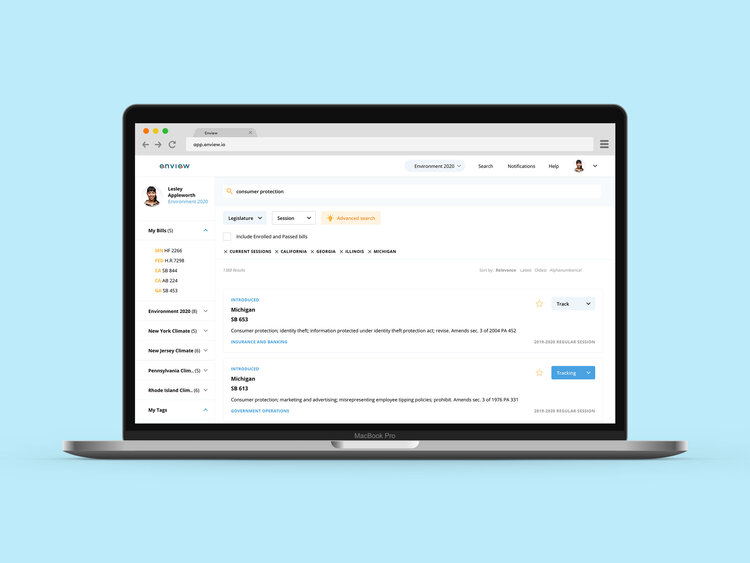
Discover legislation with smart searches in Plural.
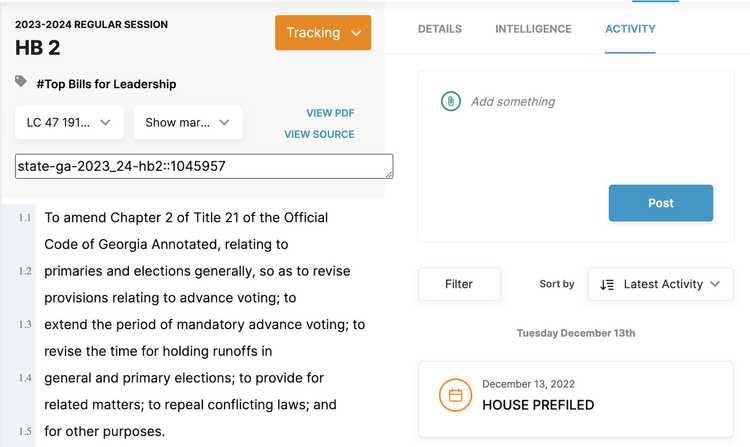
Introducing Activity Feeds
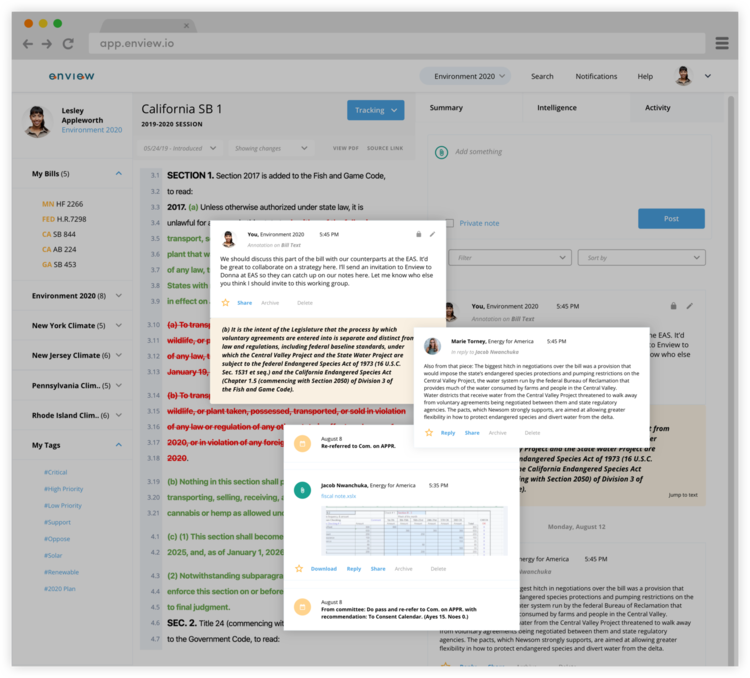
We wanted to make it easier for a user to view the most updated information about a bill, its status, and the work that’s being done on it.
Now when you’re viewing a piece of legislation, there’s a space for you to see a chronological feed containing the bill’s actions, notes and highlighted excerpts of the bill, and any uploaded files attached to the bill (more about that below).
Activity feeds are your view of all related actions on a piece of legislation.
You’ll also be able to see activity feeds for teams. Speaking of teams, we’ve made some improvements!
Improvements to Team Workspaces
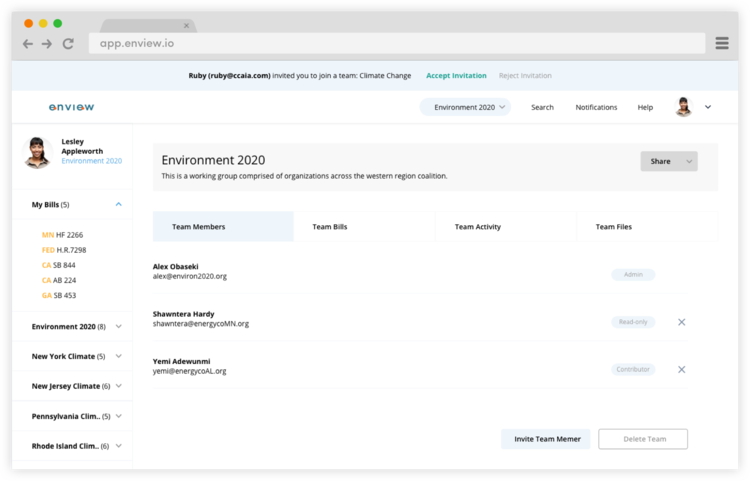
The Team experience is a place for you to optimize your policy management workflow, both internally for your organization and with external collaborators. The new Team Workspace view will make it super clear where your bills are at and ensure that everyone who’s collaborating with you on the bills are on the same page.
We’re just getting started with building out the Team experience, so stay tuned for upcoming developments in this area of the app.
Teams are a great way to make sure the right people stay up to date.
Upload & download files
Now in Plural, you have the ability to upload files! After working with dozens of users and policy professionals around the country, we learned that updates on active bills, committees and hearings happen so quickly before the information becomes available to the public. Often times, it’s your team on the ground at the Capitol or in meetings that have the intel.
Now you and your team can share files in real-time, including relevant documents to bills and other digital media like photos or audio.
You can upload files (up to 200MB) both in your Team Workspace and within a bill’s activity feed.
Running a successful organization takes funding. Lots of funding.
Whether your organization is working to advance vital community projects, disrupt the tech industry, or establish itself as an education leader, money from grants is a critical ingredient in the recipe for success.
To find that all-important funding, organizations spend lots of time manually searching and applying for grants. But looking through numerous websites or relying on word of mouth is inefficient and time-consuming.
Today’s legislation tracking tools can streamline your entire search. For starters, you’ll never miss important updates, like changes to application deadlines and grant qualification criteria. You can automate reminders that will let you know when any changes occur on a bill related to a grant program you’re interested in.
Even better, this tech-driven approach will expand your access to new opportunities and improve your overall grant win percentage. Here’s what you need to know to begin using technology to help bring in more funding.
Make Your Grant Discovery and Management More Strategic
The beauty of today’s advanced technology is that if you find the right tool, it can revolutionize your plan of action for finding and securing grants with far less manual effort.
As you know, during each legislative session, money is allocated to existing grant programs or used to fund new grant programs. Legislative tracking software, like Plural, can help your team stay on top of grant application deadlines, enable more efficient lobbying for bills that support your agenda or mission, and even help you shape legislative language so a grant meets your organizations’ specific needs.
Let’s say there’s proposed legislation that will award grants to organizations like yours setting up primary care facilities in areas of need. Because you’ve set up an alert to notify your team when bills establishing relevant grant programs are in play, you’re in the enviable position of being able to lobby for the grant requirements to fit your organization.
To qualify for this particular grant program, you have to meet the following criteria:
There needs to be a documented healthcare shortage in the area of the proposed facility
The proposed facility needs to be at least five miles from any existing primary care facilities
The facility needs to be at least 7,500 square feet
The facility that your organization plans to build is 5,500 square feet, making it ineligible for the grant. Because you know the proposed grant program details from the get-go, you can ask the sponsor of the bill to change the requirements — from 7,500 square feet to 5,500 square feet, for example — and open up your organization’s chances of qualifying for the grant.
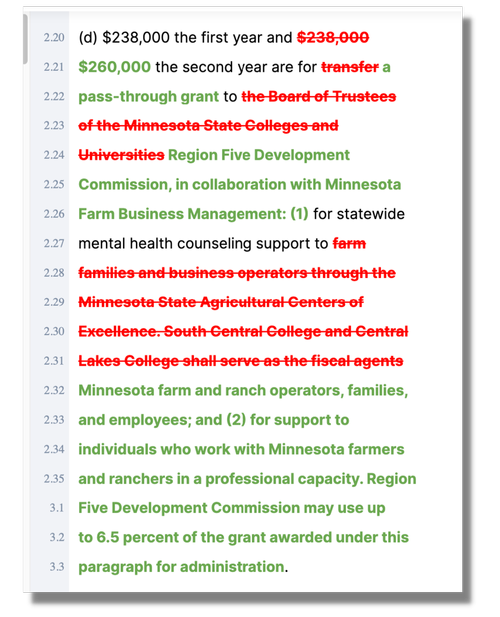
In addition to bill monitoring, Plural allows users to take advantage of workflow and collaboration features. For example, an organization can use the interactive text feature to highlight key language and share notes on what that amended language they’d prefer to see. At the same time, interactive and real-time updates allow users to see what language has been redacted from the bill and what language has been added, so your team doesn’t waste time proposing language which has been removed.
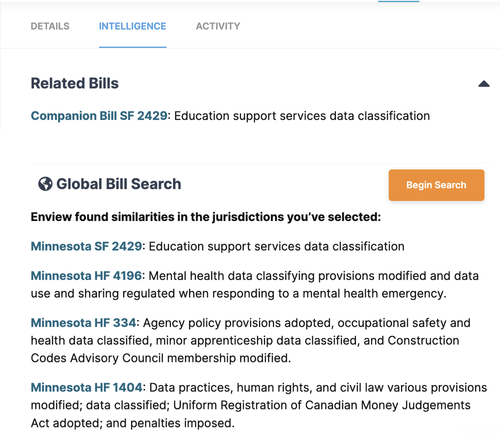
Plural also has the ability to find similar bills. By seeing similar bills that either passed or didn’t, an organization can get insight into what can get their bill past the finish line.
Best of all, your team will be able to easily collaborate on what their conversations with legislators should look like, keep track of bill developments, and note takeaways for shaping strategy. Everything can be shared internally with chosen personnel and/or externally with partners if that’s key to your organization’s success.
Expanding Grant Opportunities throughout the Legislative Session
Each year, the President and most Governors release a budget proposal. From there, appropriations committees in the house and senate work on creating appropriation bills. Sometimes these bills stick close to what the Governors or President proposed, but sometimes they differ greatly.
At the federal and state level, following the budget process can be overwhelming. Tools like Plural grant you easy access to the information you need at every step. Early in the season, your team can use legislation tracking and automatic alerts to stay on top of any appropriations bills that may impact your organization’s grant opportunities.
For example, if you notice the House Appropriations bill contains funding for a grant program critical to your bottom line, but the Senate Appropriations bill does not, you’ll be able to proactively advocate for the acceptance of that House Language in conference committee.
Later, toward the end of the fiscal year, you can also track omnibus bills, which group many smaller appropriations bills into a single larger bill.
Plenty of dealmaking goes on with appropriations. Advocating at the right time to your legislator can ensure bills that may have stalled earlier in session come back to life. If a bill proposing a $100,000 healthy communities grant program didn’t pass out of committee, for example, your team can lobby to have it included in the omnibus bill — and potentially reap the grant funding.
Grant Research Tasks by the Legislative Calendar
Here’s how you can use legislative tracking software to optimize your grant funding strategy.
Before Session
During Session
End of Session
Between Sessions
Stay on top of new opportunities that may be on the agenda next session.
Document interactions and conversations with legislators and legislative staff to understand when you may need to take action.
Communicate progress and/or strategize for roadblocks for grant program funding with your team.
Evaluate how grants were funded and which grants were failures.
Create a wish list and strategy for talking to legislators about what you want in upcoming appropriations funding.
Broaden your search and find grants where your organization meets, or comes close to meeting the criteria and plan lobbying activities.
Be in the know about updates and changes so you can communicate with your team and supporters.
View your funding pipeline, compare opportunity win percentage, and easily report back to your organization or supporters.
Set up automatic alerts, so your team is notified when a new bill is proposed — or is updated.
Use collaboration features, such as Workspaces, to work internally with team members and externally with partners to track bill changes, mark up bills with detailed notes, and strategize.
Continue to track legislation and mark up relevant bills with proposed language favorable to getting funding.
Make a list of new grants you want to keep an eye on and get updates on during the next session.
As you can see, having an integrated platform can help your team collaborate more effectively with internal and external teams to move grant applications or funding opportunities forward. Plus, having relevant win/loss grant data in one place simplifies how stakeholders evaluate whether an organization needs more resources to win grants during the next session.
It’s time to modernize and automate your grant research and management process. You need a policy intelligence tool that works in today’s digital environment. With the right tools to research appropriations and grants, you can get more grant money, spend less time chasing funds, and further your impact.
What can we learn about upcoming legislative sessions from reviewing prefiled bills?
Midterm elections are in the rear-view mirror and (most) state legislative sessions kick off in early January. What can you do NOW to organize and prepare for the 2023 Legislative Session?
One thing you will need to stay on top of (if you haven’t already) is the release of prefiled bills. Read on for more information about prefiled bills, how they can be tracked using Plural, and trends emerging from a few key states.
What are prefiled bills?
A prefiled bill is a piece of legislation that is submitted by a legislator prior to the start of the legislative session. These bills are visible on the legislature’s website once submitted but are not formally introduced until the first day of the legislative session. Bill prefiling allows legislators and staff to have more time to draft legislation and increases the efficiency of the legislative process by allowing committee referrals and public hearings to start quickly once the session begins.
Staying on top of prefiled bills increases your awareness of top priorities for legislators heading into session and grants you extra time to organize your team so that you can prepare to act on a piece of legislation from day one.
How can I use Plural to stay on top of prefiled bills?
We expect that as many as 26 states will accept prefiled bills before their session begins and we have already seen 16 states begin to share details of prefiled bills. Once a state begins to report prefiled bills, our engineers quickly ensure that your team can view, track, and comment on that legislation right in Plural. Our Saved Search feature also allows you to notify team members when a bill matching your interests is prefiled.
Checking in on prefiled bills so far in a few key states
Georgia
The 157th Georgia General Assembly that convenes on January 9th will look quite similar to the 156th Assembly that adjourned last Spring with Republicans maintaining comfortable majorities in both the Senate and the House of Representatives. Based on the prefiled bills introduced so far, it looks like the issues of voting and abortion rights continue to remain top of mind for lawmakers. HB 1, introduced by returning Democratic Rep. Dar’shun Kendrick, would provide state financial and medical aid to pregnant women who would have chosen to terminate the pregnancy had it not been for Georgia’s newly implemented six-week abortion ban. HB 2, prefiled by Democratic Rep. Jasmine Clark, would expand early voting ahead of elections.
Texas
Texas Republicans will have slightly larger majorities in the House and Senate when their session kicks off on January 10th in Austin and lawmakers on both sides of the aisle are already busy, with more than 1,250 bills already prefiled. With so many bills already introduced, it can be challenging to identify trends, but some topics are clearly getting a lot of legislative attention:
Education & Schools – Hundreds of prefiled bills are destined for the House and Senate Public Education committees. Many bills focus on school funding, school safety, and school curricula.
Abortion Rights – Following the U.S. Supreme Court’s decision in Dobbs v. Jackson, existing laws in Texas took effect, resulting in a near-total ban on abortion access in the state. The 2023 session will see continued legislative activity on abortion rights as Democrats have prefiled bills (like SB 227 and HB 819) repealing abortion bans and Republicans have prefiled bills (like HB 61 and HB 787) seeking to limit Texans’ access out of state travel to get an abortion.
Nevada
Unlike Texas and Georgia, where Republicans control the legislative and executive branches, Nevada will open its session on February 6th with Democratic control of the House and Senate and Republican control of the Governorship. Among the bills prefiled in Nevada so far, many are focused on expanding access to behavioral healthcare, dental healthcare, and telehealth. Education will be an area of focus in Nevada as well, as Governor-elect Lombardo has indicated he will seek to expand access to charter schools and several prefiled bills offer proposed changes to how education is funded in the state.
Regardless of what state you’re working in or what issues you’re focusing on, being the first to know about legislation is key to being prepared to have an impact. Tracking prefiled bills in Plural will ensure you, and your team, have no surprises on day one.
Prep for the 2023 session
Discover more best practices for advocating your issues more efficiently and effectively. Get your copy of “How to Prepare for the 2023 Legislative Session” today!
Learn how technology can give your team a competitive edge.
Anyone who works in public policy will tell you that networking is a crucial part of the job. The nitty-gritty work of creating a coalition or gathering support often happens during in-person meetings or off-the-cuff hallway conversations.
So it was no surprise that public policy workers were skeptical of digital transformation changing how policy is created. Then the pandemic hit. Suddenly, human interaction went completely online and using digital tools to gather intelligence became crucial.
Now that we’re working in a hybrid world, technology is helping public policy teams collaborate more quickly too, whether they’re working to lift an issue up or tear it down. In-person and online.
Case in point. Public policy workers looking for key legislative data don’t have to search through slow, clunky state-run websites anymore. Today, legislative tracking software helps them understand the big picture across all 50 states.
Knowing first can mean the difference between being informed or being influential. After all, the sooner you know what bills are getting traction, the sooner you can rally your base, report back to your members, or hold legislators accountable.
Below, we’ve rounded up some ways technology is helping public policy teams do just that.
Impacting Language on Bills As They Evolve
Being in the know faster can inform your lobbying efforts for maximum effectiveness.
Let’s say your public policy team is working on legislation for police officers wearing body cameras while on duty. It’s unlikely that every bill will include your preferred clauses or sections.
If you know the phrase “Only law enforcement officers with the authority to conduct searches and make arrests shall be permitted to wear a body camera” has a better chance of passing, then you can suggest that to bill authors.
Rather than checking a legislature website or visiting the legislature yourself, you can take advantage of technology that notifies you about changes in a bill’s language. Then, you can share your preferred language directly with the bill’s author, improving your chances of getting a bill you want headed towards a vote.
You can also collaborate on legislation session strategy within your public policy software. Once the author backs your bill language, you can tell everyone on your team to begin putting their efforts behind this new version of the bill right away. A quick email to your base gets everyone on the same page about next steps.
Acting on Crucial Updates Affecting Your Issue
When Georgia passed a law making it illegal to hand out food and water to those waiting in line to vote in 2021, two Plural clients—Pro Georgia and America Votes Georgia—were notified about the law’s updated language right away via the bill monitoring feature on Plural.
With Georgia legislators using stall tactics to avoid releasing the language in the bill as long as possible, not having to rely on manual checking of the Georgia legislature website paid off. Both groups got the intelligence they needed to spring into action.
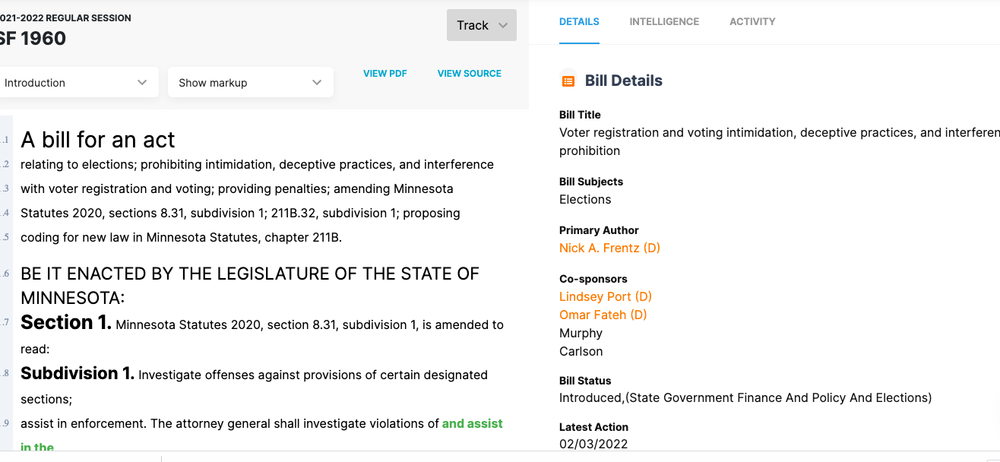
Not only did they receive a notification about the language in the bill, but the information was also easier to ingest. Plural’s color coding feature made it easy to see the changes in language from previous bills and understand the situation at hand more clearly.
Taking Advantage of Intelligent Search
Technology has also made following issue developments far more effortless, speeding up how quickly public policy teams can spring into action.
From having live news updates on our phones at all times to tools that make it as easy to collaborate across oceans as it is across a conference table, software specifically built for policy professionals can truly transform the way teams work together and supercharge their bandwidth.
For example, Plural allows you to customize your search so your team knows to take action when it matters most. You can search by state, issue, legislator, or bill number.
With its new Saved Search feature, you can also set up your search to show any movement happening within a specific period, like the first two weeks of session or the last two weeks of session. You can save that search to target key areas of information.
With a tool like this, you get to call the shots. You can set up alerts to show you what you’re most interested in, cutting down the time it takes to search through multiple state websites.
No matter your issue—climate change, voting rights, healthcare reform, immigration, education, or something completely different—public policy software can simplify and streamline your efforts.
Bottom line? Having all of your issue’s moving pieces in one central place can help your team zero in on what updates matter to you and which language changes are going to have the greatest impact on your efforts.
Did your public policy team give it their all during the home stretch of the state legislative session? It may seem like the time to rest, but if you’re between sessions, there’s still plenty your team can do to keep advancing your issue.
To help you hit the ground running, we’ve rounded up how you can use your legislative technology tools between sessions to get ahead. Trust us, you don’t want to wait until the session starts to get your ducks in a row.
Read on for tips to optimize your strategy, streamline your public policy team communications, and be prepared for any special sessions.
Tactic 1: Understand Your Impact During the Legislative Session
When the 2022 legislative session ends, it’s the perfect time to refine your strategy for 2023.
Plural client Campaign Zero uses Plural to take a deep dive into the issues, researching the bill language that passed and analyzing the data from past sessions to inform future policy.
As you look over the data, your policy team can ask:
Which issues got traction and which bills died?
Which strategies worked and which ones didn’t work?
What bill language passed that we can use going forward?
Another important part of your policy team’s audit? Communication and conversations with your community once the session is over. With legislative tracking software like Plural, you can use public tags to draw attention to key findings or export data to share at a debrief meeting.
Finally, public policy teams may know how issues played out in their own state, but between sessions is an ideal time to look at what happened in other states. Capturing those details can inform your action plan for the next session.
Tactic 2: Streamline Communication and Capture Relevant Details
Instead of reverting back to email to communicate once the session is over, continue to use your legislative tracking software to organize your public policy plans and keep everyone in the loop.
Not only can you sum up wins and losses from the previous session, but you can also use Plural’s Workspaces feature to capture relevant threads of conversations in a central place, so your public policy team can easily find what they need. You can even create a Workspace just for sharing information with your community, membership, or public policy leaders. Plural client YWCA of Minneapolis took advantage of this feature to get the word out to community members.
Tactic 3: Brush Up on Your Knowledge of Legislators and Build Relationships
Even when the legislature is not in session, your team will need to continue to build relationships with elected officials who may become authors of sponsored legislation.
For that reason, between sessions is an excellent time to see what bills legislators authored, and whether or not they ended up being co-author of a bill affecting your issue. You can use this information to decide which legislators you want to build relationships with going forward.
You can also use your legislative tracking software to update your team on any elections where a member or senator is in danger of being replaced—and make a plan of action ahead of the next session.
Tactic 4: Be Prepared to Act During Special Sessions
While a state legislative session has a finite start and end date, special sessions can be called in most states at any time.
The COVID-19 pandemic and Supreme Court decisions putting trigger laws into effect are just two recent examples of this often-overlooked tactic. You’ll want to keep using your legislative tracking software to stay on top of any emerging developments.
Just ask the Center for Economic Inclusion (CEI). During the pandemic, CEI tracked multiple special sessions in Minnesota to see what policies would impact their communities. Plural helped them stay organized and connected to their community.
At the same time, lawmakers may not be passing legislation between sessions, but your public policy team will still want to stay on top of what’s happening at the Capitol. There may be hearings or committee meetings that will affect your issue when the session returns.
Use Your Legislative Tracking System Year-Round
State legislative sessions are usually short—public policy teams must make the most of every moment.
Plural is a tool designed to keep your public policy team ready to for action at all times. So when a new session starts—or a special session is called—you don’t have to rebuild your efforts from the ground up across multiple channels. Using Plural between sessions will have your team ahead of the curve and ready to keep focusing on the win from day one.
There are only so many days in each state legislative session—your public policy team needs to make every day count.
At the beginning of a session, you’re focused on deadlines—finalizing bill language, getting your bill in front of committee chairs, earning support for your issue. But at the halfway mark, the focus shifts and it’s all about reaching the finish line, convincing members of different parties to vote for your bill when it hits the floor.
An organized legislative session strategy can help you stay in the game—and advance your issue—until the very end. Even if your bill is dead in the water during the second half of the session, you can still make an impact, especially if you use a legislative tracking system to guide your game plan.
To help you make the most of every single day in session, we’re highlighting three legislative tactics to keep in mind.
Tactic 1: Stay on Top of Legislation Still in Play
Once the session is halfway over, it may be clear your bill won’t be the one that passes and becomes a law. But you can still fight the good fight.
Did another senator sponsor legislation similar to yours? Did a representative “Frankenstein” a bill so it includes your bill too? You can use a legislative tracking system to find out.
In Plural, for example, you can perform what’s called a Global Bill Search. The solution uses artificial intelligence to compare your proposed legislation to other bills being considered in the current session, enabling you to find ones like yours championing the same issue.
Soon, you will also be able to do a Possible Omnibus Search, which reveals if your bill has been packaged together with several measures into a larger bill, called an omnibus. (Plural currently offers this feature for Minnesota and plans to expand it to all states.) The solution scans the language in your bill and matches it with similar text in other bills.
If you’re unaware of the legislation still in play this late in the session, you could miss out on a chance to advance your issue. Your public policy team can use a legislative tracking system to stay organized and lend support to these similar bills.
lobal Bill Search in Plural
Tactic 2: Make a Team Member Your Early Warning System
At this later stage of a legislative session, members and senators may schedule last-minute meetings and make behind-the-scenes deals you can’t know about without some extra effort.
Keeping an ear to the ground to learn of the latest developments will help your public policy team be ready to take action. Have one person on your team take on this important role to help you remain informed. The team member reaches out to colleagues to ask if they’ve heard anything and contacts everyone on the committee reviewing your bill before reporting back with what they discover.
Time is of the essence, so email is the wrong tactic for collaborating with your public policy team. Instead, consider software like Plural, built specifically to facilitate collaboration.
The solution’s Workspaces feature allows you to capture relevant notes and easily alert your team about pressing action items. You can also find the contact information for key senators or members right in the solution, saving you time searching for policymakers outside the committee who may have influence.
Tactic 3: Organize Your Public Policy Strategy for Next Session
As the session winds down, there’s still work you can do to advance your issue, especially for the next session. (There’s also a small chance your bill may be revived and end up passing in a special session called after the regular session ends, so there’s that.)
Fine-tuning your strategy based on what you learned during this session can help you win next time. One helpful strategy is to export the relevant data—tags, notes, contacts—from your legislative tracking system into a spreadsheet for analysis. If you’ve been using Plural throughout the session, this step should be seamless.
Then, you can review all of the data you’ve tracked, organizing key tactics and measuring results to improve your strategy for next time. So your team can seize the day another day.
AI is helping people identify which bills they should be focusing on and it’s changing the face of public policy work.
In any given session, organizations engaged in public policy advocacy may have to sift through hundreds of bills to identify important legislation that could potentially impact their particular work, cause, or agenda
Needless to say, it can be time-consuming and labor-intensive for public policy teams to determine which bills are likely to gain traction and ultimately come to a vote. Thankfully, legislative tracking software is evolving to keep up, with support from Artificial Intelligence (AI) to simulate human behavior and machine learning allowing programs to learn from past data and identify patterns.
Data is the raw material and AI is the tool that can allow public policymakers and government relations teams to generate more effective, targeted strategies to influence changes in public policy—and improve people’s lives. Not only can AI tools rapidly synthesize large amounts of data, detect patterns and identify opportunities, but the use of AI in public policy is poised to simplify policymaking and help shape public policy in the future.
How Legislative Intelligence Simplifies Public Policy Work
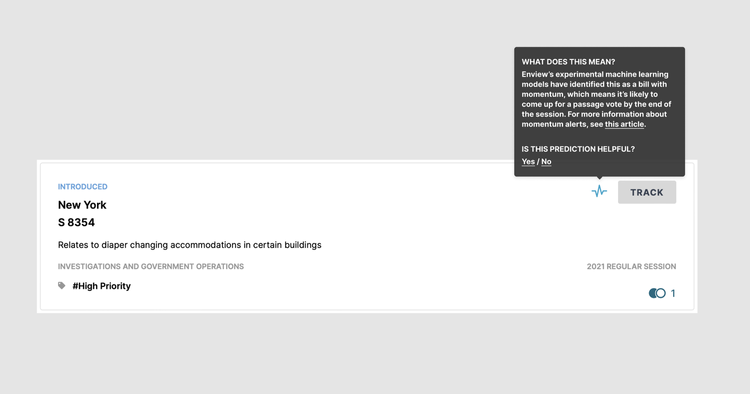
Using machine learning and drawing on historical data, Plural surfaces the bills that look most likely to come up for a passage vote at the end of a session. Once a bill is introduced, its patterns of movement correlate to its chances of passing. These patterns are different for every legislature and change over time—even in the course of a single session.
The machine learning model finds these patterns and makes predictions based on historical data from previous legislative sessions, including data points such as whether bills passed both chambers, the actions taken on those bills, and whether those bills were signed by executives.
To help you evaluate which bills to track and commit resources to, Plural released a new feature (currently in beta) that marks bills it believes are more likely to be put up for a vote by the end of the session with a pulse icon next to the “Track” button in search. You can also view the pulse icon on its bill card and its bill detail page.
Pulse Icon in Plural
Currently in Beta
See how much momentum a bill has in Plural.
How to Streamline the Bill Discovery Process
Until recently, public policy and government relations teams have had to visit many different websites to sift through each session’s legislation. Then, they manually gathered all of the relevant bills and pertinent language into lengthy spreadsheets, which they emailed to their team to collect their comments and determine next steps.
The machine learning built into Plural dramatically simplifies and speeds up this tedious but necessary bill discovery process.
Let’s say you’re part of a small public policy team relying mostly on interns or less experienced staffers to suss out what makes a particular piece of legislation worth following. Because bills with momentum are automatically flagged within Plural, it’s easy for someone less familiar with issue nuances to share it quickly with more senior decision-makers on your team. And if you’re the more experienced one? Having the ability to filter your search to include bills that have been flagged as having momentum will dramatically shorten the number of bills you have to review.
Waste Less Time on the Wrong Legislation
Technology in public policy-making is empowering public policy teams to make better, more informed decisions. Plural’s ability to identify bills more likely to come to a vote allows public policy professionals and advocates to be more strategic when choosing bills to pursue and deciding how much effort to allocate to bills when they start circulating within the legislature.
Of course, AI won’t replace the expertise it takes to influence policy. But by helping you speed up the process of identifying which bills matter most to your team, the technology will save the time you would spend on manual processes so you can spend it more strategically.
The investment brings Plural’s total funding since launching our legislative intelligence and collaboration platform in 2019 to over $14 million. The new funding will help us aggressively expand our sales and marketing efforts, broaden and accelerate our product development, and continue our social-impact-driven mission.
The Investors
Aaron Perman, Principal at S3 (lead investor): “Plural has built the most effective software platform for government affairs professionals with its collaborative workflow and rich public policy dataset.” said Aaron Perman, Principal, S3 Ventures. “The company has an impressive track record of enabling its large and rapidly growing client base of Fortune 500 companies, trade associations, and leading advocacy organizations to achieve their public policy objectives. We are excited to partner with CEO Damola Ogundipe and the impressive team to further accelerate Plural’s rapid growth.”
Bobak Emamian, Partner at Debut Capital: “Since meeting Damola in 2020, we have been beyond impressed with his leadership and the team’s ability to build a world-class product and organization.” said Bobak Emamian, Partner at Debut Capital. “Plural has consistently met and exceeded its goals and we couldn’t be more thrilled for this next chapter.”
The Journey
When we started Plural, we began our mission of using data and technology to increase government transparency and increase democratic participation. Since bringing our flagship legislative intelligence and collaboration software to market in 2019, 100+ organizations and 2,000+ users have tracked and influenced 50,000+ bills all over the country. We’ve helped organizations work and influence policy in areas ranging from data privacy to voting rights, infrastructure to women’s health, and cannabis to emissions. We are proud and excited to have been able to build a high-growth company that is at the forefront of social good.
The future of Plural will continue to be driven by our values: exercising transparency, being people-first, and practicing audacious thinking. As we scale, we’ll continue to invest in our people and our products as we build a world-class public policy data and software company.
We’re thankful to have S3 join us as a partner, and Aaron Perman join our Board of Directors. Aaron’s passionate belief in my leadership, our team, and our collective vision is exciting and we’re looking forward to working and building together.
I’d also like to thank our over 100 customers, large and small, across the country. We’re fortunate to work with organizations as diverse as Comcast, Google, Common Cause, The Center for Secure and Modern Elections, America Votes GA, The University of Minnesota, Fredrikson and Byron Law, and The Austin Chamber of Commerce among many others. Thank you all for giving us an opportunity to win your business, prove our value, and continue to innovate how smart policy work gets done with you.
Our Products
Plural: Using legislative intelligence, our flagship product, Plural automates the process of discovering, tracking, and analyzing legislation in progress. For example, surfacing similar bill text, or identifying which bills among hundreds or thousands, are gaining momentum. Using Plural’s Workspaces feature, customers can invite internal teams, clients, partners, organizers, and activists to collaborate, without the cost of licensing seats.
Open States by Plural: Since 2009, Open States has provided advocacy organizations, journalists, researchers, and the public with data about legislation across all 50 statues, Washington D.C. and Puerto Rico. In addition to information publicly available and searchable on the site, Open States supports a community of over 11,000 technical users by providing API access and downloads of aggregated legislative information.
The Plural Team
I’m incredibly grateful for the team we’ve built at Plural. I’d like to take this opportunity to thank each one of our team members for joining me on this journey. As I often say, we’re a team, not a family. But the strongest and most successful teams are unified in their goal, unwavering in their commitment to accomplishing that goal, resilient in the midst of adversity, and clear-eyed and heart-filled in their trust in each other. Thank you all for upholding our company culture and our values.
I’d also like to thank my co-founders, Yemi Adewunmi and Shawntera Hardy. You’re two of the most incredible, ambitious, and resilient people I’ve ever met, and it’s been an honor working and building this company with you.
Plural, a technology company providing legislative data and intelligence products, raises a $10M Series A funding round. The funding will be used to expand the company’s impact on public policy data innovation, aggressively expand sales and marketing efforts, and broaden product development.
The funding round was led by S3 Ventures, and with participation from Menlo Ventures, Consonance Investment Managers, Debut Capital, and Colin Kaepernick. Returning investors include Backstage Capital, ffVC, M25, and Higher Ground Labs.
Its software, Plural, leverages state and federal legislation to unlock opportunities in government relations and advocacy work. Their customers, including Comcast, Google, Common Cause, and The Center for Secure and Modern Election, use Plural’s innovative technology to stay automatically updated on fast-moving legislation across the country.
“Since bringing our flagship legislative intelligence and collaboration software to market in 2019, 100+ organizations and 2,000+ users have tracked and influenced 50,000+ bills all over the country. We’ve helped organizations work and influence policy in areas ranging from data privacy to voting rights, infrastructure to women’s health, cannabis to emissions. We are proud and excited to have been able to build a high-growth company that is at the forefront of social good,” says Damola Ogundipe, CEO and co-founder.
Legislative Intelligence & Collaboration
The company’s unique approach to public policy management centers on what they’ve coined legislative intelligence™ and collaboration. Their product’s innovation comes at a time when public policy professionals, lobbyists and advocacy organizations are looking for a reliable tool as their work moves in a digital and remote world. Plural’s software enables organizations to stay on top of updates in the legislature and share information with various stakeholders, while providing best-in-class customer experience and support.
“We’ve designed a solution that truly helps users with the challenges they face in their day-to-day work as policy professionals and advocates. We’re excited to bring a design-first approach to how communities interact with public policy,” says Yemi Adewunmi, COO and co-founder.
The investment brings Plural’s total funding since launching their legislative intelligence and collaboration platform in 2019 to over $14 million. The new funding will help the company aggressively expand their sales and marketing efforts, broaden and accelerate product development, and continue their social-impact-driven mission.
About Plural
Plural is led by co-founders Damola Ogundipe (CEO); Yemi Adewunmi (COO); and Shawntera Hardy (Advisor). The all Black founding team is shaking up how public policy work gets done by developing cutting-edge legislative tracking tools which make it easy to discover, interpret, and collaborate on public policy change. Plural gives government relations professionals an edge by giving them clarity on the status and changes to bills, enabling them to develop more inclusive strategies and quickly take action on pending legislation. Plural’s tools deliver open access to legislative information, and provide simple to use, modern approaches to public policy tracking and collaboration.
With $900M in assets under management, S3 Ventures is the largest venture capital firm focused on Texas. Backed by a philanthropic, multi-billion-dollar family for 17+ years, we empower great entrepreneurs with the patient capital and true resources required to grow extraordinary, high-impact companies in Business Technology, Consumer Digital Experiences, and Healthcare Technology. For more information, please visit www.s3vc.com.
Whether you’re championing voting rights, clean energy, or healthcare reform, one thing is certain. Being able to read and understand a bill quickly can help you advance your issue more easily.
With so many bills being introduced, not to mention being revised on repeat as they progress through the legislature, staying on top of the changes can make your head spin faster than an out-of-control merry-go-round.
If you—or someone on your public policy team—is still learning the components of a legislative bill, we’ve outlined how to quickly make sense of what a bill is trying to accomplish. Plus, we cover how to use legislative tracking software to streamline and simplify how to read legislative bills.
What Makes Up a Bill?
First things first. Understanding how bills are typically structured can be helpful, especially if you’re new to public policy.
Every state does things a bit differently. But for the most part, federal and state bills share the same basic structure, even though they may use different names or have slight variations in what’s required in a bill.
Bills typically begin with a title and a summary—called a caption by certain states. The title identifies the subject of the proposed legislation, while the summary provides an overview of how the bill will affect current legislation to become a law.
Each bill will also include who is responsible for introducing the bill—a primary sponsor or co-sponsors. In some states, the bill’s sponsor can be found under what’s called the enacting clause. There may be instances where two members of Congress introduce essentially the same bill, so checking the bill’s author can help you avoid reading the wrong bill.
The meat of the bill—exactly which laws the bill is trying to change and how it will specifically change them—is outlined in what are typically called sections. Often numbered for easier reference, sections will reference existing statutes on the books and spell out the changes the bill seeks to bring into effect.
Finally, the bill’s effective date, usually at the end, refers to the date the bill becomes a law.
The Beauty of Legislative Tracking Technology
Put simply, the language used in a bill is what becomes law, and that’s where reading a bill can become a bit cumbersome. To clearly illustrate the bill’s intention, a bill will strike through language it wants removed and underline new language that must be added in. Some states use bracketing to make it extra clear the bill seeks to remove the language that’s part of existing law.
Example:
A tax of three [two] dollars per person [and three dollars per family] shall be collected in alternate years.
Legislative tracking technology like Plural automatically highlights a bill’s new language being added in green and old language being removed in red. The color-coding, which is based on universally understood traffic cues, makes the information far easier to digest.
The color-coding feature makes it easier to comprehend a bill’s nuances at a glance, saving your public policy team time that can be used developing public policy strategy. This can be especially helpful when tracking bills that support your issues across multiple states.
Even better, when you’re reading a bill within Plural, you can quickly and easily create Workspaces for specific teams to collaborate based on issue, creating a repository of similar bills you want to track.
One final tip: When reading a bill for the first time, take a moment to ground yourself in the part of the law the bill is seeking to change. For example, a new cryptocurrency bill may seek to legislate issues related to Commerce or the Environment, or both. Reading the bill carefully to know the particular statutes being affected is what will help you decide if the bill is one your team will support.
Find out how Plural can help you easily analyze bills
Public policy work can be a tricky business. To truly affect change in your community and make an impact, you need to understand the ins and outs of how laws are made. Only then can you advance your issue at the right time and place.
If you’re new to public policy work—or have someone on your team who’s still learning the nuances of government relations—this post can help you get up to speed fast.
Here, we give a quick overview of how a bill becomes a federal law, the key terms you need to know, and some modern tools that are making the necessary legislative tracking—and collaboration among public policy teams—more efficient. (The process is similar on the state level, but each state handles the process slightly differently.)
(To be fair, you could watch Schoolhouse Rock’s “I’m Just a Bill” video, but the dated yet beloved cartoon for elementary school kids doesn’t cover tips for efficiency and digital collaboration.)
A little fine print to keep in mind with the legislation process…
This is how the process is supposed to work in the ideal. Once you get human beings involved, well…things can happen. Bill text can get changed. Sometimes the entire text of another bill can get merged into a piece of legislation without going through the process. (Rarely, even stranger things happen like permanent Daylight Savings passing the Senate unanimously without a full vote).
That’s one reason it helps to have good legislative tracking tools. A good tool will highlight changes that appear through the process, alert you when they happen, and even identify passages of similar text from other bills by using Artificial Intelligence (AI).
And now back to your regularly scheduled blog post.
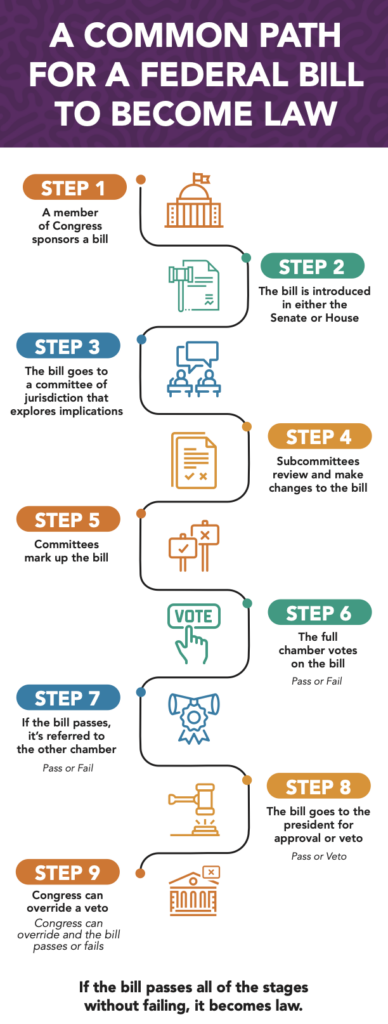
While the ideas for proposed legislation (called a bill) can come from the Senate, House of Representatives, advocacy groups, or everyday citizens, only a member of Congress can introduce, or sponsor, a bill.
Step 2: The bill is introduced in either the Senate or House
You can find federally sponsored bills listed on Congress.gov. Or you can use legislative tracking software to receive automatic notifications of federal and state bills making their way through the legislature. Tracking tools can simplify how you collaborate with your public policy team, allowing you to tag a bill, assign the next action step, or categorize legislation by priority and policy stance.
Step 3: The bill goes to a committee that explores implications
Both the upper chamber (Senate) and lower chamber (House) have various committees made up of members who are responsible for issues such as health, commerce, or foreign affairs. (Fun fact: Nebraska is the only state to have a single chamber.) Legislative tracking software can also help you see which bills are gaining traction and more likely to come up for a vote, enabling your team to devote resources to legislation that will have an impact.
Step 4: Subcommittees review and make changes to the bill
Often, committees vote to refer bills to a subcommittee that further studies the bill. The subcommittee conducts hearings and “marks up” the bill–essentially edits or amends it–before voting to move the bill forward and reporting back to the committee on their findings.
Step 5: Committees mark up the bill
When the hearings are completed, the committee will make additional changes and amendments prior to a vote recommending the bill to the “floor,” which refers to the physical place where members debate, vote, and conduct other legislative business.
Step 6: The full chamber votes on the bill
With some exceptions, bills can originate in either chamber. For a bill to become a law, it has to first pass the chamber in which it originates and then pass the other chamber. Once the bill reaches the floor, members debate the bill, approve any amendments, and vote whether to pass it. If it doesn’t get enough votes, the bill dies.
Step 7: If the bill passes, it’s referred to the other chamber
Because each chamber may pass different versions of the same bill, Congress may have a conference committee to resolve or reconcile the differences. If the conference committee is unable to reach an agreement, the bill dies.
Step 8: The bill goes to the president or governor for approval or veto
If both the House and Senate approve a bill in identical form, it’s sent to the President. If approved, the president signs the bill and it becomes a law. If opposed, the president vetoes it.
Step 9: Congress can override a veto
If the President vetoes a bill, the veto can be overridden by getting the Senate and House to pass the bill by a two-thirds majority.
Of course, this is only one possible path. To get more details and learn about alternative paths, we highly recommend you review the articles and videos here.
Key Terms to Understand in Legislation
Knowing the definitions of bill, law and legislation will help you stay on top of where key bills are in the legislative process so your public policy team can decide on strategies.
Bill
Proposed legislation that is under consideration by a legislature.
Congress
Congress is the legislative arm of our government and its job is to make laws. Congress is made up of two houses: the Senate (upper) and the House of Representatives (lower).
Law
Once a bill has been enacted into law, it is called a statute or a law.
Legislation
The action of legislating or exercising the power and function of making a bill into a law.
Lobbyist
A person who takes part in an organized attempt to influence legislators.
Government Relations
The process of influencing public policy at all levels of governance: local, regional, national, and even global.
House of Representatives
One half of Congress. The number of representatives a state has is determined by its population. Each representative serves two-year terms.
Public Policy
A system of laws, regulatory measures, courses of action, and funding priorities concerning a given topic promulgated by a governmental entity or its representatives.
Senate
The other half of Congress. Each state has two senators in the Senate who serve six-year terms.
Manage All the Moving Parts
Now that you’re up to speed (we won’t tell if you bookmark this post as a reference), it’s time to take the next step: see how you can streamline tracking bills and collaborating on issues with legislative tracking technology.
Legislation doesn’t get passed in a vacuum—the path to progress starts with building a winning coalition. To move your public policy agenda forward, you need to partner with anyone—and everyone—who can help you influence the outcome.
Whether you need to work with lobbyists, attorneys, government relations professionals, organizers, or volunteers, connecting all of the key players so you engage stakeholders in meaningful ways is critical.
Plural is legislative tracking software with built-in workflow and collaboration features—called Workspaces—that help you keep your team on the same page across all of your issues. Think of Workspaces as the digital conference room you gather everyone who matters in to have conversations. Workspaces is where you meet to plan strategies, share updates and assign tasks across your team.
But instead of living inside an office, this conference room is digital. Even better, it’s a central digital repository for the many ongoing conversations across teams who need to collaborate on public policy anytime from anywhere.
How Workspaces Work
The tools and strategies that have gotten the job done in the past are being rapidly outpaced by techniques that rely on digital collaboration. Not too long ago, you may have sat around a table with your colleagues sifting through this session’s relevant bills. You discussed which ones you were against, which ones were your priority, and even went through each bill’s language line by line, flagging on-point phrases and striking restrictive ones.
Along the way, you assigned your team key tasks like following up with government relations staff at aligned organizations and designating roles like leading your team on an issue nationwide.
Plural lets you do all that remotely in a digital platform, where every conversation, every note, every action item is captured, organized, and tracked in one place where stakeholders can access the information they need and act on it.
With Plural, you can quickly and easily create Workspaces for specific teams to collaborate based on:
Issue Create Workspaces for an issue—criminal justice reform, healthcare, or clean energy—to keep relevant information organized and easily accessible.
Region Give team members working on federal or state issues their own spaces. (National organizations usually set up workspaces for their state chapters.)
Role Connect everyone with similar responsibilities—lobbyists, lawyers, clients, interns—in one spot to facilitate sharing ideas.
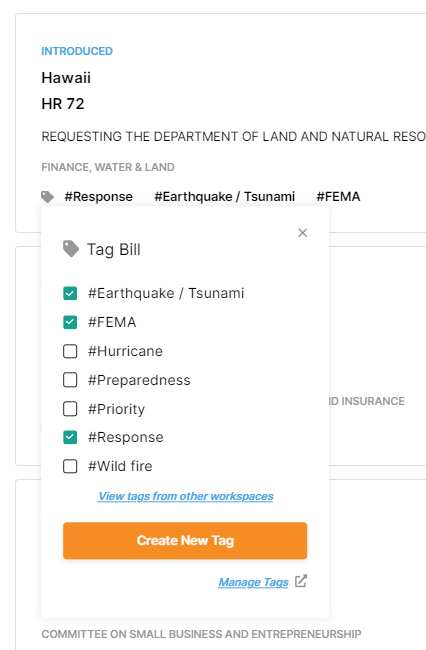
In addition to receiving automated notifications about the status of bills your team is tracking, you can use Plural’s Tags feature within a Workspace to draw attention to a bill, assign the next action step to a client, or categorize legislation by priority and policy stance.
The Minnesota Nurses Association of Minnesota created a Workspace called Reports. Instead of communicating back and forth in email, their team gets a notification when a lobbyist working on behalf of the association shares a daily report of relevant legislation activities. With relevant public policy information housed where it belongs, the association members no longer have to search through never-ending email chains to find what they need.
More Ways to Use Workspaces
Law firms often create a Workspace for each of their clients, either using the space to stay updated on all the moving pieces on their behalf or inviting their clients to collaborate with them on pieces of legislation.
Coalitions, like the Partnership on Waste Management in the Twin Cities, often use Workspaces to track various public policy initiatives, breaking them out by issues like recycling and waste.
“Plural helped America Votes Georgia and our partners become more coordinated than ever. At the end of the day, we could log on to Plural and get a rundown on everything happening under the Gold Dome.”
— Ashley Robinson, Executive Director at Progress Georgia, and previously at America Votes Georgia
Changing How Public Policy Teams Collaborate
Plural designed Workspaces to support effective democratic processes by encouraging access, collaboration and inclusion in policy discussion. Winning public policy battles is hard work, but thanks to Workspaces, collaboration with everyone on your public policy team is easier than ever.
Plural is intuitive and easy to use, so teams can collaborate in digital Workspaces right away.
Even better, the solution comes with unlimited users. Public policy teams can foster connections, exchange information, and work together to make lasting change without having to pick and choose who gets a license.
There’s no doubt that moving from an in-person conference room to a shared digital workspace is transforming how public policy work gets done. See how Workspaces can help you take your public policy work to the next level—get started with Plural today.
Learn More About Plural
Plural helps busy public policy professionals advance their issues by providing the most intelligent, streamlined, and collaborative public policy tracking platform available.
Save time with automated legislative tracking
Streamline workflows so you can respond effectively and quickly to change
Synchronize team and partner strategy using shared workspaces
Collaborate with internal and external teams without limit
Modernize your team’s processes with on-demand training and support