
Author: Yemi Adewunmi

  • 5 Tips to Convince Your Public Policy Team to Upgrade with Collaborative Tech Tools

    5 Tips to Convince Your Public Policy Team to Upgrade with Collaborative Tech Tools

    Now more than ever, influencing public policy takes teamwork. New digital tools are helping companies and organizations with public policy objectives quickly align partners, clients, and internal stakeholders on strategies for making a difference.

    Shared digital workspaces centralize conversations about particular bills and reduce the need for meetings. Tracking similar or related legislation manually is becoming obsolete.

    The next phase of public policy work is already here. If your team is reluctant to try new technology, here’s how you can make a case for making the switch. 

    Tip 1: Focus on Issues You Need to Solve

    Start by asking your team what their roadblocks are to getting their jobs done as efficiently and effectively as possible.

    Maybe your team needs a tool that helps them be the first to respond to changes in pending legislation—or maybe they’re looking for ways to streamline communications with legal departments, compliance, and organizers to ensure everyone is on the same page. Understanding their specific needs will help you select a solution that solves business challenges—something that motivates the team to try new technology.

    Tip 2: Build Buy-In for The Tech’s Benefits

    Next, consider how a solution will fit the needs of your team—and what challenges it will help them overcome. There’s no question that public policy work is evolving. Just like buy-in from key players can make or break a public policy campaign, having colleagues on your side can help you move the needle on technology adoption.

    Then, make sure you understand the technology’s features and benefits. Ask yourself, what solutions are on the market and how can they make our day-to-day work easier, faster, or more efficient?  

    Specifically, find out:

    • What are the business benefits of the new technology?
    • How is each solution different or why is one better than another?
    • Does the solution offer ongoing support?
    • How long will it take to implement the solution?
    • What’s involved in learning and adopting the tool?
    • What can the solution’s online reviews or case studies tell you about fit for your organization?

    Tip 3: Clarify Your Organization’s Goals and Requirements

    Whenever you need to get buy-in for a new solution, you must consider the needs—and possible objections—of each stakeholder.  

    Your public policy team may be intrigued by the solution’s promises to save time by automating legislative tracking, for example, but your CEO and IT team will be more concerned with how it affects the organization’s budget and operations. Reach out to each department to find out what matters most to them. 


    Common Requirements by Stakeholder

    Decision-MakersSolution UsersIT Department
    Meets security needsIntuitive and easy-to-useImplementation documentation
    Falls within budgetMeets workplace needsSensible timeline
    Meets legal prerequisitesMakes job easierReasonable maintenance

    Tip 4: Build in Ongoing Communication 

    Naturally, your colleagues will be curious about how they will integrate the new digital tool into their routine. Keep the lines of communication open so your team knows feedback is always welcome and understands the expectations around a timeline for making the transition.

    Set up a process for airing concerns, asking questions, or addressing any other issues before, during, and after implementation. In addition, let them know there will be access to resources your vendor provides—how-to guides, manuals, videos, ongoing support, or in-person training sessions.

    Tip 5: Tailor Your Message to Overcome Objections

    No matter their job title, everyone is most concerned with how any proposed change impacts them–whether directly as users, as team members responsible for the success of an effort, or as leadership managing a team and budget. Catering your messaging to each stakeholder’s concern can help you get a new solution approved.

    In your presentation, include the points you know will resonate within your organization, including how you’ll address any potential blockers that may pop up while the team adjusts their workflow to using the tool.

    One final note. We’re all naturally resistant to change. You can help set the tone for a successful solution adoption by acknowledging this fact. There’s bound to be some people who are frustrated at the beginning. 

    Help your team keep their eyes on the prize. A solution that improves collaboration or organizational efficiency—and ultimately positions your team to influence and win more legislative battles—is well worth the effort. 


    Learn More About Plural

    Plural helps busy public policy professionals advance their issues by providing the most intelligent, streamlined, and collaborative public policy tracking platform available.

    • Save time with automated legislative tracking
    • Streamline workflows so you can respond effectively and quickly to change
    • Synchronize team and partner strategy using shared workspaces
    • Collaborate with internal and external teams without limit
    • Modernize your team’s processes with on-demand training and support

  • Powerful Partnerships for Justice: How your brand can take effective public policy action on social issues

    Powerful Partnerships for Justice: How your brand can take effective public policy action on social issues

    One of the biggest questions facing organizations and corporations today is how and when to get involved with prominent social issues. There’s a lot to unpack, and this can be a tricky subject for policy professionals and organizational leaders.

    Your customers and supporters are paying attention to where you stand. On issues such as voting rights, reproductive rights, climate, racial justice, and many more, there’s no such thing as a neutral position. And with more and more attention being paid to things such as corporate political donations, people will find out where you have stood in the past. We spoke with Ashley Robinson of America Votes Georgia, and the former Director and Chief of Staff of the Georgia House Democratic Caucus, among many other distinguished roles. Ashley shared with us some of her experience working with corporations and organizations on how they can make a meaningful impact in the social justice space. Here are a few of our takeaways. 

    It’s No Longer a Matter of If You Get Involved, but How

    Corporate and organizational leaders can be uncertain about engaging on hot button social issues. It may seem easier to “stay above the fray” or “just focus on our product and our customers.” Others may see engaging in activism as a distraction that would alienate consumers. While this “do no harm” approach may suffice in the very short term, more and more consumers are considering where brands stand on the issues they care about.

    It’s impossible to escape the growing demand for action on social issues. For younger generations, most notably Gen Z and millennials, where their favorite brands stand on the issues they care about is becoming a top concern. Viral videos and social posts calling out brands to speak up are not a temporary trend.

    The longer a corporation or organization stays silent on an issue that’s dominating people’s minds, the harder it can be to overcome the perception that you don’t care, or worse, are standing on the other side. It’s all the more important if your product or organization has a history of being aligned with and supported by groups with more dominant or privileged identities, or of benefitting from more marginalized groups without giving back. 

    And if you’re not taking a stand, one of your competitors certainly will.

    It’s vital to remember that consumers are real people facing real issues in their community. Responding to those issues in a meaningful way can build more trust in your brand. This is also an incredible opportunity to show you are serious about living your values.

    “Your silence is louder often, and you definitely risk your customer base, but you also risk the trust that you have developed in your customers as well. Staying at home and doing nothing doesn’t yield you anything.”

    — Ashley Robinson, America Votes Georgia

    “Customers are increasingly expecting corporations and organizations to act with social interests at heart. We want the companies we support to use their power to advance issues, whether it’s voting rights, climate, housing, or other issues affecting our lives.”

    Wintana Melekin, Plural


    It’s important to take a long view and not be reactive to a noisy but ultimately temporary negative response.

    The questions companies and organizations face are big. These are issues that can impact your company brand in a big way with bothan increasingly diverse consumer base, and also an increasingly diverse team of employees. That’s why to stay competitive, it’s vital to start having active, genuine, and even willingly vulnerable conversations about this now.

    “You may lose some customers, and you may gain some. But…I think that’s what we’re starting to see—a lot more companies that aren’t afraid to do so.”

    — Ashley Robinson

    The Key is Engaging Effectively

    Consider what issues are particularly relevant to your business or organization. Think deeply about where you may have room to put meaningful public policy action behind your support. Then talk to organizations doing work in that space. Have conversations, even if there isn’t 100% alignment on all areas of the topic, you are building a relationship with people who are experts in the topic and in the activism surrounding the issue. 

    Consumers and supporters expect that when a corporation or organization supports a social cause, they will do so in a meaningful and effective way. People will see through performative actions that make no real impact. Statements posted on social media are not enough. This is why relationship building with those who have hands-on experience is critical.

    This work will involve frank conversations with activists, employees, and in some cases shareholders. Activist groups may demand far more than you’re able or willing to provide. But that’s okay — your goal is finding a place to begin.

    However you end up engaging on an issue, actions are vital. Showing up in the community speaks volumes, and there’s always a way to engage. The benefits of doing so will pay dividends over time, and is worth the investment it requires to begin. 

    Effective action also requires thoughtful messaging to your consumers or supporters. Some consumers may resist while others rejoice. Remember, this is a process. It will take effort, but the time to start is now.

    “There is something you can do that aligns with your mission and values, no matter what industry you’re in. “If you’re making shoes, there are communities of young people who need more athletic shoes, or they may need support for their teams. We can figure out a way to insert ourselves into the community.”

    — Ashley Robinson

    Learn More

    Hear from The Pros

    Want to know more about how organizations are building coalitions in a hybrid environment? Check out our webinar on “Building Coalitions that Work”.

    Did you know….

    Plural is policy tracking built with collaboration and coalition-building in its DNA?

  • Building Winning Coalitions In A Hybrid World

    Building Winning Coalitions In A Hybrid World

    Building coalitions has long been a key strategy in the policy space, and while the pandemic has added new obstacles to overcome, it has also spurred innovation. And with hot-button legislation moving across the country, it’s never been more important for allied groups to work together. 

    Unlocking Collaboration 

    A winning coalition doesn’t come together by accident — it requires intention, planning, coordination, and excellent communication. 

    “Building coalitions is about connecting with people,” says Grace Waltz of the Minneapolis Regional Chamber. “That is still the case during the pandemic, we just do more of it through a screen.”

    Some coalitions are temporary, but most issues are won through persistence. Building a coalition that can endure and achieve big wins means investing time and energy in people-centric strategies: 

    • Outreach and relationship-building. One-to-one meetings are crucial, whether virtual or in-person. Finding the right partners means talking to those impacted by the issue, those working in the same space, and key decision makers.
    • Turning alignment into action. That means bringing together key people from each organization to develop and execute plans that draw on their unique expertise.

    Organizer and Plural Customer Success Manager, Wintana Melekin suggests asking yourself these questions to help plan and manage effective coalitions:

    1. What steps can we take to establish and maintain trust across the coalition? Partner groups need to establish common goals, and work collaboratively and transparently. Knowledge-sharing and ensuring security are also crucial to any coalition.
    2. What expertise can we leverage across coalition partners? Each group brings a unique skillset to the table, whether that expertise is geographic, subject matter, or pre-existing relationships.
    3. What tools and actions will help us to coordinate our efforts? With the many moving pieces in a coalition, it is vital to track who is doing what, and what progress is being made. Keeping everyone on the same page and preventing duplication of effort avoids lost time and resources.
    4. How can we build a sense of community in a hybrid virtual/in-person environment? Bringing partners and allies together in shared spaces is crucial to effective partnership, whether it happens virtually, in person, or both. 

    New Technology Improves Collaboration

    The last two years have seen a rapid increase in the demand for tools that allow activists and organizers to get involved from anywhere, at any time. This presents a huge opportunity to mobilize around various issues, and can eliminate some of the barriers to access. 

    Julia Freeman, Director of Community Engagement at the Voices For Racial Justice reflects, “Initially, a lot of us were not familiar with all the different ways of engaging collaboratively online. So we had to figure out what works best for us, including the security. Ensuring safety is especially important when you’re dealing with BIPOC communities.”

    Having a secure, well designed digital environment for collaboration makes it possible for more people to participate. Encouraging collaboration to happen safely and securely between meetings helps coalition organizers build community engagement and broaden who can be involved since interactions can happen from anywhere and conversations can be asynchronous.

    Learn More

    Hear from The Pros

    Want to know more about how organizations are building coalitions in a hybrid environment? Check out our webinar on “Building Coalitions that Work”.

    Did you know….

    Plural is policy tracking built with collaboration and coalition-building in its DNA?

  • Lessons of the Pandemic: How Policy Professionals Successfully Leveraged Remote Work and How You Can Succeed in 2022

    Lessons of the Pandemic: How Policy Professionals Successfully Leveraged Remote Work and How You Can Succeed in 2022

    Policy work has changed by leaps and bounds over the last two years, as a result of digital transformations spurred by the pandemic. Political pros have had to quickly adapt to a new remote-only environment to stay on top of their political game. It’s a sharp departure from a world that depends on attending hearings and meeting with legislators, staffers, and activists face-to-face.

    With continued uncertainty and new variants of COVID-19 spreading rapidly, teams that are successfully using more digital tools for efficiency and collaboration will be better positioned to influence and win legislative battles in 2022.

    The Adjustment

    If you work in policy, then you saw first-hand many of the bumps in the road as legislative bodies adjusted to virtual work. Not only did you have to get your teams set up to work from home, you also had to figure out ways to keep the pressure on lawmakers when you could no longer go to the statehouse.

    Everything needed to be moved online — gone were the days of passing notes during hearings, stopping by offices, or counting votes on a whiteboard in the office. Knowledge needed to be shared, and situational updates on legislation needed to be stored in an accessible space. 

    “And then when the pandemic hit, we all went into our homes and had to figure out ways to interact with staff and members, and it was a daunting task at first, logistically, just to figure out where people were and the best way to get in contact with them… so that was a really huge mountain to climb in the beginning.”

    — Orlando Jones, Secure Elections Project

    As lawmakers adapted to virtual hearings, we also saw the volume of work increase. Legislation often moved faster, and policy teams that didn’t have efficient virtual teams and systems could easily fall behind.

    In the year and a half since the pandemic began, we’ve learned a lot about how to manage workflow in this new, emerging environment. So what can you do now to prepare for your next legislative session — whether it’s virtual or not?

    Digital Tools Are No Longer A “Nice To Have”

    The transition to remote work made it immediately clear that digital collaboration tools are a necessity, not just an “extra.” This was only made more important by the observation that legislation moved faster than ever, with lawmakers jamming more and more hearings into the calendar.

    This faster pace will continue in 2022 and beyond. And there are a few key areas where well-designed digital tools can provide a necessary boost:

    1. Legislative intelligence
      AI tools that identify important legislation and monitor it as it moves through committee can save hours a day over manually tracking moving legislation. Discussions and assignments can even happen directly in tracking tools
    2. Contact tracking
      As policy staff interact with lawmakers, staff, and activists over a variety of mediums, having all of that information in one, accessible place is crucial.
    3. Coalition work
      With multiple organizations working on similar issues, or supporting or opposing the same bills, it’s never been more vital to ensure everyone is on the same page.

    Before the pandemic, many organizations were using ad-hoc solutions to track the large amount of information that now needed to be shared virtually. Data lived in spreadsheets, scattered documents, email messages, texts,  and chats.

    Now, more than 16 months in, organizations are taking a critical look at how they work, to ensure a deliberate approach that fosters efficiency and effective collaboration.

    The “New Normal” Is Here To Stay

    With 2022 sessions looming around the corner,  there’s little doubt that the pace of legislative work will only continue to quicken. For anyone working to influence legislation, keeping up with an ever growing workload will require new levels of efficiency.

    At the same time,  many facets of the pandemic environment, such as more virtual hearings, will continue. While this allows participation from any location — it also increases the likelihood of staff burnout. Utilizing tools that allow for real-time, secure sharing of notes and resources is vital not only for efficiency but to allow smooth handoff of work between staff.

    Hear from The Pros

    Want to know more about how teams have successfully leveraged remote work? Watch our webinar featuring speakers working on two hot button issues — voting rights and clean energy.

  • Open States Joins Plural: A message from our new Director of Public Data

    Open States Joins Plural: A message from our new Director of Public Data

    James Turk, founder of Open States, joins us as Director of Public Data

    The project that’s become Open States began back in 2009 while I was an employee at Sunlight Foundation. There was great enthusiasm for civic tech at this time, but not much direction for developers interested in getting involved. How could we rally the community and concentrate this surge of energy toward places where it had the best chance to create meaningful change? An ambitious project idea emerged: a new data source focused on state legislatures, built and led by a team of volunteer developers around the country. From the start, Open States was as much about building this community as it was about organizing legislative data.

    From the 2009 PyCon, where we really kicked things off, through today this community has remained essential to the project. During the project’s first five years at Sunlight we continued to grow the project, along the way bringing more people into the community.  Whether it was a developer who changed jobs after working on the project, or someone who taught themselves to code so they could contribute in their state, these stories have always been my favorites to share.

    The community of course isn’t just the 132 developers that have contributed to Open States’ scrapers; it also consists of those using the data, the APIs, and countless others who have found ways to promote the project through their own work. The project has seen use by some of the largest advocacy organizations, but also by the smallest, an individual citizen in a state looking to contact their legislator on an issue they feel passionate about.  The project has been used by national and local media organizations, state legislatures themselves, cited in countless academic papers, and a growing number of startups have used the product as well.  

    Truthfully, the commercial usage sometimes led to some difficult conversations among the team, as at least one startup took Open States’ code wholesale and began to adapt it privately.  This, while perfectly legal, was of course not in the spirit of the project and at times felt like a threat to the project’s existence.  As many open source projects must, we accepted this as a small downside.

    But we were more than glad to see that not all of these commercial organizations simply hoped to extract value and move on.  Despite a bad experience or two, quite a few of these organizations were genuinely interested in giving back.  This was the core of the decision to not ban commercial use or attempt to weigh down the source code with various encumbrances.  These commercial users were just as much a part of the community as others, and could contribute in meaningful ways.

    This became more important when the project became independent with the closure of Sunlight Labs back in 2016. It was here that the initial investment in openness and building a community really paid off, the team of ex-Sunlight employees that inherited the project all had day jobs, and we were depending on small grants and donations to keep the project afloat. Several organizations using the project stepped up in big ways, with major code contributions, financial support, and arranging introductions to potential donors.   It was during this period that I first became aware of Plural, as their Chief Data Officer, Jesse Mortenson, began to contribute to community discussions. I was grateful that this startup was willing and able to give back to Open States, and understood the importance of collaboration. 

    2020 was in many ways a banner year for Open States, with several grants allowing me to resume full time work on the project. Of course, the grants were finite, and the pandemic also shifted a lot of funding priorities away from this kind of civic infrastructure project. Thinking forward to 2021 I knew that the future of the project was again in question. Would I try to maintain the project in my free time as I had for the first independent years? continue with some reduced capacity and accompanying sacrifices? or, worst case, have to step away and shut key parts of the project down?

    I knew no matter what that I wanted the project to continue. It was right as I began to explore these opportunities that Plural reached out.  I could tell right away from my conversations with Jesse and their CEO Damola that they wanted to see Open States succeed, not just eliminate it as competition or keep others from benefiting from the openness. 

    As we continued to discuss what joining forces would look like, it became clear that this choice was the best for both the Open States community and for Plural.  I grew confidence that Open States could continue to grow under their umbrella, while remaining open.  Open States’ growth will be driven in part by Plural and by community needs, in turn increasing the quality and breadth of public data.

    I’m joining Plural as its new Director of Public Data because I know that they are a team that is passionate about doing good and that understands the importance of tools like Open States for the communities it has served for the past twelve years. I am excited that Open States’ future will no longer be tied to the free time of a few former employees of a nonprofit, or the whims of grant-giving organizations. I’m eager to continue to grow the Open States community in new ways as the project enters its thirteenth year.

    Thank you for sticking with me,

    James Turk
    Director of Public Data, Plural

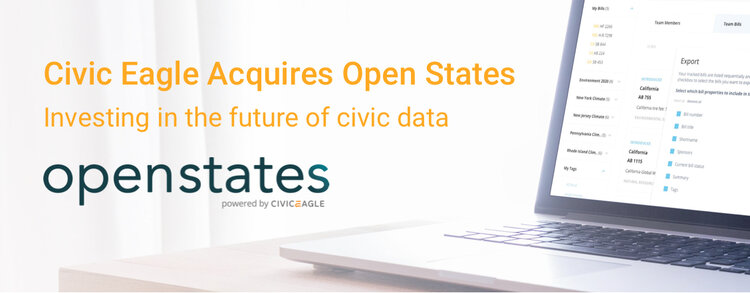
  • Plural Acquires Open States and Invests in the Future of Civic Data

    Plural Acquires Open States and Invests in the Future of Civic Data

    Plural is working towards a world where public policy is transparent and accessible to communities; because, if you can’t see it, you can’t change it. In 2019 we launched Plural, our legislative intelligence and policy management software, for policy professionals to monitor, report and collaborate and create deeper insights on legislation. 

    Today, our technology helps some of the nation’s leading organizations and advocacy groups track and investigate important policy from all 50 states, Congress, D.C. and Puerto Rico. Since 2019, we’ve doubled our funding, employed 13 full-time teammates, and have closed notable partners such as Comcast, Center for Secure and Modern Elections, and Fair Fight.

    We know that our software tool relies on clean, reliable data in order to serve our users. At first, we started where we could, but quickly realized that we needed additional support if we wanted to build around complex state legislative data. We embraced Open States, the leader in open legislative data in the country. Over the past 2 years, we’ve collaborated with and contributed to Open States’ passionate community of volunteer engineers who support public data. As we began to look at the future of the Open States project, we saw an opportunity to be a permanent resource and to ensure continued access and transparency to this civic data.

    Today, we are announcing our acquisition of Open States and the expansion of our product offering. This is a natural fit for us because we share the mission of empowering people to impact policy through innovations in technology and data. More importantly, Open States brings an invaluable vibrant community of technologists focused on civic data projects. Open States will continue to serve as a public resource for researchers and the greater community. In addition, Open States Founder James Turk has joined Plural as our Director of Public Data leading a team responsible for growing our political data infrastructure. 

    We are excited about growing our team and furthering our investment in open civic data. This acquisition helps us with our mission of making the democratic process more transparent and accessible using technology. We believe that when we can see the workings of power around us, we can lend our voices to shape how that power is exercised.

  • REPORT: COVID-19 Adaptations for State Legislatures

    REPORT: COVID-19 Adaptations for State Legislatures

    Preparing for Legislative Session in a Pandemic

    We’ve researched the top challenges you can expect to see in state legislatures in light of the pandemic.

    Download the report to learn what each state is planning for its 2021 legislative session.


    Watch the webinar with Shannon Watson, Director of Public Affairs at the St. Paul Area Chamber of Commerce

  • 5 Steps to Make Sure Your Stakeholders Get Out the Vote

    5 Steps to Make Sure Your Stakeholders Get Out the Vote

    Whether you’re part of a corporation or a nonprofit, chances are your employees are going to be affected by what happens in the election this November. With misinformation spreading rapidly and confusing processes on how to vote safely during a pandemic, it has become more difficult than ever to know how to properly get the vote out. 

    At our recent Getting Out The Vote webinar with Fair Fight and BallotReady, we discussed five steps organizations can take to make sure their stakeholders, from employees to clients to constituents, get out the vote:

    1. Encourage people to make a vote plan

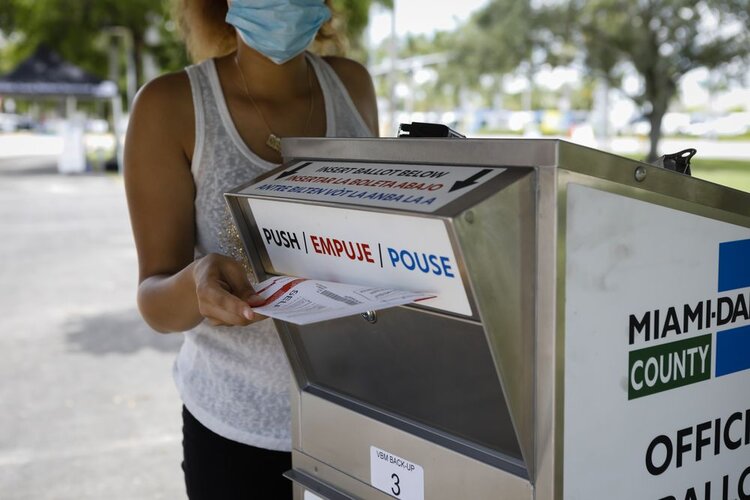
    It can be overwhelming for voters to navigate all the information about how to vote. But it’s best to have a plan. Share links to websites about your state’s early voting dates, mail-in voting drop box locations, and polling places so that your stakeholders know exactly where to go and when. Be sure to send this information as early as possible, so they have time to make plans to vote.

    Here is a list of resources to help you navigate.

    2. Communicate clearly what is at stake

    As more Americans realize just how important their vote is, some political operatives are making efforts to suppress the vote for certain demographics and regions. This suppression can come in the form of provisional ballots in different counties, purging voters due to signatures “not being an exact match,” requiring fines to be paid before being able to vote, asking for a witness to sign an absentee ballot, and much more. Yet this is exactly why it’s more important than ever to increase voter turnout and help eliminate voter suppression in the future.

    3. Be thoughtful about your voice

    Voter protection is not a partisan issue. Regardless of political affiliations, every American should have the right to vote and should be able to submit their ballot easily and quickly. Be sure to communicate this when encouraging stakeholders to get out the vote. 

    4. Engage with your audience consistently

    Attention spans are shorter than ever before, and with the overwhelming amount of information flooding social media, it’s key that you consistently communicate and engage with your audience. Send weekly emails or newsletters to your stakeholders, informing them of what’s happening regarding voting in your area, and consistently share election dates and information to keep it all top of mind. More of your audience will appreciate this information than you might think, and will also keep you top of mind.

    5. Leverage partners to amplify your voice

    There are plenty of amazing nonprofits out there who can help you in your mission to inform voters and get out the vote. BallotReady makes it easy for voters to understand every candidate and referendum on their local ballot and to cast informed votes all the way down the ticket. Fair Fight is a quickly growing organization that advocates for the right to vote and aims to combat voter suppression nationally. Each of these organizations offers stakeholders easy ways to stay informed and know what signs to look out for to prevent voter suppression.

    At Plural, we designed a toolkit for advocacy organizations to make it easier to innovate their stakeholder or audience engagement workflow. By following our guide and using its templates, you and your team will have a comprehensive plan for achieving your advocacy goals through growing an audience of engaged and informed stakeholders.

    Download our Advocacy Toolkit today:
    https://learn.civiceagle.com/toolkit 

  • The Next Wave of COVID-19 Relief Legislation and What It Means for Nonprofits

    The Next Wave of COVID-19 Relief Legislation and What It Means for Nonprofits

    As the Senate adjourned in August amidst massive gridlock surrounding the second COVID-19 federal relief bill, many Americans were left asking how they will be affected once a second stimulus bill eventually gets passed. Nonprofits in particular have been some of the hardest hit by the pandemic, as unemployment rates continue to skyrocket and families earn less money for charitable giving. In the first quarter of 2020 alone, nonprofit donations already declined by 6%

    The second wave of COVID-19 relief has largely become a battle between one Democratic-backed bill, titled the Health and Economic Recovery Omnibus Emergency Solutions Act (HEROES Act), and the Republican-backed bill, called the Help, Economic Assistance, Liability Protection and Schools (HEALS) Act. While each bill has differences, there are new portions that will benefit nonprofits if passed in the next legislative session.

    So how will the government extend help to the nonprofit industry, which is facing up to $25 billion in revenue losses in 2020? We took a deep dive into what has been discussed for the potential second stimulus bill, and three ways nonprofits may benefit: 

    1. Second Round of PPP Loans: The first relief bill which was passed in March, titled the CARES Act, unfortunately shut out a large portion of the nonprofit sector from accessing a grant under the Paycheck Protection Program (PPP). The new HEROES Act aims to fix this by extending PPP eligibility to all 501(c) nonprofits, not just 501(c)(3) and 501(c)(19) veterans organizations. Additionally, the new bill lifts the cap of 500 employees so that nonprofits of all sizes can apply for relief, and also eliminates the requirement that 75 percent of the loan through the CARES Act cover payroll expenses. These measures will ensure that a much larger number of nonprofits across the country can apply for desperately needed aid for a variety of purposes beyond payroll. 
    2. Loan Qualification & Forgiveness: The Main Street Lending Program will provide low-interest loans to nonprofits with a minimum of 10 employees through December 31, 2020. The HEROES Act aims to ensure that nonprofit organizations in economic danger can qualify for a loan and eliminates the minimum loan size. This portion of the bill will also allow nonprofits serving low-income communities to defer payments and earn loan forgiveness. The HEROES Act also hopes to incorporate a $60 billion long-term recovery loan program that targets nonprofits, low-income communities and minority-owned businesses.
    3. Liability Shield for Nonprofits: A major point of contention amongst the Democrats and the Republicans is the SAFE TO WORK Act, which aims to protect a wide variety of entities from coronavirus-related liability. These protections are designed to protect business owners unless they engage in gross negligence or consciously engage in reckless disregard for the safety of their customers and employees. Republicans argue that this will provide extra protections for businesses and nonprofits who are already struggling economically, while Democrats argue that it would allow organizations to put employees in danger with no legal consequences. It still remains to be seen whether this portion of the bill will pass or not.

    While the Senate adjourns through Labor Day without reaching a stimulus deal – and we very likely will continue to see a debate between Republicans and Democrats on the path forward – it is key for organizations to keep track of the bills that will impact them or their constituents. This legislation could affect almost every American, as well as nonprofits, advocacy organizations, employers, states and municipalities. If you have a stake in the outcome, now is the time to track what matters most and work to advocate for your members.

  • How Fair Fight reduced its time reviewing legislation by 75% with Plural

    How Fair Fight reduced its time reviewing legislation by 75% with Plural

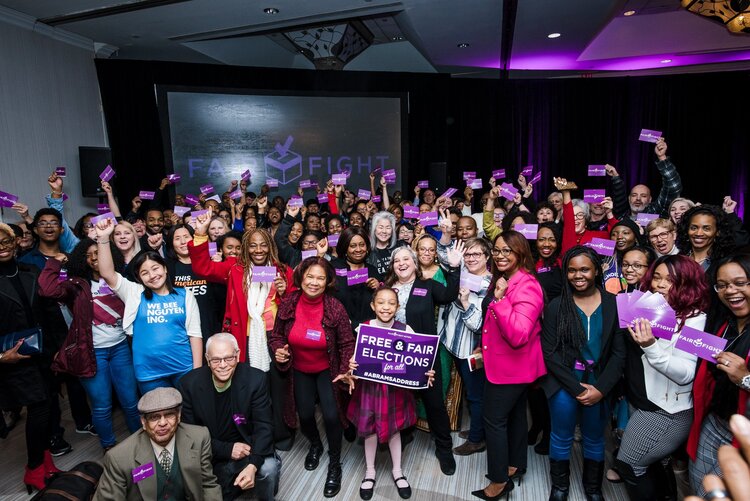
    Charged with promoting fair elections in a pivotal election cycle, Fair Fight needed a software solution to match its drive for equity.

    Photo by Element5 Digital on Unsplash

    The Background

    Fair Fight was founded by former Georgia State Representative Stacey Abrams, who ran as the Democratic nominee for Governor of Georgia in 2018. After her narrow loss in the gubernatorial election, Abrams launched Fair Fight “to ensure every American has a voice in our election system.” Fair Fight brings awareness to voter suppression, encourages voter education and engagement, and advocates for voter protection programs and election reform at all levels.

    The Goal

    Reduce the amount of time spent on reviewing legislation so that more time is invested in community engagement.

    Mobilizing voter turnout requires a combination of policy management and deep grassroots engagement. Detangling complex legislation and policies for the average voter is critical for the movement and can mean the difference between inspiring a new generation of voters or voter apathy. 

    For advocacy organizations like Fair Fight, this work requires understanding the policy matters at stake, the positions of the stakeholders involved, and strategizing on a coordinated community engagement effort.

    Better than ever before, technology can give advocacy organizations a leg up in understanding legislation and policy. Through a combination of rapid bill analysis, tracking and collaboration, policy professionals can ensure that they never miss a policy update. This means less time spent with keeping up with legislation and more time can be spent crafting messaging and engaging with stakeholders.

    Workflow Transformation with Plural

    “To achieve structural change, grassroots engagement plays a critical role in policy formation. Working from the bottom up ensures consistency between the needs of the people and policy direction.”

    Andre Field, political director

    Andre Fields, Fair Fight’s political director, was no stranger to grassroots political engagement. With over a decade of state and national political experience, he served as senior advisor to Stacy Abram’s gubernatorial run before joining Fair Fight. We spoke to him about how he’s been able to use Plural to directly address one of their biggest challenges.

    The Problem

    The 2020 presidential election is top of mind for Fair Fight and its partners. The organization has assembled a team of organizers, advocates, lobbyists and policy experts to help ensure a fair count for all voters. Their mission is to neutralize any efforts to suppress votes. 

    In order to do so, however, it’s crucial that their group identify and review every piece of proposed legislation that could possibly inhibit voter turnout. Being able to track quickly changing legislation in real time is critical to gaining clarity about priorities and driving consensus around strategy. 

    Without a legislative tracking tool, it was a manual process to access legislation, monitor bill updates, save memos and notes, and keep other collaborators up to date. Such a workflow left Fair Fight and its partners at a significant disadvantage and risked their ability to execute on their mission. “I wanted to have a system that made us more efficient. Last year we spent a lot of time on extraneous processes leaving us with little time for community engagement.”

    The Results

    After beginning to use Plural, Fair Fight’s team saw a 75% reduction in time spent reviewing legislation. Their team can now access a robust library of proposed legislation, focus on its key policy concerns, and collaborate on messaging to its communities. With the bill identification and review process powered by artificial intelligence (or what we like to call “legislative intelligence”), Fair Fight can now leverage their core strength of crafting informative and inspirational campaigns that inspire voter turnout.

    Empowered with Plural’s legislative intelligence tools, Fair Fight has increased efficiency, reach, and cost savings. The result is reduced overhead and time sifting through millions of pages of legislation.

    Looking forward, Plural is proud to help Fair Fight continue to achieve their mission critical work to maximize voter turnout and ensure integrity within our democratic process.

    photo: https://fairfight.com/

    Plural helps government affairs teams and lobbying groups increase productivity, work remotely, enhance communication, and improves access to legislation across the country.

  • What’s new in Plural: Updates to reporting and tagging features

    What’s new in Plural: Updates to reporting and tagging features

    We’re excited to share these updates with you. Let’s take a look…

    Customize your reports

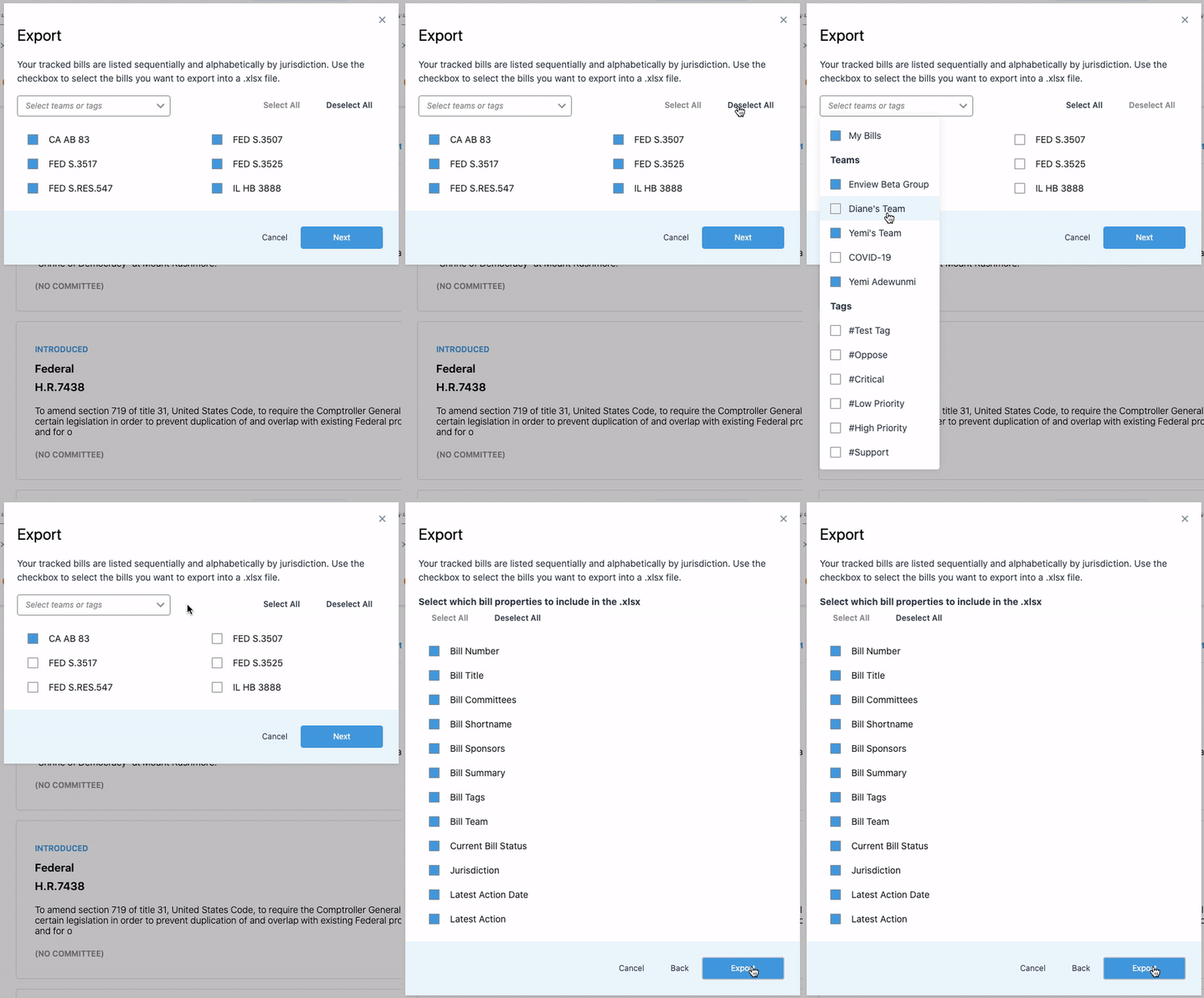
    We’ve made improvements to the way you can export the bills you’re keeping track of. Quickly generate a spreadsheet of the legislation that’s organized by your Tags or Teams. Select the legislative data that you want to include, then export your report!

    Customize the details in your bill export.

    Better access to tags

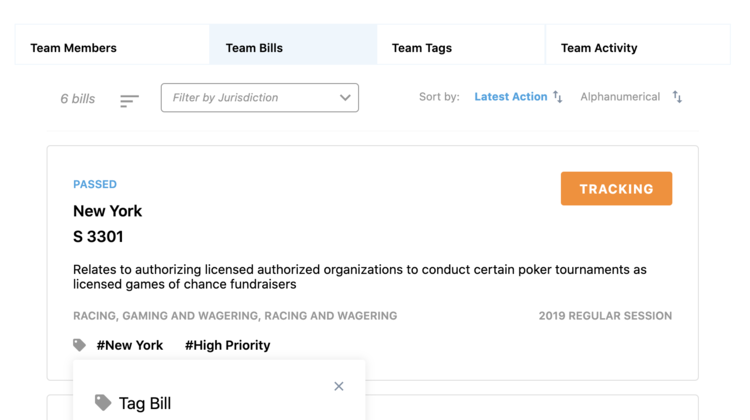
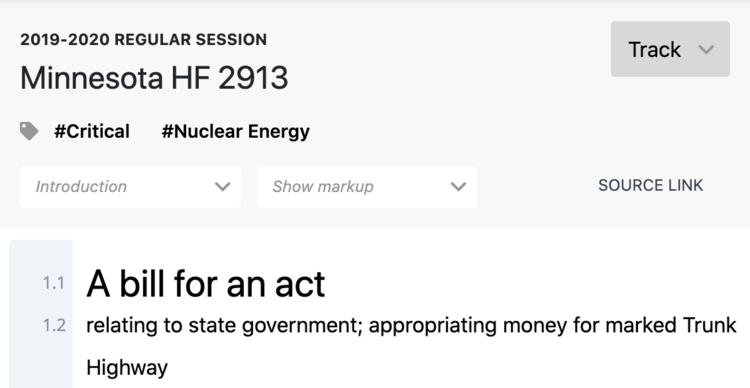
    The latest updates to bill tagging now allows you to more easily tag a bill from any list view. Use the tag icon to access a dropdown of your tags. When viewing a bill’s detail page, you’ll now see your tags near the top of the page underneath the bill number.

    Tag bills from any list view.
    Tag bills from any bill view, below the bill number.
  • Using Tags in your Workflow

    Using Tags in your Workflow

    Using Plural’s tagging feature is one of the best ways to keep your policy work organized.

    For example, some of our policy pros are using Tags to manage their client engagement work by tagging bills by their client name or next action step. Other policy pros on Plural are using Tags to categorize legislation by priority and policy stance.

    See for yourself how you can start organizing bills with a single click. Our CEO, Damola, walks you through how tagging works in Plural: