
Tag: Congress

  • What the One Big Beautiful Bill Means for: Labor & Workforce

    What the One Big Beautiful Bill Means for: Labor & Workforce

    On July 4th, President Trump signed H.R. 1, the One Big Beautiful Bill Act, into law. The 330-page act contains provisions that will reshape nearly every sector of the American economy and society. The rushed passage and sweeping scope of H.R. 1 have left many wondering:

    What’s actually in the bill and how will it affect me?


    At Plural, this opacity strikes directly against our mission. From our open data to our AI bill summarizer trained specifically on legislative text, we strongly believe in the power of technology to unlock legislative insights for policy professionals, activists, and citizens alike. With this mission in mind, we are producing a series of One Big Beautiful Bill explainers. Within each explainer, we will dive into the megabill’s impact in a specific subject area with a text-first approach that pulls impacts directly from the bill. This week we take a look at how the new law will impact American healthcare.

    We help you shape policy together,
    so you can shape the future.

    That’s the power of Plural.

    It starts with providing the most complete information about the policies that impact us.

    It takes extreme effort and vigilance just to track policy—much less to create a positive impact. If you can’t react fast or fully engage your team, laws will pass without you.

    The teams that forge the policies of tomorrow will use the latest technology to empower many voices. Plural exists to make policy creation more transparent, responsive, and inclusive. And to make full participation possible.

    We are leaders, thinkers, innovators,
    public policy wonks, and technologists.

    We are also constituents, neighbors, advocates, disruptors, and our vision is to make full participation possible.

    Our Mission

    The Power of Plural

    We help you shape policy together, so you can shape the future. It starts with providing the most complete information about the policies that impact us.

    The policymaking process is opaque, hard to access, and difficult to influence alone.

    It takes extreme effort and vigilance just to track policy—much less to create a positive impact. If you can’t react fast or fully engage your team, laws will pass without you.

    The teams that forge the policies of tomorrow will use the latest technology to empower many voices. Plural exists to make policy creation more transparent, responsive, and inclusive. And to make full participation possible.

    Created for policy wonks, by policy wonks.

    We are leaders, thinkers, innovators, public policy wonks, and technologists. We are also constituents,
    neighbors, advocates, disruptors, and our vision is to bring visibility into the policy process
    and improve the means to participate in democracy. At Plural, we’re proud to provide intuitive,
    effective solutions for mission-oriented organizations to help them meet their goals.


    Join Our Team

    Machine Learning Engineer (remote)


    Our Values

    People First

    First and foremost, we’re dedicated to our users. We take a user-centric approach to building our products, and we’re proud of our connections with our customers who use our product to do important work every day.

    Transparent

    We value trust and transparency. We want to cut the dishonesty and mistrust out of public policy, and we believe that democracy work best when information is accessible and honest.

    Audacious

    Speaking of honesty, let’s keep it real. What we’re building at Plural is bold. Our vision is audacious, and we’re passionate about taking on this challenge. We’re also passionate about innovation, good design, and making a difference.

    Ready to Amplify Your Policy Impact?

    Experience the power of Plural first-hand with a free account or schedule a demo for a live walk through of our tools. Find out how Plural can transform the way you and your team shape policy.

    Economic and labor policy is constantly at the forefront of political campaigns in the United States in part because a significant number of Americans consistently rank the economy as the nation’s “most important problem.”

    At the Federal level, we can find many recent examples of labor policy campaign promises that were delivered on as well as those that weren’t. Each of President Biden’s four major bills — the American Rescue Plan, the Bipartisan Infrastructure Law, the CHIPS and Science Act, and the Inflation Reduction Act — delivered on investments in labor he touted during the 2020 campaign. 

    Conversely, each of the past three Presidents (and plenty of members of Congress) have pledged to raise the federal minimum wage but every effort in the past fifteen years has failed. 

    Throughout the 2024 campaign, President Trump focused on economic messaging and won a sizable share of votes from union households, for a Republican candidate. Trump and Congressional Republicans know they must ask voters to retain their Congressional majorities in 2026 based, in part, on their progress on these very issues. 

    Therefore it’s unsurprising that Republicans have returned to campaign-style messaging in touting H.R. 1 as a “pro-worker” bill. To best understand how H.R. 1 will impact the American workforce, we take a look at some of the most significant labor provisions from the bill below. 

    No Tax on Tips

    Heavily touted within President Trump’s 2024 stump speech was the proposal to end the federal taxation of tips. Section 70201 of the newly passed legislation eliminates federal income taxes on up to $25,000 in tipped income for qualified workers earning less than $150,000 annually (those earning more receive an exemption on a smaller amount of tips). 

    While “no tax on tips” sounds simple enough (and makes for a compelling campaign proposal), the details in practice are more complex. The new law only applies to federal income tax and workers will still pay Medicare, Social Security, and state taxes related to this income. 

    Further, the administration still needs to define the occupations regularly receiving tips that will qualify for this deduction. 

    Finally, unlike other tax cuts within H.R. 1, section 70201 is not permanent and will expire after four years. 

    No Tax on Overtime Pay

    Coupled with “no tax on tips” in the 2024 campaign was President Trump’s proposal to eliminate federal taxes on overtime pay. Section 70202 of H.R. 1 allows qualifying taxpayers to deduct up to $12,500 in overtime pay from their income subject to federal income tax. Overtime income will still be subject to state income taxes as well as Medicare and Social Security taxes. 

    Notably, the portion of overtime pay eligible for this deduction is only the “premium” that employers are required to pay for overtime under the Fair Labor Standards Act (FLSA). If a worker makes $10 per hour and is eligible for overtime, the FLSA requires their employer to pay them $15 per hour for all hours worked over 40 in a week ($10 base pay plus a $5 premium). In this example, only the $5 per hour premium overtime pay could be deducted under H.R. 1’s new allowances. Overtime pay provided for reasons besides the FLSA requirements (like more stringent state requirements or a collective bargaining agreement) would not qualify for this deduction. 

    Other Tax Changes Impacting Employee Benefits

    Beyond changes to taxes on tips and overtime pay, H.R. 1 makes a few other notable changes that employees could factor into their taxes:

    • Section 70404 expands the maximum contribution into a Dependent Care Assistance Program flexible savings account from $2,500 to $3,750 for an individual. Allowing workers with a DCAP benefit to exclude more dependent care expenses from their taxes. 
    • H.R. 1 also makes permanent an existing tax credit allowing employers to make up to $5,250 in student loan payments on behalf of employees without an impact to an employee’s income subject to taxation. 

    Pell Grants for Workforce Training

    Section 83002 of the new law enacts the “Workforce Pell Grant Program,” which will make Pell Grants available to individuals participating in short-term (between eight and fifteen week) job training programs. Like those changes described above, many of the details of this new program will need to be sorted out in forthcoming rulemaking. 

    Existing workforce training programs, community colleges, and individuals looking to make a career change or earn an additional accredited degree will certainly be following rulemaking this fall to see what programs may qualify for this new federal assistance. 

    Changes to “Safety Net” Programs

    It is important to note that the expected benefits to workers described above are dwarfed (in size of spending) by the cuts to federal “safety net” programs like SNAP, Medicaid, and CHIP, as shown in the chart prepared by the Center for American Progress below. 

    Advocates on the left have pointed to this disparity in their arguments that the benefits to workers touted by the Administration are far outweighed by the negative impacts on low-income workers relying on government programs for assistance. 

    H.R. 1 implements work requirements for Medicaid that are expected to put more than 10 million Americans at risk of losing Medicaid coverage. Despite this massive impact on Medicaid enrollees, the Congressional Budget Office has indicated that this change is only expected to have a marginally positive impact on the size of the labor force. 

    Conclusion

    While the 2024 Presidential Campaign was unprecedented for a number of reasons, both candidates did follow the established playbook of focusing their policy priorities on jobs and the economy. With H.R. 1, President Trump and Congressional Republicans had their first and best chance to enact policy changes they campaigned on, including those they touted as “pro-worker.” 

    While campaign promises can be impactful, they lack the detail of enacted policy. And the details of “no tax on tips” and “no tax on overtime” as implemented by H.R. 1 may leave some workers confused by the limitations of the policies as enacted. Additionally, these temporary tax breaks for certain workers are due to expire just as the most significant cuts to social safety net programs are expected to come into effect and negatively impact low-income Americans. 

    As the details of these new policies are defined through rulemaking and as workers begin to feel their impact we should have a better sense of the degree to which voters feel the Administration has delivered on its promise to be “pro-worker.”

    Ready to see what your team is missing?

    Plural Legislative Intelligence powered by SAI360 gives government affairs teams real-time visibility into state and federal legislative activity — with AI-powered bill analysis, viability signals, and stakeholder engagement workflows built in. 

    And it’s the only platform that combines with integrated compliance workflow. Learn more by scheduling a live walkthrough.


  • Upcoming Changes to Party Leadership in Congress

    Upcoming Changes to Party Leadership in Congress

    Every two years, a new Congressional election cycle changes the makeup of the United States federal government, including Congressional leaders. Seats in the House of Representatives and Senate may switch parties, possibly flipping the chambers from one political party’s control to the next. Aside from a shift in control, the most impactful changes in Congress may happen in its party leadership.

    Congressional leaders control which legislation comes to a vote and when, which members sit on certain committees, and the priorities of both major parties in Congress. They even influence how other members vote on major issues. Knowing who these leaders are and what they do is key to understanding who holds the power in Congress.

    For example, on March 22, Rep. Marjorie Taylor Greene (R-GA) filed a motion to vacate the Speaker of the House position. The House of Representatives likely will not take a vote on the issue unless Greene calls for it. If that happens and a majority of representatives approve it, this would remove Mike Johnson as speaker. The House is currently on recess until April 9.

    Key Positions: Congressional Leaders

    There are many congressional leadership positions in the U.S. Senate and House of Representatives. The most powerful are the Speaker of the House, majority and minority leaders, and whips. Of these, only the speaker is mentioned in the U.S. Constitution. The rest have been established by the traditions and rules of the political parties. Each leadership position has a different set of responsibilities.

    In a rare move, Rep. Kevin McCarthy (D-CA) was ousted as Speaker of the House in October of 2023. Photo credit: Maryland Daily Record.

    Speaker of the House

    The Speaker of the House is the presiding officer and spokesperson of the House of Representatives. The speaker maintains order on the House floor, applies House rules, decides on matters of order, and calls on members to speak. They work with other congressional leaders in the majority party to set the legislative agenda. Further, the speaker sends bills to committees and helps decide which ones come to the floor for debate and when. They may also negotiate with the opposing leader to gain minority party support for bills and budget resolutions. The speaker and House minority leader assign members to the Ethics, House Administration, and Rules committees, as well as all select committees.

    While it is not a Constitutional requirement, every speaker in history has been a sitting representative. The House elects a new speaker every two years at the beginning of a new Congress. Each party’s caucus or conference decides on a candidate, and the parties put forward their choices for a vote. Repeated votes are held until one candidate receives a majority. While uncommon, representatives are free to vote for someone other than their party’s candidate. The speaker is almost always a member of the majority party.

    Rarely, the House can elect a speaker in the middle of a congressional term if the position becomes vacant. The current Speaker of the House, Rep. Mike Johnson (R-LA), was elected this way. The previous speaker, Rep. Kevin McCarthy (D-CA), took the post in January 2023 after fifteen rounds of voting and disagreement among Republicans. McCarthy became the first speaker ever removed through a motion to vacate in October of that year. A handful of Republicans and all Democrats voted to remove him from his post. This kicked off four more rounds of roll-call voting that led to Johnson’s election. McCarthy later resigned from Congress effective December 31, 2023.

    Majority Leader

    Majority leaders represent and speak for the majority party in each chamber of Congress. When multiple senators or representatives want to speak on the floor, the presiding officer will call on the majority leader first. They help set the legislative agenda, schedule bills on the calendar, and make committee recommendations. As spokespersons for their party, they may also help promote policies and gain public favor for them.

    This role works a bit differently in the House of Representatives than it does in the Senate. Traditionally, the House majority leader is the speaker’s second-in-command and will share some of the above duties with the speaker. The responsibilities of each position can change slightly with each new speaker and majority leader pair. The House majority leader in 2024 is Rep. Steve Scalise (R-LA).

    In the Senate, the majority leader is effectively the leader of the chamber. The U.S. Constitution names the Vice President as the Senate’s presiding officer, but they are rarely active in proceedings. Instead, the majority leader often presides over the chamber, performing duties similar to the Speaker of the House. Senator Chuck Schumer (D-NY) is the current Senate majority leader.

    The Democratic Caucus and Republican Conference each choose new majority leaders, minority leaders, and whips before the start of a new Congress. Unlike the Speaker of the House, these positions do not need a floor vote.

    Minority Leader

    Minority leaders are the opposition leaders in the House of Representatives and the Senate. As spokespersons for the minority party in each chamber, they represent their party’s members and interests. They have second priority to speak during floor debates, behind the majority leader. Depending on their party’s strategy, they may oppose the majority’s legislation or negotiate changes to a bill. If the President belongs to the same party, the minority leader often works with the White House toward the President’s legislative goals.

    The minority leader also helps their party regain control of their chamber, often by giving campaign assistance. They criticize the majority’s policies and promote their own party’s agenda to the public.

    Party leaders often keep their roles when control of a chamber switches, so a majority leader might become a minority leader. In the House of Representatives, the former Speaker of the House and the former majority leader may compete for the minority leader role.

    Representative Hakeem Jeffries (D-NY) is the House minority leader in 2024. As Democratic party leader, he serves as chair of the House Democratic Steering and Policy Committee. This group nominates party members for standing committee assignments and advises party leaders on policy. The current Senate minority leader is Senator Mitch McConnell (R-KY), the longest-serving congressional leader in the Senate with a 17-year tenure as Republican party leader. He is chair of the Republican Steering Committee, which decides the party’s committee assignments.

    Whip

    Whips help their party leaders round up votes for legislation and support for their agenda. Both the majority and minority parties have them. The name comes from “whipper-in,” an old fox hunting term for hunters who kept dogs from straying from the chase.

    In Congress, a whip’s job is to keep party members from straying from the party’s platform. They serve as communicators, negotiators, and enforcers of party discipline. They count the expected votes for important legislation and report feedback to their party leaders. If a piece of legislation needs more votes to pass, they work to persuade members to vote for it. Whips may negotiate changes to the bill or offer support for a different bill. The promise of a committee position, or the threat of losing one, can also change a member’s mind. In addition, whips inform party members about the current legislative agenda and the party’s positions on major issues.

    Both parties may contain several congressional caucuses. Caucuses are subgroups which represent different interests and legislative goals. Sometimes, different caucuses conflict with each other. Whips aim to unite these different groups behind the party’s most important goals.

    Whips may also be called “assistant majority leader,” “assistant minority leader,” “Democratic whip, or “Republican whip.” As of 2024, the current whips in Congress include:

    Upcoming Changes to Congressional Leaders

    At least some of the nation’s congressional leaders will change next year. In February 2024, Senator McConnell announced that he would step down from his position as Senate Minority Leader at the end of the year. Before the next Congress is seated in January 2025, the Senate Republican Conference will select a new leader.

    One potential candidate for Republican Senate leader is Senator John Thune (R-SD), the current minority whip. He will need to step down as whip whether he is elected as the new leader or not. He has served three full two-year terms, which is the limit that Republicans set for their Senate leaders and committee chairs. The party leader is an exception to this rule, which is why McConnell was able to stay so long in his post.

    The Speaker of the House position may also be contested at the start of 2024, if the last two speaker elections are any indication. Both took multiple rounds of voting before Republican representatives united behind a candidate.

    Meanwhile, Democrats all supported Minority Leader Rep. Hakeem Jeffries (D-NY) as speaker in both elections. If the majority party flips in the House of Representatives, Jeffries is the most likely candidate for speaker. Democrats would choose a new House majority leader, while Republicans would lose one of their leadership positions. A change in the majority of either the House or the Senate in 2025 would also shift that chamber’s legislative priorities.

    Learn More About Congressional Leaders With Plural

    Plural is the policy tracking and stakeholder management tool of choice for public policy teams seeking to monitor changes to congressional leadership, as well as key bills and legislative developments. With Plural, you’ll:

    • Access superior public policy data 
    • Be the first to know about new bills and changes in bill status
    • Streamline your day with seamless organization features
    • Harness the power of time-saving AI tools to gain insights into individual bills and the entire legislative landscape
    • Keep everyone on the same page with internal collaboration and external reporting all in one place

    Interested in getting started? Create a free account or book a demo today!

    More Resources for Congress

  • Is Congress About to Ban TikTok?

    Is Congress About to Ban TikTok?

    Is a TikTok ban imminent? While TikTok’s virality may still feel novel, official U.S. concern over the app surfaced almost five years ago. On March 13, the House passed HR. 7521. The bill now heads to the Senate with many more eyes tracking its progress.

    The federal legislative process has always been opaque, and therefore difficult for ordinary citizens to follow and connect with. This is, after all, a driving force behind the creation of Plural as a source of open public policy data. The journey from an idea to an enacted law is far more complex than Schoolhouse Rock made it seem. This legislative process can often take years. The ongoing congressional battle over TikTok encapsulates this halting, confusing path. The recent passage of H.R. 7521 out of the House took many by surprise and has users of the app wondering how we got here.

    While TikTok’s virality may still feel novel, official U.S. concern over the app surfaced almost five years ago. At that time, the FBI and military leaders cited national security risks related to the app. ByteDance, the company that develops and owns TikTok, has a close relationship with the Chinese government. The Trump administration then pressured TikTok to agree to host all of its U.S. user data under Oracle’s infrastructure. 

    Despite this move to protect user data, lawmakers were still eager to act on TikTok. Beginning in 2022, we saw a wave of state legislation aimed at banning TikTok. Most of these bills, like Texas’ SB 1893, sought to ban the use of TikTok by government officials and on government devices. The Biden administration followed a similar path by banning the use of TikTok on federal devices. Montana’s SB 419, enacted in May 2023, went a step further. The new law banned the use of TikTok by anyone in Montana. A federal judge later blocked this ban before it went into effect. 

    After years of debate, Congress wanted to go further. After being introduced on March 5, the House of Representatives overwhelmingly passed HR. 7521, the Protecting Americans from Foreign Adversary Controlled Applications Act, on March 13. The bill now heads to the Senate with many more eyes tracking its progress.

    What would H.R. 7521 do?

    H.R. 7521 would prohibit companies from providing distribution or hosting services to “foreign adversary-controlled applications.” This would force companies like Apple and Google to remove TikTok from their app stores. It would also prevent internet service providers from supporting access to the application. The bill narrowly defines “foreign adversary-controlled applications” to apply to TikTok. However, it does provide an avenue for other applications to be banned in this way. 

    The bill doesn’t include penalties for individual users of TikTok, and it wouldn’t remove TikTok from anyone’s phone. But, without web hosting services or the support of app distributors like Apple and Google, the application would quickly become buggy and unusable.

    The bill also provides an exemption for certain action taken by ByteDance. If ByteDance divests from TikTok within 165 days of enactment, application support would not be banned. In short, the bill gives ByteDance 165 days to sell TikTok, or be banned from the U.S. 

    So – Is a TikTok Ban Imminent?

    H.R. 7521 passed out of the House by a wide margin and President Biden has signaled he will sign it if it reaches his desk. However, there are still many barriers between where we stand on March 15th and a TikTok ban. 

    First, the House vote caught many by surprise, in part because the bill moved so quickly from introduction to passage. The reaction to the House vote has ensured that any debate on this bill in the Senate will be met with significant attention from all sides. This additional attention may not change any vote, but it will certainly slow down the process. 

    Second, even if the bill does pass, its divestment exemption provisions pave the way for TikTok to stay usable in the U.S., as long as ByteDance is willing to sell the application. A sale could be complicated by a lack of willingness to sell from ByteDance or anti-trust concerns here in the U.S. 

    Finally, even if the bill does successfully pass, its enactment would be swiftly followed by litigation from ByteDance and others. ByteDance has hinted that they would continue their fight in the courts if H.R. 7521 passes. The American Civil Liberties Union is also organizing opposition to H.R. 7521. It would likely support legal challenges to the law, among many other groups.

    Taken together, these obstacles will slow the momentum of this past week. While a TikTok ban might feel imminent, it’s unlikely that any enforcement of the bill, if passed, would begin before the end of 2024. There remain many hurdles to pass before H.R. 7521 becomes law.

    Get Started With Plural

    Plural is the legislative tracking tool of choice for policy teams looking to gain greater insights into the policies that matter. With Plural, you’ll:

    • Access superior public policy data 
    • Be the first to know about new bills and changes in bill status
    • Streamline your day with seamless organization features
    • Harness the power of time-saving AI tools to gain insights into individual bills and the entire legislative landscape
    • Keep everyone on the same page with internal collaboration and external reporting all in one place

    Create a free account or book a demo today!

    More Resources for Congress

  • Navigating the Landscape: What Congressional Committees Should You Be Monitoring?

    Navigating the Landscape: What Congressional Committees Should You Be Monitoring?

    Congressional committees are integral to the legislative process. They’re responsible for shaping the courses of action for the federal government. Congressional committees review bills, oversee federal agencies, and conduct investigative hearings. With their extensive influence on public policy, understanding committees is crucial. Effectively monitoring committees is the key to successful lobbying or advocacy.

    An Introduction to Congressional Committees

    Congressional committees are specialized groups within Congress tasked with specific legislative functions. These include drafting legislation, conducting hearings, and overseeing the executive. The role of a committee is critical in the passage of legislation. Committees sift through proposed legislation to assess their necessity and potential impacts. They’re a key step before proposed legislation reaches the full Congress.

    Senate Committees

    The Senate operates many committees, each with its jurisdiction over specific policy areas. Notable committees include:

    Monitoring these committees is essential, due to their significant influence on national policies.

    House Committees

    The House of Representatives also boasts a variety of committees with broad jurisdiction. This includes:

    These committees are vital in initiating discussions that shape the legislative agenda.

    Joint Congressional Committees

    Joint committees consist of members from both the Senate and the House. These committees manage issues of common interest, like the federal budget or taxation. Joint committees coordinate, research, and analyze data to guide Congress’s decision-making. As such, they’re a critical component of the legislative process.

    Committees of Interest

    In recent times, certain committees have been in the spotlight for various reasons. This includes, for instance:

    • The House Committee on Rules, responsible for determining the terms of debate for bills. The House Committee on Rules has been crucial in the fast-paced legislative environment.
    • The Senate Committee on Foreign Relations manages international diplomacy and security issues. This committee has garnered interest due to conflicts in Ukraine and the Middle East.

    Keeping an eye on these committees and more can provide valuable insights into pressing national concerns.

    Find Info about Congressional Committees on Plural

    Plural streamlines the process of staying updated with congressional committees. With real-time updates, detailed analyses, and historical data, ensure you remain informed about the latest legislative developments pertinent to your interests. Interested in getting started? Create a free account or book a demo today!

    More Resources for Government Affairs Teams

  • Bipartisanship in Congress

    Bipartisanship in Congress

    In an era marked by political polarization, bipartisanship in Congress seems more like an idealistic dream than reality. Yet, bipartisan legislation shines a light on the possibility of unity in the Congress and beyond. These efforts offer a glimpse into effective governance serving the interests of Americans.

    A Divided Congress

    The division within the Congress reflects a nation that is ideologically split. In recent years, each party has championed distinct legislative agendas. Democratic priorities have centered on pressing societal challenges. This includes:

    • The Inflation Reduction Act, which sought to mitigate skyrocketing living costs
    • The Infrastructure Investment and Jobs Act and the CHIPS Act of 2022 both focused on comprehensive infrastructural and technological advancements
    • The No Surprises Act, which aimed to protect consumers from unexpected medical bills;

    Further Democratic priorities included combating inflation, addressing energy costs, and promoting clean energy.

    Republican efforts have revolved around different focal points. The Healthy Future Task Force proposed healthcare reforms. The Task Force aimed to provide Americans with more choices and lower costs. The party also pushed broader economic strategies, like the Tax Cuts and Jobs Act. Republicans have also advocated for reengagement in global trade agreements. This includes the Trans-Pacific Partnership.

    Breaking the Gridlock

    Political gridlock is not an insurmountable impasse. Bipartisanship is possible, even in our current divided political landscape. Strategic collaborations and mutual concessions have paved the way for landmark bipartisan achievements.

    Bipartisanship in Congress

    Instances of bipartisan agreement have not been as scarce as one might presume. Significant legislation emerged as products of cooperative legislative efforts. This includes the Fiscal Responsibility Act of 2023 and the Bipartisan Defense Bill. Common ground, though often elusive, is attainable and can lead to policy advancements.

    Bipartisan Legislators in Congress

    The Problem Solvers Caucus consists of both Democrats and Republicans. Caucus members worked to craft and forward cooperative solutions. Beyond the caucus, figures from both sides of the aisle have occasionally eschewed party lines to pursue the greater public good.

    Looking Ahead: Bipartisanship in Congress

    As the 2024 elections approach, the political arena may experience heightened partisan tensions. Complex foreign relations dynamics present further challenges to bipartisan efforts. This includes the ongoing conflicts in Israel and Ukraine. Yet, these obstacles also offer opportunities for unity. Addressing shared concerns and forging a collective front may draw bipartisan support.

    Understanding and appreciating the implications of bipartisanship are crucial for the electorate. Cooperative politics doesn’t just shape legislative outcomes. It defines the health of our democratic institutions and the well-being of our nation. As we move toward another election cycle, the American public holds the key to endorsing a more collaborative political future.

    More Resources for Public Policy Teams

  • How a Bill Becomes a Law

    How a Bill Becomes a Law

    The process of how a bill becomes a law is a fundamental cornerstone of democratic governance. This process allows citizens’ preferences to be translated into enforceable rules. Though seemingly straightforward, this process involves multiple stages of scrutiny and revision. Understanding the process of how a bill becomes a law is crucial for anyone looking to comprehend the workings of or influence our government.

    What Is a Bill?

    A bill is a proposal for a new law or an amendment to an existing law. It’s the raw material of law-making; an idea drafted in legal form, subjected to the rigorous legislative process. Bills can originate from either legislative chamber. They can also encompass a wide range of issues, from appropriations to policy reforms across various sectors.

    How a Bill Becomes a Law: The Key Steps

    Drafting the Bill

    The idea for a new law can come from anyone. Typically, ideas for bills come from members of the legislative body, government agencies, or the executive branch. In this step of the process, the idea is put into a formal text.

    Introducing the Bill

    A member of the legislature must sponsor and introduce the bill. Upon introduction, the bill is assigned a number and title, read aloud, and entered into the legislative record.

    Referral to Committee

    The bill is referred to one or more standing committees that specialize in the bill’s subject matter. This marks the bill’s first major hurdle.

    Legislative Action in Committee

    Much of a bill’s shaping occurs at the committee stage, where it’s examined in detail.

    Committee Action

    Committees review, discuss, and modify the bill, deciding if it should proceed. They’re pivotal, with the power to effectively green-light or halt a bill’s journey.

    Public Hearings and Citizen Engagement

    Committees hold public hearings, inviting experts, public officials, and relevant stakeholders to provide insights. Citizen engagement here is crucial, as public opinion can influence the bill’s progression.

    Reporting Out of Committee

    If the committee approves the bill, it’s “reported” back to the floor of the entire legislative body. The bill is accompanied by a committee report explaining the bill and the committee’s recommendations.

    Floor Debate

    Once a bill reaches the floor, it’s debated by the entire legislative body. At this stage, the bill can still be amended or even rewritten entirely.

    Voting by a Simple Majority Vote

    Most bills require a simple majority vote to proceed. If successful, they move to the other legislative chamber or, if already passed in an identical form, to the executive.

    Amendments

    During debate, amendments can be added, altering the bill’s content. Significant amendments can necessitate additional rounds of voting.

    Conference Committee Report

    It’s possible that the two legislative chambers could pass different versions of the bill. In this case, a conference committee of members from both houses is formed to reconcile differences. The committee’s final version, the Conference Committee Report, must be approved by both chambers.

    Approval by Majority Vote

    The final step in the legislature is approval by a majority vote in both chambers. Following this, the bill heads to the executive for approval or veto.

    Visualizing How a Bill Becomes a Law

    The visual below breaks down the intricate journey a bill undertakes, from inception to becoming a law. Understanding each step is essential for those looking to engage with or influence the legislative process.

    Get Started with Plural

    Plural offers best-in-class data, advanced searching and tracking, and AI-powered tools to help public policy professionals deepen their legislative insights. Create a free account or book a demo to learn how Plural can amplify your policy impact.

  • Need to Know: The Bipartisan Infrastructure Bill

    Need to Know: The Bipartisan Infrastructure Bill

    The Infrastructure and Jobs Act, H.R. 3684, was signed into law by President Joe Biden in November of 2021. The Act was the culmination of nearly a decade of negotiations over investments in America’s infrastructure. Debates over what would be included or excluded from the bill and whether it could receive bipartisan support dominated much of President Biden’s first year in the White House. The debates, negotiations and ultimate passage of the Act were just the beginning, though — once the Infrastructure Investment and Jobs Act did become law, individuals, businesses, states and municipalities were all eager to learn how they could benefit from the $1.2 trillion in spending authorized by the bill. 

    In the years since the bill’s first introduction, we have been able to begin to see the impact of its provisions and learn more about the continued funding opportunities created by the legislation. Read on to learn more about how this law came to be as well as its ongoing impacts.

    The Starting Point: The Build Back Better Plan

    The Biden-Harris Administration came into office after campaigning on the “Build Back Better Plan”, which proposed massive investments in three categories.

    The American Rescue Plan – Largely focused on COVID-19 pandemic relief, and including extended unemployment benefits, direct stimulus payments, and extensive relief funding for schools, hospitals and businesses, this $1.9 trillion package became law in March of 2021 at H.R. 1319.

    The American Jobs Plan – Commonly understood as a combination of “physical infrastructure,” like roads and bridges, and “human infrastructure,” like access to child and home care. The American Jobs Plan proposed more than $2 trillion in investments and policy changes including those aimed at rebuilding aging infrastructure, climate change mitigation and resilience, and workforce development.

    The American Families Plan – More focused on social policy, the American Families Plan proposed spending nearly $2 trillion on childcare, universal pre-kindergarten, subsidized paid family and medical leave, as well as additional progressive priorities.

    Of these three original proposals, only the American Rescue Plan passed into law in a form that resembled the ambitious proposal the Biden administration originally outlined. Moderate Democrats and Republicans, whose support was especially crucial in the Senate, were staunchly opposed to spending over $3.5 trillion to enact the American Jobs Plan and the American Families Plan, forcing the Administration and Congressional leadership to the bargaining table.

    Bipartisan Efforts to Reach an Infrastructure Deal

    Once it became clear that the Administration’s original proposals would not pass through Congress, White House officials worked with centrist Senators to craft a less expensive bill primarily focused on “physical infrastructure” that could win enough support to pass through Congress. The result was the Infrastructure Investment and Jobs Act, a $1.2 trillion bill ($550 trillion being newly authorized spending) that passed with 67 votes in the Senate and 228 in the House of Representatives. 

    Once it became clear that the Biden-Harris Administration’s original proposals would not pass through Congress, White House officials worked with centrist Senators to craft a less expensive bill primarily focused on “physical infrastructure” that could win enough support to pass through Congress.

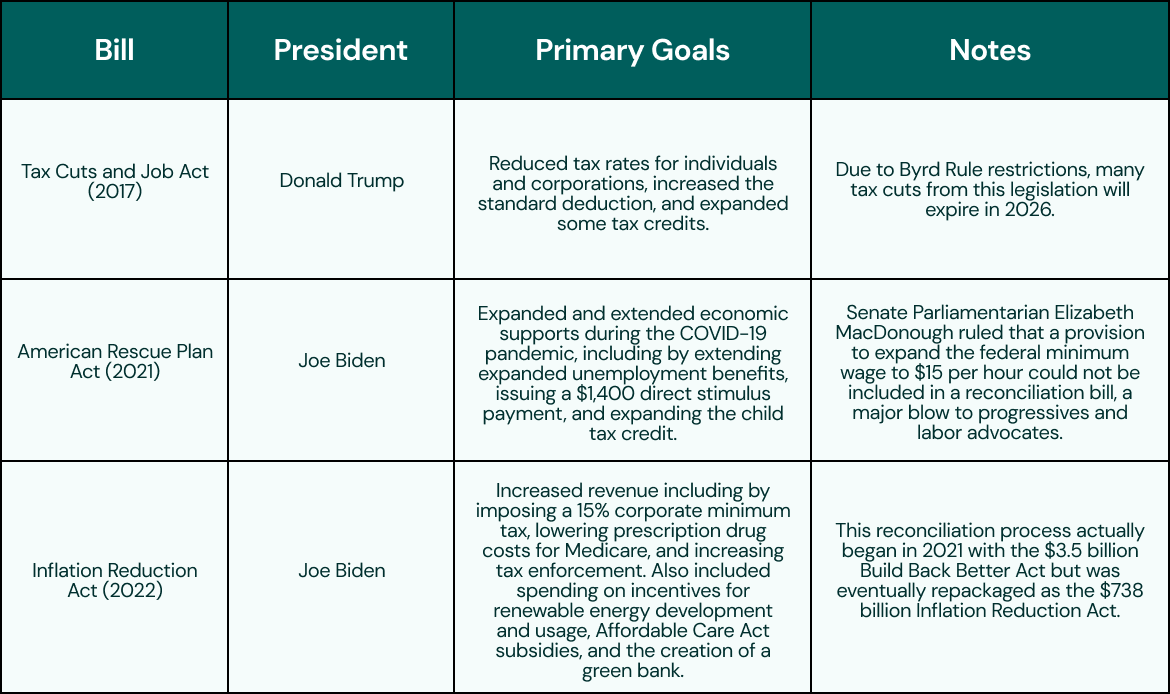
    A concurrent push to adopt proposals from the American Families Plan and some “human infrastructure” proposals in the American Jobs Plan under the name the Build Back Better Act (H.R. 5376) was doomed in 2021 by a lack of support from moderate Democrat Senator Joe Manchin. This bill came back to life as the Inflation Reduction Act in the Summer of 2022 and was passed into law with party-line support by Democrats. 

    The Infrastructure Investment and Jobs Act and the Inflation Reduction Act were less ambitious than the proposals in the original Build Back Better framework, but their passage represented the culmination of the Administration’s work to get as many of their priorities through a closely divided Congress as possible. Understanding the Infrastructure Bill’s path through Congress and into law can be helpful in understanding the key components and impacts of this historic federal investment.

    Key Provisions of the Infrastructure Investment and Jobs Act

    While the price tag of the Infrastructure Investment and Jobs Act is often listed as $1.2 trillion, it is important to note that about $650 billion of that is directed towards the reauthorization of existing transportation infrastructure programs. The remaining $550 billion is what is commonly referred to as “new spending”. Among the initiatives covered in this new spending are the following:

    • $125+ billion to repair, expand and improve the efficiency of travel including through investments in rail, airports, public transit and electric vehicles. 
    • $110 billion to repair and rebuild roads and bridges.
    • $65 billion to upgrade, and modernize America’s electric grid with the goals of reducing power outages and expanding access to renewable and clean energy.
    • $65 billion to broadband infrastructure development including funds for broadband in rural areas and payment assistance programs for low-income families without internet access. 
    • $55 billion to invest in water infrastructure and eliminate lead service pipes.

    Funding the Infrastructure Plan

    According to the bill’s advocates, the chief selling points for moderate and conservative legislators, and for voters, was that new spending would not come with additional taxes on individual income. While this claim is debatable, it comes from scoring done by the nonpartisan Congressional Budget Office and the bipartisan Joint Committee on Taxation. Among the new revenues and savings that cover this $550 billion in new spending are the following:

    • $300+ billion of unused COVID relief dollars, recouped fraudulently paid COVID unemployment benefits, and states returning unused COVID funds was repurposed to support the bill’s initiatives. 
    • $87 billion in proceeds from past and future spectrum and c-band auctions.
    • $56 billion in estimated economic growth based on a projected 33% return on investment in the long-term infrastructure projects included in the bill. 
    • $49 billion from delaying a Medicare Part D rebate rule that would cost the Government money. 
    • $34 billion from an increase in mortgage fees ($21 billion) and superfund sites ($13 billion).
    • $28 billion from further regulating cryptocurrency.

    What’s Next?

    According to the White House, over $220 billion in funding from the law has been awarded to over 32,000 specific projects across 4,500 communities throughout the country. The largest investments have broadly gone to the largest economies, with communities in California, Texas, New York and Florida receiving the most funding overall. Fact sheets breaking down investments from the bill in each state are available here

    Additionally, new stories of how this money is or could be spent locally are constantly popping up. Check out these recent stories found by the Plural team, as of June 2023:

    Remarkably, while $220 billion in new funding has already been allocated, more than 50% of the new funding authorized by the law is still to be allocated. The funding of projects, and their impacts, will be far-reaching for years to come — a deep understanding of the law that authorized that funding is incredibly valuable in anticipating and analyzing that impact.

    Explore the Bill on Plural

    You can read the full text of the Infrastructure Investment and Jobs Act and explore details including sponsors, past versions and votes all formatted in Plural’s easy-to-use bill details page here.

  • Prove Your Worth: Pro Tips for Creating a Legislative Report

    Prove Your Worth: Pro Tips for Creating a Legislative Report

    The legislative session, or week or year may have wrapped up, but your work is hardly over – it’s time for those (dreaded?) legislative reports!

    If you don’t report it, it didn’t happen, right? And if you can’t find the data you need to document all of your work throughout the session, you can’t report on it. 

    What were those bill numbers? Where was that note? Who was in that meeting? What was that final vote count?

    Why Create a Legislative Report?

    Creating a legislative report is a key mechanism for proving the impact of your role, your team and your organization. It showcases the tangible results of your work to your board, stakeholders and community members. Boards and funders in particular want to be able to draw clear lines between the value that your organization is delivering and the dollars invested to support your work. In summary, it’s a critical tool for maintaining funding and support, in addition to demonstrating the ROI for additional support.

    The Biggest Pro Tip of Them All: Plan Ahead

    Having a strong system for keeping all of your important documents and files organized throughout the session can help make the process of legislative report preparation as pain-free as possible. However, the reality is that bill text, notes and documents can live everywhere from your desk, to your inbox, to your computer drive, to the “cloud”, to that group text message thread filled with animated gifs, key notes from legislator meetings and everyone’s lunch order.

    The biggest pro tip for crafting a legislative report is to start planning for what you will be reporting on before the session even begins. That way, you can model your system of keeping information organized around your eventual legislative report needs. 

    You probably already do this at the highest level by developing an annual legislative agenda. So, once you’ve finalized your legislative agenda, you can use that to shape your plans for keeping all of your critical data and information organized throughout the session.

    Establish Your System Before Session Begins

    It starts with creating a system organized around the classic WWWWWH framework. Consider: 

    • WHO will you need to provide the legislative report to? Your funders, board of directors, executive team, your membership or another audience? Thinking about your audience(s) ahead of time can help determine the length of your legislative report, level of detail in the report, what types of information you choose to include and exclude, the format of the report and how data is presented in it.
    • WHAT does your audience need to know about? Funders might have very specific reporting preferences. Boards and executive teams may want very high level summaries. Your organization’s membership or the media may welcome a more detailed, educational legislative report.
    • WHEN or how often will you need to provide your legislative report? Is your audience expecting updates daily, weekly or at the end of the session? Will the information be reused later in the year for an annual report? Is it tied to your organization’s annual cycle for employee reviews or budget process? You may have to provide a legislative report on similar data multiple times to different audiences at different frequencies, making it all the more critical to have information that’s well organized and easily accessible to you.
    • WHERE will the information for your legislative report need to be presented? What format will the report be in (e.g., slides, digital documents, printed documents)? It’s especially ideal to have a system for presenting your data interactively if you’ll be reporting in a digital format, or to have data that can be easily exported into a spreadsheet for audiences that need a report that’s further into the weeds.
    • WHY are you providing this information? What action do you hope to generate from your audience(s) (e.g., renewed funding, a positive annual review, increased membership engagement)? Make sure you’re documenting the work you’re doing that demonstrates the concrete actions you and your team took that led to key outcomes.
    • HOW will you organize and gather the information needed? Are you a one-person operation or will this be a highly collaborative process that involves gathering input from others within or outside of your organization? The answer to this question should be informed by your answers to the who, what, when, where and why questions that precede it. Planning ahead on where you’re going to store files, what labels you’re going to use to organize those files and what standard formats you want information presented in — for instance, formats for testimonies, analysis notes, media clips, or otherwise — will save you hours (possibly even days!) when it comes time to develop your legislative report.

    How Plural Can Make Your Legislative Report Easier 

    Plural offers a simple and intuitive one-stop-solution for public policy teams to keep all of the information they need for a legislative report in a single, well-organized tool.

    Find Essential Legislative Info Quickly 

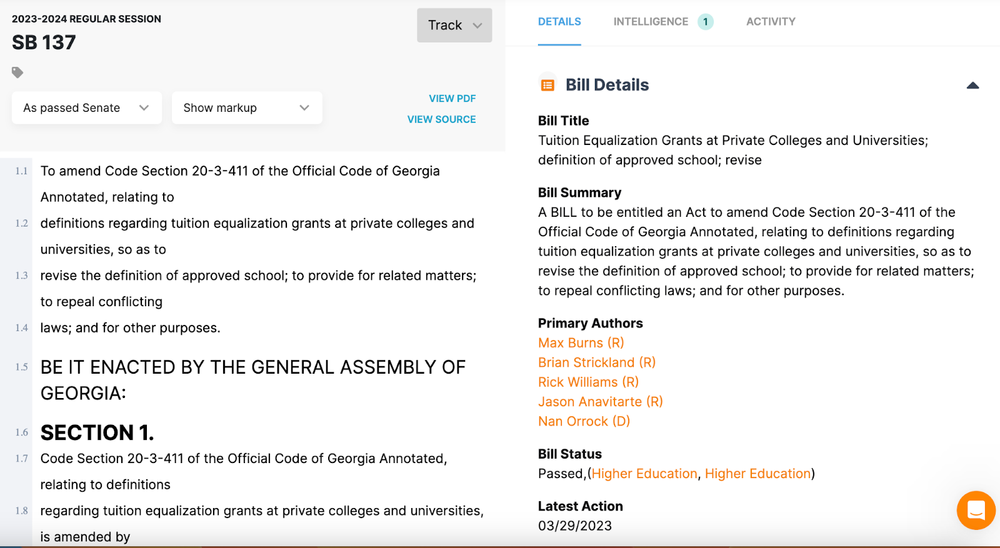
    Plural’s best-in-class data makes it easy to find information about any bill that’s been introduced in the most current and recent sessions of all 50 U.S state legislatures, the U.S. Congress, Puerto Rico and the District of Columbia. In addition to providing full bill text complete with line numbers, Plural’s bill detail pages include the bill’s number and title, author and co-sponsor, originating committee information and a summary of key actions that were taken on the bill.

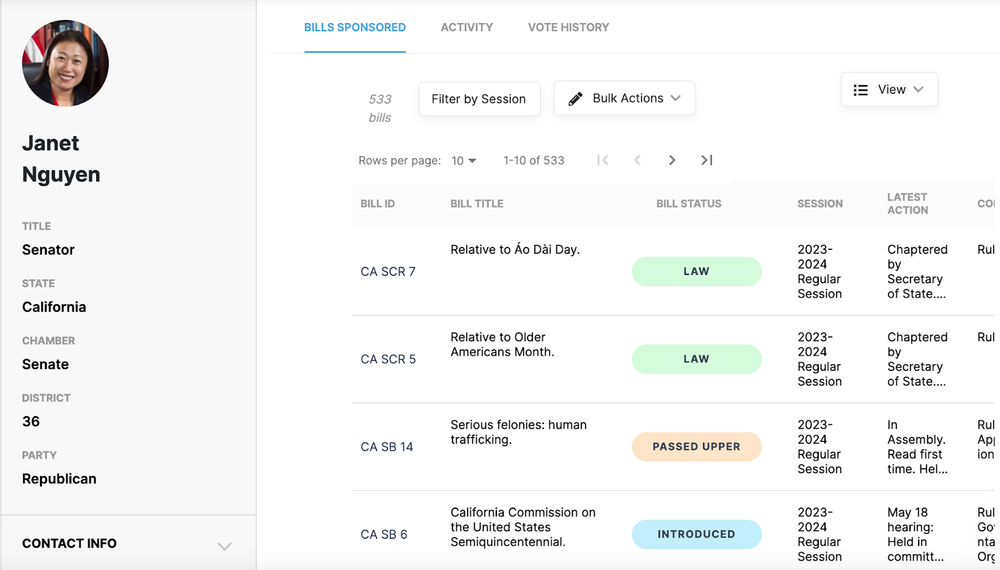
    In addition to bill information, you can also find key information for legislators across 52 U.S. jurisdictions, as well as a list of all bills each legislator has authored or co-sponsored, and their legislative voting records

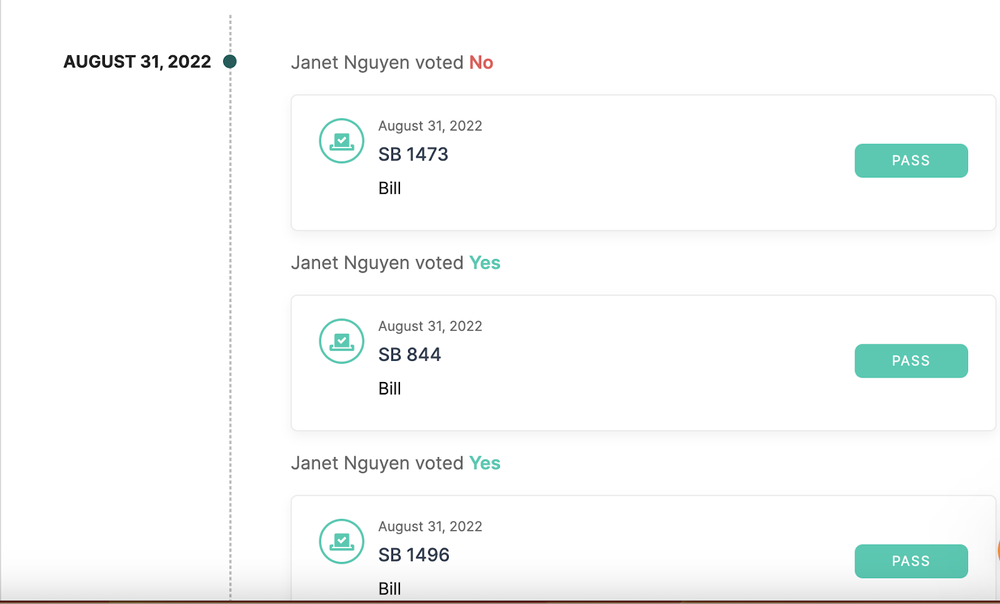
    Plural also provides vote data by individual legislator or bill, which means you can easily confirm pass/fail votes on your bills of interest and dig into how your legislators of interest voted on key bills.

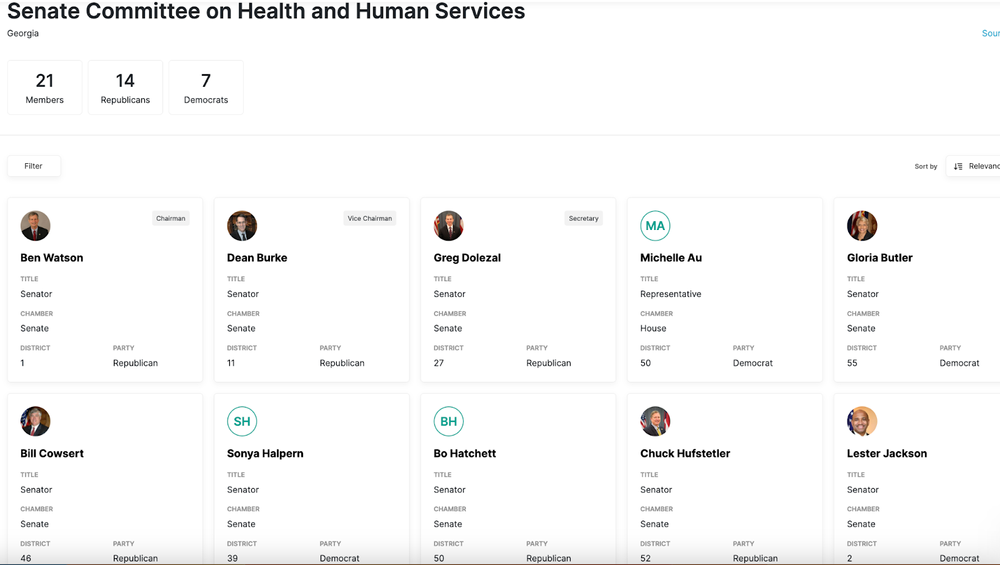
    AND, you can also find key committee information such as membership and leadership.

    Take Your Reporting to the Next Level with the Power of AI

    Plural harnesses the power of AI to strengthen the insights you can include in your legislative report. Plural’s Highly Similar Bill feature helps you quickly identify bills that are related or similar to another bill. Or, you can identify patterns in bills across jurisdictions through the use of Plural’s Global Bill Search.

    Plural’s AI-powered Momentum Indicator can also help you easily identify bills that had the best chance of movement during the session.

    Keep Everyone and Everything on the Same Page

    Plural’s workspaces provide a way for you to organize your collaborators, bills, notes and files by topic, project, team, campaign or client. No more searching across email, text messages, documents and hand-written notes.

    Within a workspace, you and your team can create and share notes from staffer meetings on legislator profile pages, annotate bill text, and upload files such as testimony documents, voice memos or media clips that are easily accessible to everyone else in your workspace. No more chasing people at reporting time to get what you need or sifting through dozens of different file formats. It will all be in your workspace – already organized.

    Plus, with no limit to the number of workspaces you can create, you can easily keep files, notes, and bills that are associated with one client, team or topic separate from others – in the cloud and secure – with access available only to those that should truly have it.

    Get and Stay Organized from the Start

    Plural’s tag feature is like a virtual folder system for you to keep your bills of interest organized. Create a “support” and a “oppose” tag, for instance, and apply them to relevant bills, making it simple to find this important category of bills when needed. Additional oft-used tags are “high priority” or “low priority;” or by topic such as “education” “healthcare” and “budget.” There’s no limit to the number of tags you can create in Plural or to the number of tags that can be associated with bills, making it easy for you to find your bills across a variety of useful categories.

    Make Your Legislative Report Interactive

    Tags are a quick and easy way to organize and find your bills of interest internally, and can also serve as a handy way to share a group of bills with audiences outside of Plural. Plural’s public tag feature allows you to share a link to all of the “support” or “oppose” bills that can be accessed by anyone who has the link. Once viewing the list of bills associated with that tag, they’ll be able to click into the bill number and see a summary of key information about the bill and view the bill’s full text. All without any additional work needed from you or a Plural log in needed from them.

    Dig Deeper

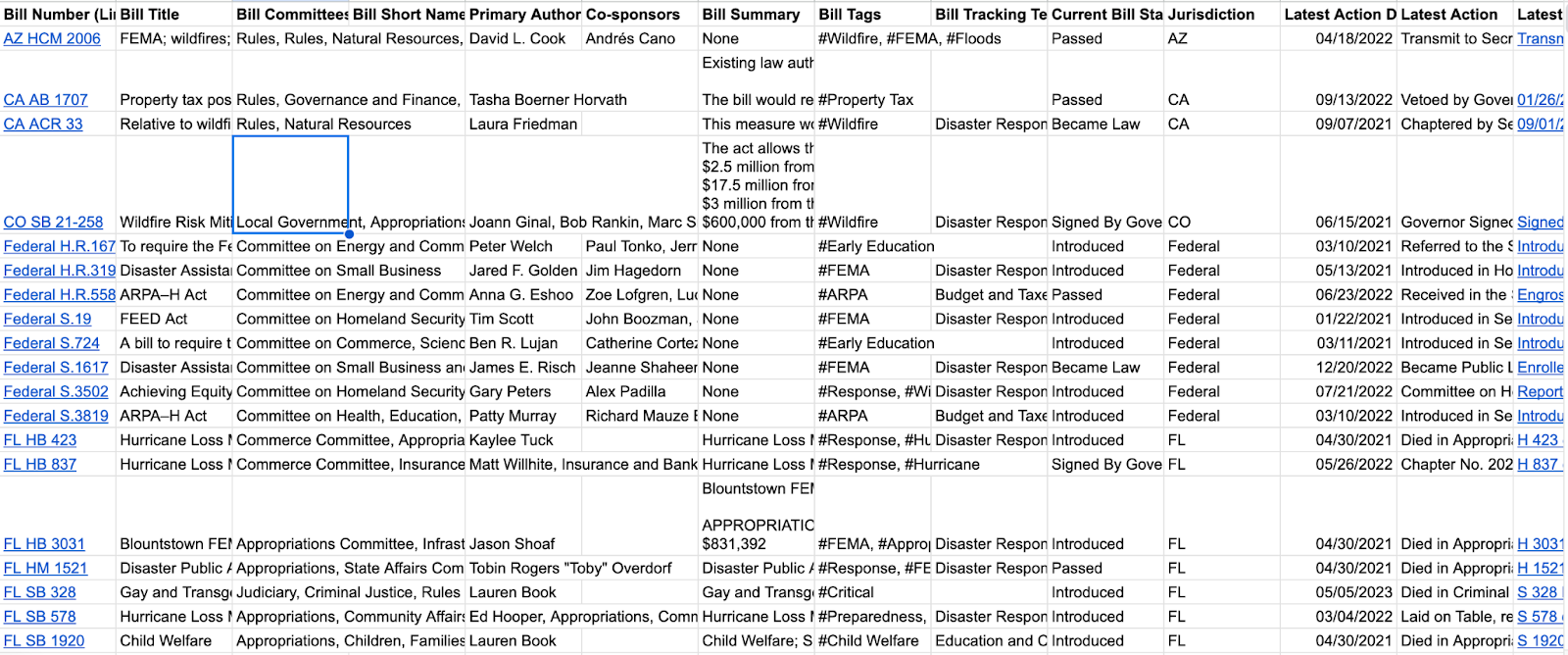
    Need to do more complex and in-depth analysis on a group of dozens, hundreds or even thousands of bills? Need to convert raw data into charts and graphs? You can easily export your data from Plural into a .csv file to conduct further analysis and data configuration as needed.

    Need help getting started?

    Creating a legislative report is key to proving the impact of your role, your team and your organization. It showcases the tangible results of your work to your board, stakeholders and community members.

    Need help getting started? Download our end-of-session report template today!

    You Deserve a Break

    Whether it’s the end of the week, the end of session or the end of a budget or calendar year, you and your team have already put in the hardest part of the work. Let the legislative reporting process be the easier part. With planning, organization and commitment to process you can knock out stellar reports that demonstrate the value that you, your team and your organization bring – in a fraction of the time.

    PLUS, there’s an added bonus – a stellar legislative report isn’t just for someone else’s benefit, but will be a critical asset when it comes to your planning and strategizing process for the next session.

    Ready to start creating a more organized system for monitoring, documenting and reporting on your public policy work all in one easy place?

  • Need to Know: The Federal Debt Ceiling

    Need to Know: The Federal Debt Ceiling

    Once every few years, we hear politicians and the media begin talk about the debt limit, also known as the debt ceiling. The conversation, which includes vague references to the disastrous economic consequences of surpassing the limit, slowly builds momentum and urgency until a deal to avoid crisis is struck, and talk of the debt limit recedes. 

    Amidst the chaos of what can seem like a regularly-scheduled financial crisis, it’s easy to lose track of what is actually being debated, which is the increase of a congressionally-defined cap on the amount of money that the federal government can borrow to pay its bills. Read on to learn what exactly the debt limit is, why approaching or breaching the limit could be risky, and how the 2023 debt limit negotiations fit in.

    What Is the Debt Limit?

    A core tenet of the separation of powers set up by the United State Constitution is that only Congress can authorize the borrowing of money by the federal government, typically through the issuance of bonds. Before 1917, Congress would specifically authorize borrowing when the federal government needed to. This process changed when unpredictable spending needs during World Wars I and II led to the creation (in 1917) and further establishment (in 1939) of a general limit on the national debt, which we now know as the debt limit. 

    In 1941, Congress passed an act raising that debt ceiling to $65 billion, meaning that Congress would need to act before the federal government’s debts reached that limit. Since 1941, Congress has passed more than 100 debt ceiling increases, oftentimes with little fanfare or controversy. 

    There are two basic approaches to “increasing the debt ceiling”:

    1. Congress can simply raise the amount of money that the federal government can borrow, or
    2. Congress can “suspend” the debt ceiling for a set period of time, granting the government the ability to borrow beyond the existing ceiling, and meet its financial obligations, through that period.

    In both cases, a debt ceiling increase is only a temporary solution. To understand why this common procedure is so often at the center of Congress’ most heated battles, it is important to understand the impact of hitting the debt ceiling.

    What Happens if the Debt Ceiling Is Breached?

    Generally speaking, Congress directs the federal government’s income via taxes, and its expenses, like social security, payroll for federal employees, and interest on existing debt, through appropriations bills. Because the expenses almost always exceed the income, the Treasury Department must take on debt to pay the government’s bills via bond sales. If the debt limit is reached, and the Treasury is no longer able to raise funds via debt, there will not be enough money for Congress to pay for all of its expenses. 

    The United States technically hit its debt ceiling in January 2023, but Treasury Department “extraordinary measures” allowed the government to keep paying its expenses for over six months. The date at which even those extraordinary measures would fail to allow the federal government to pay all of its bills is known as the “x-date”, and it is difficult for even financial experts to precisely predict.

    Congressional leaders and the White House were able to pass a deal before the x-date in 2023, but what would happen if that x-date was reached? Economists have debated this question for decades, and it is impossible to predict exactly what would happen. But, in a general sense, the federal government would need to decide which bills to pay, and which payments to miss. 

    It is commonly thought that, after reaching the x-date, the government would first delay federal employee paychecks and/or payments through federal programs like Medicare and Social Security before failing to make payments on existing debt, which would cause a default. Experts agree that a default would have disastrous impacts on the stock market, the national and global economy, and any American who relies on programs like SNAP or veterans benefits to get by.

    Why Do We Constantly Find Ourselves Nearing the Debt Ceiling?

    Given the turmoil that default could cause, it can be hard to understand why Congressional leaders struggle to agree on increasing the debt ceiling. In fact, strong arguments could be made for eliminating the debt ceiling altogether — no other country has a similarly restrictive debt ceiling; Denmark is the only other country with an absolute debt limit, but it is kept well above current borrowing to avoid ever approaching the limit.

    The truth is that the debt ceiling is so often at the center of massive political debates because of the turmoil that a default would cause. Missing social security payments, weakening the United States’ borrowing reputation, and the other impacts of a default end up being an invaluable bargaining chip for one party to use to win policy concessions from the other party. In a strictly political sense, debt limit negotiations require the support of both chambers of Congress and the White House, and anybody with enough power can effectively tie their support of increasing the debt limit to their policy priorities.

    2023 Debt Ceiling Negotiations

    Once Republicans took control of the House of Representatives following the 2022 midterm elections, a looming fight over the debt ceiling, technically hit in January 2023 but with an estimated x-date in early June, began to take shape. President Biden first called for a “clean increase”, meaning an increase that is unattached to any other policy changes, through the 2024 elections. The President’s logic makes sense, as a clean increase would prevent him from having to win GOP support of policy changes. Further, the extension through 2024 would prevent the debt ceiling from becoming a liability for the President during campaign season. 

    House Republicans, led by newly appointed Speaker Kevin McCarthy, were never going to let this happen. Without Republican control of the Senate or White House, the debt ceiling negotiations became one of McCarthy’s first and only opportunities to force concessions from Democrats. Republican demands mostly centered on federal government spending, which they view as out-of-control. Republicans proposed non-defense spending caps that would have drastically limited the growth of federal spending for the next decade and more aggressive work requirements for government programs like SNAP and Medicaid. 

    In the end, the White House and House Republican leadership were able to get their respective parties to pass H.R. 3746 to suspend the debt limit through the 2024 elections, cap non-defense spending in 2024 and 2025, and expand work requirements for those receiving food stamps to older individuals. Other policy changes in the bill will expedite approval of a natural gas pipeline in West Virginia (a win for their delegation), end the pause on student loan payments beginning in September (a Republican ask that aligns with the President’s existing plans), and cut IRS spending created by the Inflation Reduction Act (a Republican win). 

    Once again, Congressional leadership were able to avoid default at the last minute, but leaders are clearly getting more comfortable with approaching the debt limit, and the 2024 election will determine exactly what the next fight looks like.

    Want to gain greater insights into the U.S. federal government?

  • Understanding the Federal Budget Process

    Understanding the Federal Budget Process

    The constant evolution of the budget process, coupled with how much of the negotiations happen behind closed doors, can make following the process intimidating. But the outsized impact of these large legislative packages, along with the regularity with which Congress must engage in this process, makes following the budget essential. Understanding the key steps in this process will put you on the right path to being the budget expert in your organization.

    What Is the Federal Budget Process?

    The modern federal budget process, largely defined by the Congressional Budget Act of 1974, is the prescribed timeline by which the federal government should determine its annual spending and revenue levels each year. The government’s fiscal year runs from October 1 to September 30, and the budget process lays the tracks for each of the involved parties, including federal agencies, both chambers of Congress, and the President, to influence, debate, and approve funding for the next fiscal year ahead of the October 1 deadline. 

    Increasingly over the past 15 years, Congress has deviated from the federal budget process’ deadlines by missing deadlines or skipping steps. While it seems counterintuitive, amidst the uncertainty of the informal budget process that exists in practice today, a greater understanding of the traditional budget process is vital to understand where Congress is, and where they must get to, in order to keep the government funded.

    Mandatory and Discretionary Spending

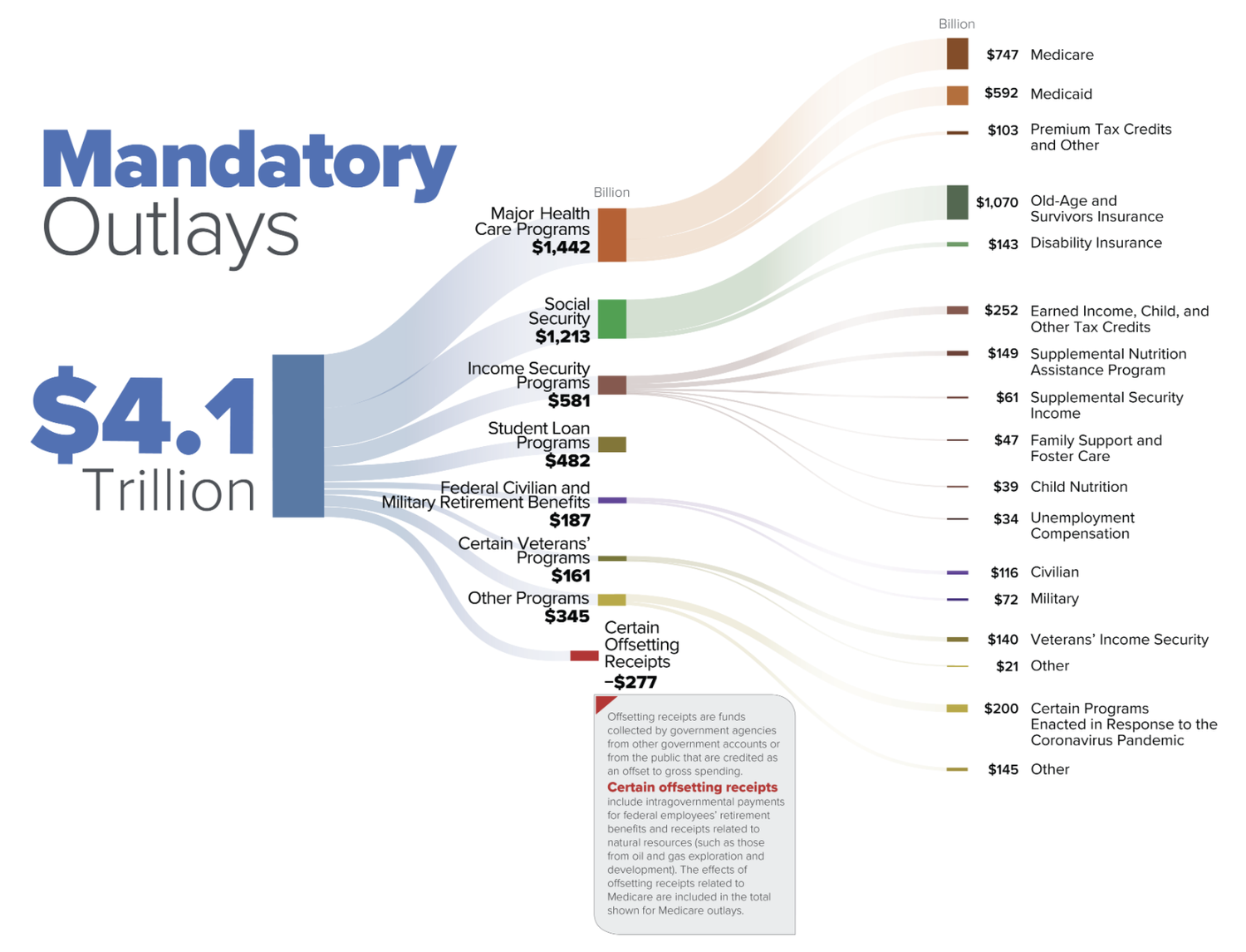
    Federal spending is commonly categorized into two distinct categories, mandatory spending and discretionary spending —interest payments on existing debt make up the remainder of the government’s spending budget. 

    Mandatory spending includes funding for programs that have their funding levels determined by existing law. Most mandatory funding categories are determined by existing laws, which establish social benefit programs, like Social Security, and set forth the criteria used to determine who is eligible. Spending on Social Security, therefore, is determined by how many individuals are eligible, and the benefits they are owed as defined by existing law, making it mandatory spending. The only way to impact mandatory spending is for Congress to amend that existing law, typically by expanding or restricting eligibility to these programs.

    Source: Congressional Budget Office

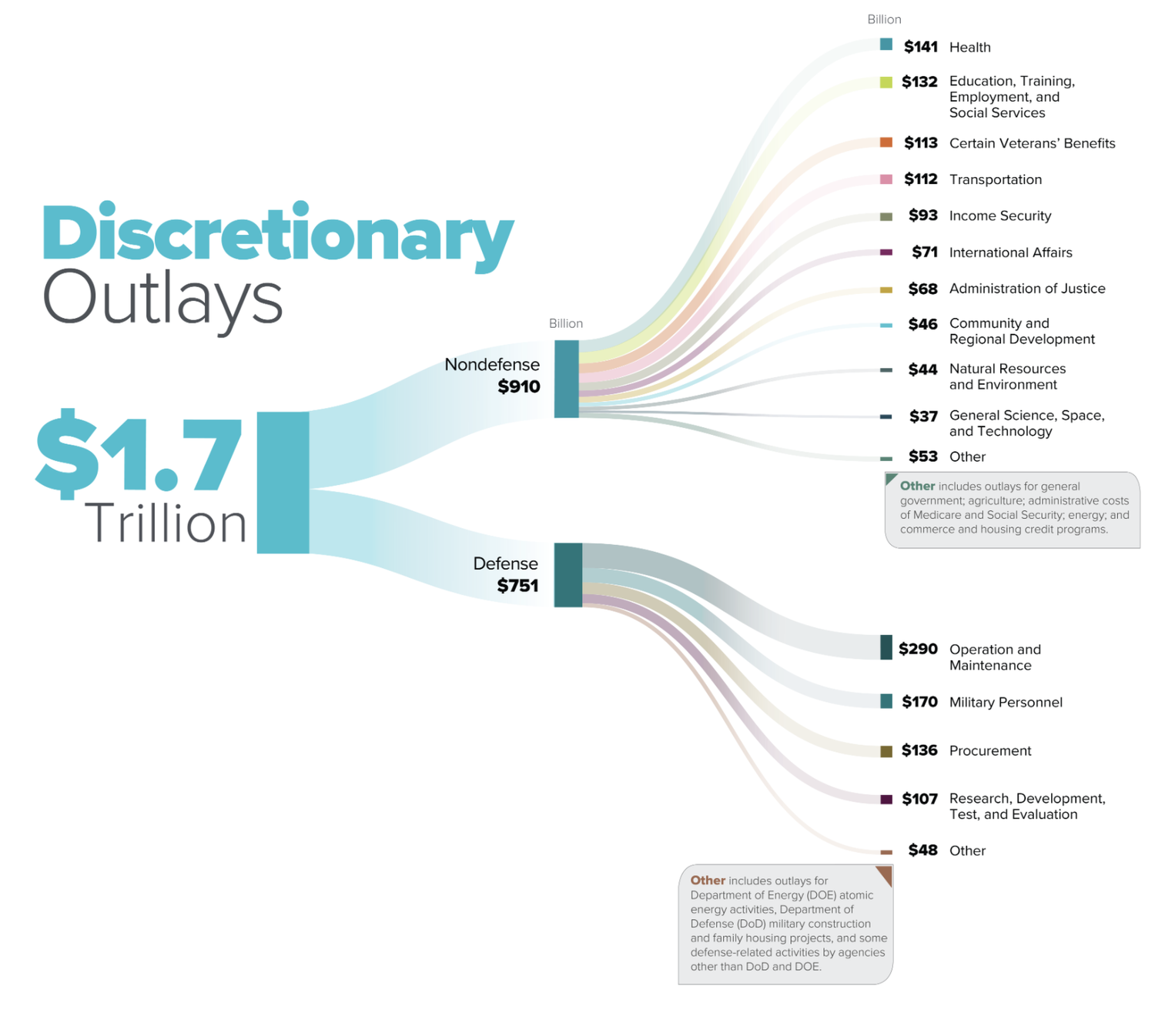
    By contrast, the dollar amount and specific use of discretionary spending is not determined by any existing law. Despite its name, discretionary spending is no less important than mandatory spending, as it is the tool that Congress uses to fund the federal agencies responsible for education and defense programs, along with many other priorities. For example, a large portion of discretionary spending is directed towards agencies like the Centers for Disease Control and the National Institutes of Health, for their work researching and improving public health. Under the federal budget process, discretionary spending is formulated, debated, and passed by the House and Senate Appropriations Committees.

    Source: Congressional Budget Office

    Spending vs. Revenues

    Like any budget, the federal budget balances spending against income, known as revenues. The government’s revenues are derived from taxes and fees that,like mandatory spending, are traditionally determined by existing law. During the budget process, Congress can attempt to change revenue levels by amending existing tax law, or passing new tax law. However, this isn’t a necessary component of the budget process, and revenues generally receive less consideration than discretionary spending.

    Source: Congressional Budget Office

    Stages of the Federal Budget Process

    The incredibly complex and important process of  appropriating and receiving trillions of dollars can be understood in the following 4 steps:

    • The President’s Budget Submission – Generally submitted in early February, this is the President’s opportunity to lay out their proposed spending plan for the next year.
    • Congressional Hearings – Following the release of the President’s Budget Plan, Congressional Committees hold hearings for agency leaders to promote and defend the President’s proposed funding for their agencies.
    • Budget Resolution – After consideration of the President’s proposal, and hearing from agency leaders, the House and Senate may pass their outline of a budget proposal, known as a Budget Resolution. 
    • Consideration and Passage of Appropriations Bills – Following the limits set by the budget resolution, the House and Senate Appropriations Committees consider and pass bills that detail spending on discretionary programs in the next fiscal year, known as Appropriations Bills. Following passage out of committee, these bills are voted on by the full chambers, and any differences between proposals will be worked out in Conference Committee before a final passage is sent to the President for their signature. 

    In practice, the budget process can often deviate from these four steps, and include other tools and procedures.

    The President’s Budget Submission

    Kicking off the annual budget process is the President’s Budget, typically submitted in February. This detailed report is the result of months of hard work by agency staff and includes top-level recommendations for government expenditures and revenues, as well as proposed spending in the 20 budget function categories, including transportation, Social Security, national defense, and so on.

    While incredibly detailed, the President’s Budget holds no legal authority, and is generally quite different from what ultimately ends up being passed into law. With that being said, this is one of the President’s best opportunities to turn their campaign promises into proposed policy before Congress.

    Congressional Hearings

    Each spring, both chambers of Congress host congressional hearings to question agency heads about the proposed funding for their programs as outlined in the President’s Budget. Depending on the partisan makeup of Congress, and the agency leader, these hearings can be some of the most contentious on a Committee’s calendar. Just as the budget submission is an opportunity for the President to lay out their priorities, these hearings are an opportunity for members of Congress to challenge those priorities, or offer their own priorities.

    The Congressional Budget Resolution

    Following these hearings, Congress may release its own outline for the next year’s budget, known as a budget resolution. This proposal is first created by the House and Senate Budget Committees, before being passed by each chamber. Compared to the President’s Budget Submission, a Congressional Budget Resolution is far less detailed, typically outlining just overall spending and revenue targets, and offering some direction to appropriations committees. This resolution may also include reconciliation instructions that direct a committee to produce legislation making changes to mandatory programs or revenues. As a concurrent resolution, this plan must be approved by both chambers of Congress, but it is not signed by the President and does not become law. 

    It is important to note that Congress is not required to pass a budget resolution. Since 2000, Congress has only passed a budget resolution around 50% of the time. Instead, the House and Senate often instead pass “deeming resolutions”, which  allow individual chambers to proceed on budget-related work without coming to an inter-chamber agreement first.

    Appropriations Bills

    With spending targets set, either through a budget resolution or other means, House and Senate Appropriations Subcommittees conduct hearings to deliberate on the budget(s) of the agencies and programs under their jurisdiction. The subcommittees pass their subject-specific bills out to the larger Appropriations Committee, where the full committee votes on sending the bill to the floor of the House or Senate. 

    Once these appropriations bills reach the floor of their chamber, the full legislative body will debate and vote on the proposals. Resulting from this process is two sets of appropriations bills, one House-approved and one Senate-approved, that a Conference Committee consisting of members from both chambers then considers and combines into a consolidated proposal. The Conference Committee proposal then must pass the Senate and House once more, before heading to the President’s desk for signature. 

    In theory, the bill should be signed by the President in advance of the October 1 fiscal year beginning, so that the government is consistently funded. However, as explained further below, the process to pass an annual budget can often stretch well beyond the beginning of the fiscal year.

    Visualizing the Federal Budget Process With a Flowchart

    Understanding the federal budget process is key to understanding how our government works and developing strategies to achieve your organization’s goals.

    Other Considerations

    Reconciliation

    As mentioned above, the Congressional budget resolution may contain reconciliation instructions that direct certain committees to consider and pass legislation, making specific changes impacting spending, revenues, or the debt limit. These instructions only direct the specific committees to pass legislation that makes a certain impact to spending, revenues, or the debt limit, and do not dictate the specific policies that should be enacted. 

    Because these bills are derived from the Congressional Budget Resolution, as outlined by the Congressional Budget Act, they are able to move through the Senate without needing its usual 60-vote majority to end a filibuster (more on that here).

    The Debt Limit

    Connected to the federal budget process, both procedurally and politically, is the issue of our national debt. Federal government spending typically outpaces the revenues generated by taxes and fees, resulting in a deficit that increases our national debt year after year. Since World War I, Congress has regularly authorized new borrowing to cover those deficits by raising or suspending a cap on the amount of debt that the government is allowed to hold, known as a “debt limit”. 

    If the government were to hit the debt limit, it would be unable to meet its debt obligations and would begin to default. Defaulting, which the U.S. has never done, could have disastrous impacts on the domestic and global economy. It is because of the disastrous impacts of default that Democrats and Republicans often tie policy priorities to the debt limit. If one party views increasing the debt limit as essential, the other party may see an opportunity to demand a partisan priority, like spending reductions, in order to commit their support. The debt limit has often been suspended until the beginning of the fiscal year so that the two Congressional tasks of funding the government and ensuring it doesn’t hit the debt limit are tied together.

    What Happens if Congress Doesn’t Pass a Budget by October 1?

    Outside of passing an annual budget outlining funding for the next fiscal year by October 1, Congress has two options: 1) Pass a continuing resolution or 2) Enter a government shutdown.

    By far the less disruptive option, a continuing resolution simply leaves in place existing funding levels, sometimes with small adjustments, for agencies and programs as they were during the previous fiscal year. Continuing resolutions generally expire once a proper budget has been passed or a certain date has passed, whichever comes first. Continuing resolutions offer negotiators in Congress extra time to work out a budget agreement without entering a government shutdown. An increasingly popular tool, there have been 33 continuing resolutions passed in the past 10 years. 

    Absent a comprehensive budget bill or a continuing resolution, the government enters what is known as a shutdown. During this time, only the “essential” services and functions remain active, like active duty military employment and programs relying on mandatory spending. “Non-essential” government employees may be furloughed, and government-run facilities like museums and national parks may be closed. Similar to hitting the debt limit, the negative impacts of a government shutdown are often used as a bargaining chip in partisan budgetary negotiations. The government has shut down three times in the past ten years, for a total of 54 days.

    Download our federal budget process flowchart to unlock greater insights into the functioning of our federal government.

  • How Does Congress Make Public Policy: 5 Little-Known Tools

    How Does Congress Make Public Policy: 5 Little-Known Tools

    For the past decade, Congress has been defined by small majorities and partisan gridlock. It is easy to forget that at times during President Obama’s first Congress, the Democratic caucus had a 60-seat majority in the Senate, or that President Obama’s cabinet included several conservative members. More recently, small majorities and a lack of bipartisanship have led to intense standoffs between lawmakers. For instance, during the Supreme Court nominations during President Trump’s administration and the upcoming debt limit fight President Biden’s administration is facing. 

    As these barriers to policy making have taken hold, we have seen Congress become increasingly reliant on little-known tools and procedures that allow them to avoid the Senate’s 60-vote thresholds and legislate with smaller majorities. Knowledge of these tools is crucial to understanding how Congress has passed major legislation, like the Inflation Reduction Act, and what proposals have viability to pass into law moving forward. Here are five tools Congress can use to affect change amidst partisan deadlock:

    The Congressional Review Act

    A path for Congress to reverse federal agency rulemaking.

    The Congressional Review Act (CRA) is an oversight tool that Congress established in the 1996 Small Business Regulatory Enforcement Fairness Act to grant themselves additional oversight of the federal rulemaking process. The CRA requires federal agencies to report to Congress on any rules they issue and allows members of Congress to file a joint resolution of disapproval in an effort to overturn the issued rule within 60 legislative days of the rule being reported. While most legislation requires 60 votes to pass the Senate, joint resolutions require only a simple majority, making them a useful tool for a party with a slim majority. 

    The CRA has emerged as a popular tool for incoming administrations to use to disallow rulemaking finalized during the previous administration. There have been 20 successful joint resolutions of disapproval, with one passed early in the Bush administration, 16 passed during the Trump administration, and three passed so far during the Biden administration. 

    In eight additional cases, both chambers have passed joint resolutions of disapproval to oppose a rulemaking action taken by a sitting administration. Each has been predictably vetoed. Two joint resolutions of disapproval were passed by Congress and quickly vetoed by President Biden between February and April 2023. The first would have overturned a Department of Labor rule allowing retirement-plan managers to consider factors like climate change in their investment decisions. The second would have overturned a rule expanding environmental protections under the Clean Water Act.

    Congressional Intervention in the District of Columbia’s Legislative Process

    A limited, but powerful, role that Congress plays in the governing of Washington, D.C.

    While the Council of the District of Columbia’s legislative processes mostly align with state legislative processes, it differs significantly in that legislation passed by the D.C. Council must undergo a period of congressional review. Once a bill is signed by the Mayor or the Council overrides their veto, it becomes an Act and is sent to Congress for review. In most cases, Congress then has 30 days during which it can introduce a joint resolution disapproving of the Act. If passed by Congress and signed by the President, the joint resolution prevents the Act from becoming law. 

    Successful Congressional intervention is incredibly rare. In fact, when President Biden signed a resolution blocking a D.C. Council-passed Act that would have rewritten criminal sentencing laws in March 2023, it was the first such action in more than thirty years.

    The Filibuster

    A minority party’s favorite way to block passage of a bill. 

    Although most measures require only the votes of a simple majority to pass the Senate, we often hear of the need for the support of 60 Senators in order for a bill to have a chance at passage. This is because of the filibuster. The rules of the Senate generally allow for unlimited debate on measures, which can only be ended by 60 Senators voting to invoke “cloture”, which limits further debate on the measure to a maximum of 30 hours. The filibuster means that a minority of Senators may prevent a vote on a bill by refusing to invoke cloture and start the process to proceed to a vote. 

    Historically, the filibuster has been used in attempts to block additional war powers during World War I, civil rights legislation in the mid-20th century, and judicial nominations in the 2000s. Reactions to each of these have resulted in the filibuster being weakened in some ways, and simply modified in others. We are left with a filibuster that does not actually require a Senator to speak on the floor to block legislation (as was the case before the 1970’s), and which does have certain exceptions as discussed in numbers 4 and 5 below.

    While somewhat weakened, the filibuster remains an incredibly powerful tool that prevents a party with a simple majority, but not a 60-vote majority, from governing without some participation from the minority party. Recent partisan priorities like the Republican push to repeal the Affordable Care Act and Democratic efforts to raise the minimum wage have been hampered by the use of the filibuster by a minority group of Senators.

    Reconciliation

    An increasingly relied upon procedure to pass congressional priorities with a simple majority. 

    Created by the Congressional Budget Act in 1974, reconciliation is a special parliamentary procedure that allows for certain budget legislation to move through the Senate more quickly and with less support. Debate on reconciliation bills is limited to twenty hours, meaning that the 60-vote majority to end a filibuster that is needed for most legislation is not necessary and the bill can be passed with a simple majority. 

    Restrictions, mostly stemming from the Byrd Rule, limit what proposals can be included in a reconciliation bill. Among other restrictions, the Byrd Rule limits reconciliation bill provisions to only those that impact spending or revenues, prevents any provisions that would increase the federal deficit beyond ten years, and blocks any changes to Social Security. Decisions on whether a reconciliation bill meets the requirements set by the Byrd Rule are referred to the Senate Parliamentarian for interpretation.

    Congress may pass one reconciliation bill per year impacting revenue, spending, and the federal debt limit,up to a theoretical total of three bills. In practice, Congress generally passes at most one reconciliation bill in a year, impacting each of the three topics listed above.

    Twenty three reconciliation bills have been signed into law since the procedure was first used in 1980. An additional four reconciliation bills have passed Congress, but were vetoed by the President.

    The Nuclear Option

    The omnipresent tool of last resort.

    While the 60-vote majority to invoke cloture, end debate, and move legislation forward in the Senate is central to the Senate’s legislative process rules, changing those rules only requires a simple majority. This intricacy means that anytime a simple majority is road blocked by the threat of a filibuster, they do have the option of changing Senate rules to reduce the need for that 60-vote majority. Changing those rules in any fashion is controversial, and is generally referred to as the “nuclear option.”

    Use of the nuclear option has long been debated, threatened, and used as a bargaining chip. It wasn’t truly deployed until 2013, when Democrats removed the 60-vote requirement to invoke cloture and end debate on judicial nominations except for the Supreme Court. This allowed Democrats to overcome Republican filibusters of the Obama administration’s judicial nominations. 

    In 2017, a Republican Senate majority invoked the nuclear option to expand the changes made in 2013 to apply to Supreme Court nominations as well. This move allowed for the Supreme Court nomination of Neil Gorsuch,and later Brett Kavanaugh and Amy Coney Barett, to pass with a simple majority.  

    Since 2017, the nuclear option hasn’t been invoked, but both President Trump and President Biden have hinted at supporting its use to allow for certain legislation to pass with a simple majority. Debates over the debt limit, government funding, and abortion rights have all seen the nuclear option considered, but not used, in recent years.

    While these tools can make Congress’ actions harder to predict, follow, and understand, the policies they enact are just as important and impactful to our daily lives as legislation passed through traditional means. Being aware of each way that Congress may affect change is essential to following the modern federal legislative process. 

    Interested in learning how Plural can help unlock powerful legislative insights into Congressional actions and the modern legislative process? Book a demo today!